
Alma Jeftic – författare
Visar alla böcker från författaren Alma Jeftic. Handla med fri frakt och snabb leverans.
4 produkter
4 produkter
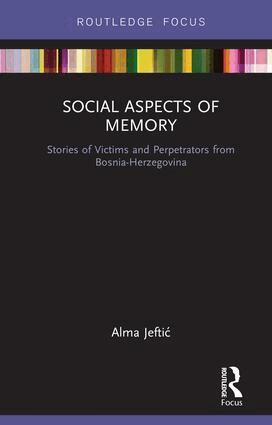
Inbunden, Engelska, 2019
958 kr
Skickas inom 10-15 vardagar
Social Aspects of Memory presents a compelling study of how ordinary people remember war. Whilst the book focuses on the cities of Sarajevo and East Sarajevo during the 1992-1995 war in Bosnia-Herzegovina, Jeftić also presents narratives from other war-torn cities and countries around the world. This book adopts a unique approach, by looking at how perpetrators and victims (as well as new generations who may not remember the war directly) manage in the aftermath of war. Jeftić explores how our memories of war and violence are formed, and how we can learn to reconcile those memories, individually and as a collective. Drawing on the author’s own extensive empirical research, the book explores the connections between memories for significant war events, transgenerational transmission of memories, bias for in-group wrongdoings and readiness for reconciliation between two groups.Giving a voice to underrepresented narratives and prioritising the importance of expression as a necessary catalyst for reconciliation, this book is essential reading for those interested in collective and transgenerational memory and memory studies, especially in relation to the aftermath of the 1992-1995 war in Bosnia-Herzegovina.
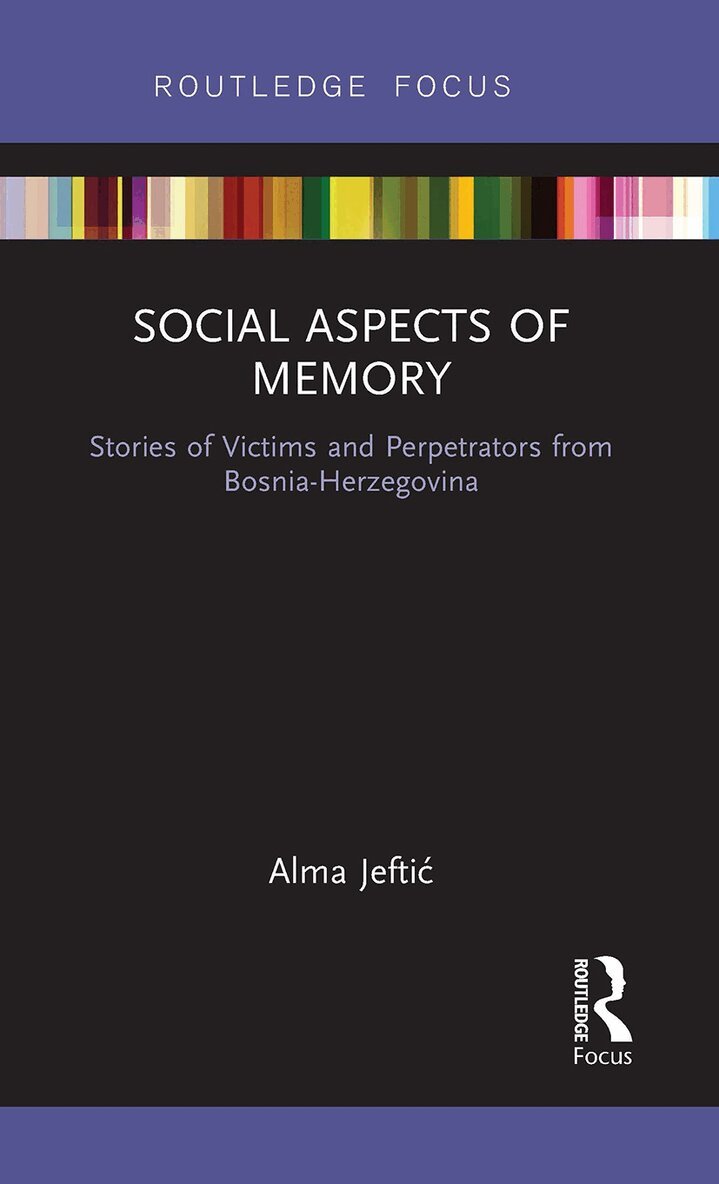
Häftad, Engelska, 2023
353 kr
Skickas inom 10-15 vardagar
Social Aspects of Memory presents a compelling study of how ordinary people remember war. Whilst the book focuses on the cities of Sarajevo and East Sarajevo during the 1992-1995 war in Bosnia-Herzegovina, Jeftić also presents narratives from other war-torn cities and countries around the world. This book adopts a unique approach, by looking at how perpetrators and victims (as well as new generations who may not remember the war directly) manage in the aftermath of war. Jeftić explores how our memories of war and violence are formed, and how we can learn to reconcile those memories, individually and as a collective. Drawing on the author’s own extensive empirical research, the book explores the connections between memories for significant war events, transgenerational transmission of memories, bias for in-group wrongdoings and readiness for reconciliation between two groups.Giving a voice to underrepresented narratives and prioritising the importance of expression as a necessary catalyst for reconciliation, this book is essential reading for those interested in collective and transgenerational memory and memory studies, especially in relation to the aftermath of the 1992-1995 war in Bosnia-Herzegovina.
E-bok
Engelska, 2019401 kr
Läs direkt efter köp
Social Aspects of Memory presents a compelling study of how ordinary people remember war. Whilst the book focuses on the cities of Sarajevo and East Sarajevo during the 1992-1995 war in Bosnia-Herzegovina, Jeftic also presents narratives from other war-torn cities and countries around the world. This book adopts a unique approach, by looking at how perpetrators and victims (as well as new generations who may not remember the war directly) manage in the aftermath of war. Jeftic explores how our memories of war and violence are formed, and how we can learn to reconcile those memories, individually and as a collective. Drawing on the author’s own empirical and extensive research, the book explores the connection between memories for significant war events, transgenerational transmission of memories, bias for in-group wrongdoings and readiness for reconciliation between two groups.Giving a voice to underrepresented narratives and prioritising the importance of expression as a necessary catalyst for reconciliation, this book is essential reading for those interested in collective and transgenerational memory and memory studies, especially in relation to the aftermath of the 1992-1995 war in Bosnia-Herzegovina.
E-bok
PDF, Engelska, 2019401 kr
Läs direkt efter köp
Social Aspects of Memory presents a compelling study of how ordinary people remember war. Whilst the book focuses on the cities of Sarajevo and East Sarajevo during the 1992-1995 war in Bosnia-Herzegovina, Jeftic also presents narratives from other war-torn cities and countries around the world. This book adopts a unique approach, by looking at how perpetrators and victims (as well as new generations who may not remember the war directly) manage in the aftermath of war. Jeftic explores how our memories of war and violence are formed, and how we can learn to reconcile those memories, individually and as a collective. Drawing on the author’s own empirical and extensive research, the book explores the connection between memories for significant war events, transgenerational transmission of memories, bias for in-group wrongdoings and readiness for reconciliation between two groups.Giving a voice to underrepresented narratives and prioritising the importance of expression as a necessary catalyst for reconciliation, this book is essential reading for those interested in collective and transgenerational memory and memory studies, especially in relation to the aftermath of the 1992-1995 war in Bosnia-Herzegovina.