Alvin Roth – författare
Visar alla böcker från författaren Alvin Roth. Handla med fri frakt och snabb leverans.
8 produkter
8 produkter
Häftad, Engelska, 2026
190 kr
Skickas inom 5-8 vardagar
Nobel Prize winner Alvin Roth argues that our most important and difficult decisions - about our most controversial issues - require a different calculation of what matters most.Our intuitive and automatic thinking is influenced - in ways we don't always recognize - by strongly-held notions of repugnance. A transaction is repugnant if some people want to engage in it, and others think they shouldn't be allowed to. You Can't Do That explores how ideas about repugnance have changed drastically over time, and examines the causes and consequences of forbidding transactions in our most intimate relationships (such as sex, reproduction, or donating blood) and our commercial relationships (finance, labor, or data use).Leading economist Alvin Roth turns his attention to a controversial set of markets to answer difficult questions about allowing, regulating or forbidding certain transactions. Should narcotics be legalised? Should we allow compensation for kidney donors, or let thousands of people die each year while waiting for an altruistic kidney? Should we allow physician-assisted suicide for terminally ill patients who desire death with dignity? Roth's goal is not to tell us what to think, but to give us a new framework for how to think - balancing the rights of people to pursue their individual and mutual goals with the need to protect society's most vulnerable members from harms that might arise from markets, including black markets, growing without boundaries.This is about trade-offs, not moral absolutes. Combining Roth's expertise in market design with his skill in making complicated ideas accessible, You Can't Do That examines how to make those trade-offs in the most humane, beneficial, and efficient ways.
Inbunden, Engelska, 2026
248 kr
Skickas inom 5-8 vardagar
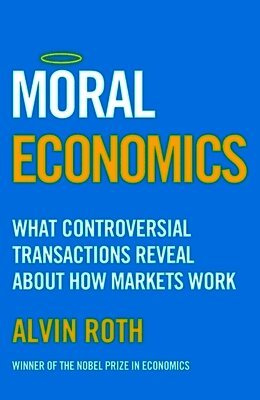
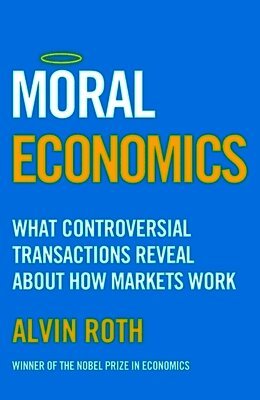
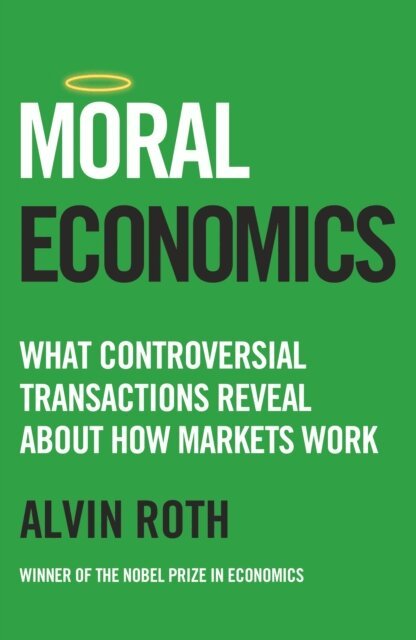
A Nobel Prize-winning economist shows us why we have to deal in trade-offs when we can't agree on what's right and what's wrong.Some of the most intractable controversies in our divided society are, at bottom, about what actions and transactions should be banned. Should women and couples be able to purchase contraception, access in vitro fertilization, and end pregnancy by obtaining an abortion? Should people be able to buy marijuana? What about fentanyl? Can someone be paid to donate blood plasma, or a kidney?Disagreements are fierce because arguments on both sides are often made in uncompromising moral or religious terms. But in Moral Economics, Nobel Prize-winning economist Alvin E. Roth asserts that we can make progress on these and other difficult topics if we view them as markets-tools to help decide who gets what-and understand how those markets can be fine-tuned to be more functional. Markets don't have to allow everything or ban everything. Prudent market design can find a balance between preserving people's rights to pursue their own interests and protecting the most vulnerable from harms.Combining Roth's unparalleled expertise as market design pioneer with his incisive, witty accounts of complicated issues, Moral Economics offers a powerful and innovative new framework for resolving today's hardest controversies.
Häftad, Engelska, 2016
114 kr
Skickas
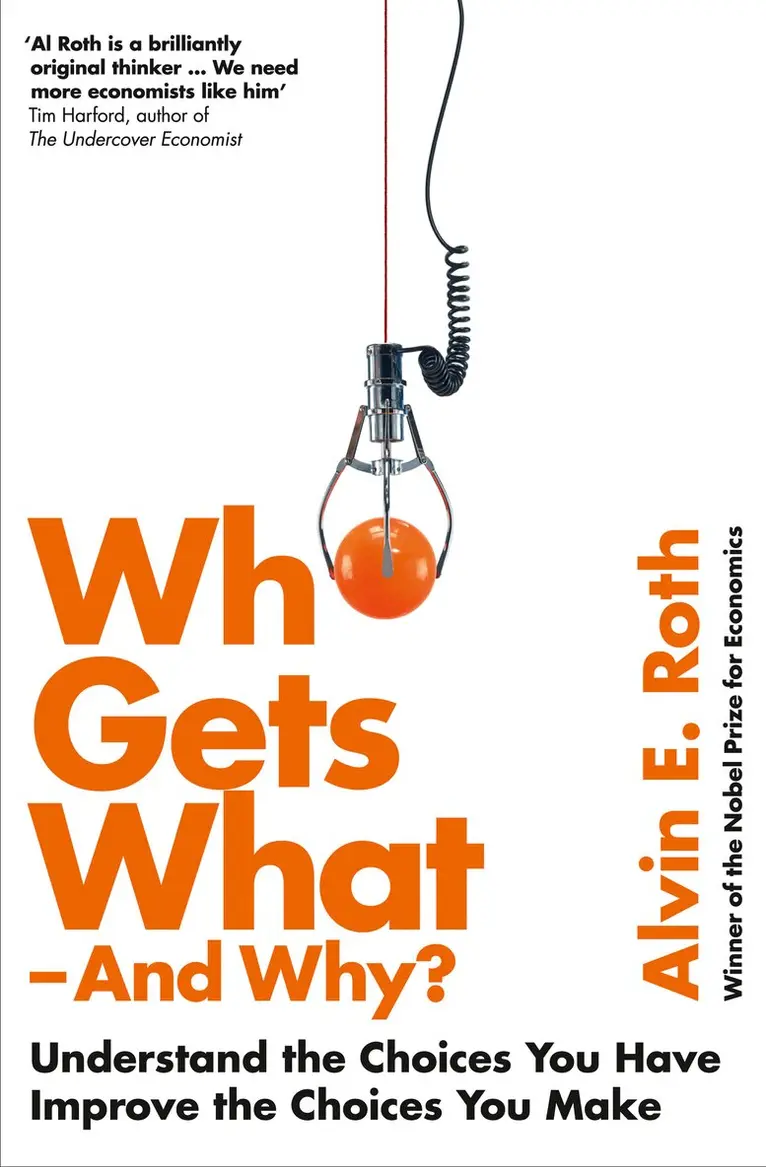
This book shows how our lives are shaped not only by the choices we make, but by the choices we have.From dating, school and university applications to the job market, understand the most important decisions you’ll ever make with insights from a Nobel Prize-winner.Who Gets What and Why is a piquantly written, mind-expanding exploration of the markets that matter most to many of us. If you’ve ever sought a job or hired someone, applied to university or guided your child into a good school, asked someone out on a date or been asked out, you have participated in a matching market. They are everywhere around us and account for some of the biggest technological successes of the decade, like Uber and Airbnb. Matching markets can even be the gatekeeper of life itself, guiding how desperately ill patients receive scarce organs for transplants.Alvin E. Roth shared the 2012 Nobel Prize in economics for his pioneering research into market design – the principles that govern all kinds of markets where money isn’t the only factor in determining who gets what. His book reveals what factors make these markets work well – or badly – and shows us all how to recognise a good match and make smarter, more confident decisions.
E-bok
Engelska, 201575 kr
Läs direkt efter köp
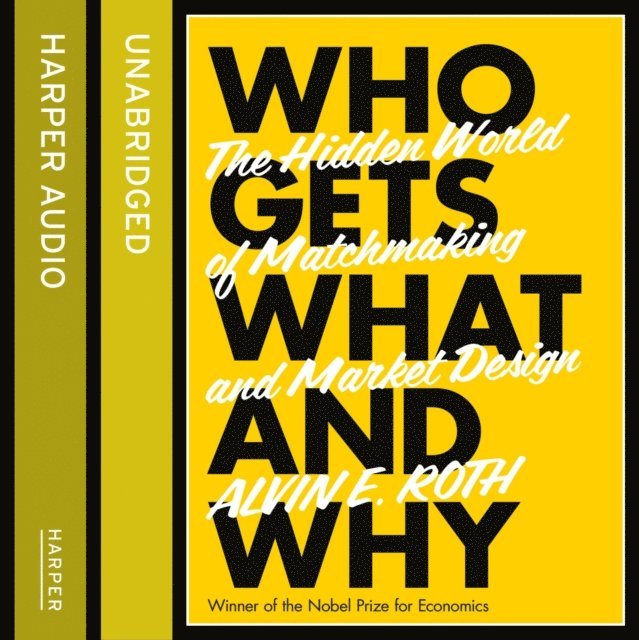
How our lives are shaped not only by the choices we make, but by the choices we have.In many parts of life – jobs, housing, medical care, education, even a date on the internet – price is not the only determinant of who gets what. So how do the other processes that influence who gets which goods, jobs, university places and partners really work?In `Who Gets What’, Nobel Prize winning economist Alvin Roth uncovers the global rules of how markets allocate, how matchmaking shapes lives, where markets exist that we may not even realise, and how everything about our biggest experiences – from getting accepted at university or living where we want – can be better understood and negotiated when one understands the design of those matching markets. The distribution of rewards is often unfair, but it’s seldom as random as it seems, and Roth reveals just how much of our life takes place in marketplaces, and leads us to a new understanding of who gets what and why.For fans of `Freakonomics’ and `Thinking Fast and Slow’ this groundbreaking book sheds new light on the politics of free markets, and how many things that we choose in life also must choose us.
Ljudbok
Engelska, 2015209 kr
Lyssna direkt efter köp
How our lives are shaped not only by the choices we make, but by the choices we have.In many parts of life – jobs, housing, medical care, education, even a date on the internet – price is not the only determinant of who gets what. So how do the other processes that influence who gets which goods, jobs, university places and partners really work?In ‘Who Gets What’, Nobel Prize winning economist Alvin Roth uncovers the global rules of how markets allocate, how matchmaking shapes lives, where markets exist that we may not even realise, and how everything about our biggest experiences – from getting accepted at university or living where we want – can be better understood and negotiated when one understands the design of those matching markets. The distribution of rewards is often unfair, but it’s seldom as random as it seems, and Roth reveals just how much of our life takes place in marketplaces, and leads us to a new understanding of who gets what and why.For fans of ‘Freakonomics’ and ‘Thinking Fast and Slow’ this groundbreaking book sheds new light on the politics of free markets, and how many things that we choose in life also must choose us.
E-bok
Engelska, 2026188 kr
Läs direkt efter köp
A Nobel Prize- winning economist shows us why we have to deal in trade-offs when we can't agree on what's right and what's wrong.Some of the most intractable controversies in our divided society are, at bottom, about what actions and transactions should be banned. Should women and couples be able to purchase contraception, access in vitro fertilization, and end pregnancy by obtaining an abortion? Should people be able to buy marijuana? What about fentanyl? Can someone be paid to donate blood plasma, or a kidney?Disagreements are fierce because arguments on both sides are often made in uncompromising moral or religious terms. But in Moral Economics, Nobel Prize-winning economist Alvin E. Roth asserts that we can make progress on these and other difficult topics if we view them as markets-tools to help decide who gets what-and understand how those markets can be fine-tuned to be more functional. Markets don't have to allow everything or ban everything. Prudent market design can find a balance between preserving people's rights to pursue their own interests and protecting the most vulnerable from harms.Combining Roth's unparalleled expertise as market design pioneer with his incisive, witty accounts of complicated issues, Moral Economics offers a powerful and innovative new framework for resolving today's hardest controversies.
55 kr
Läs direkt efter köp
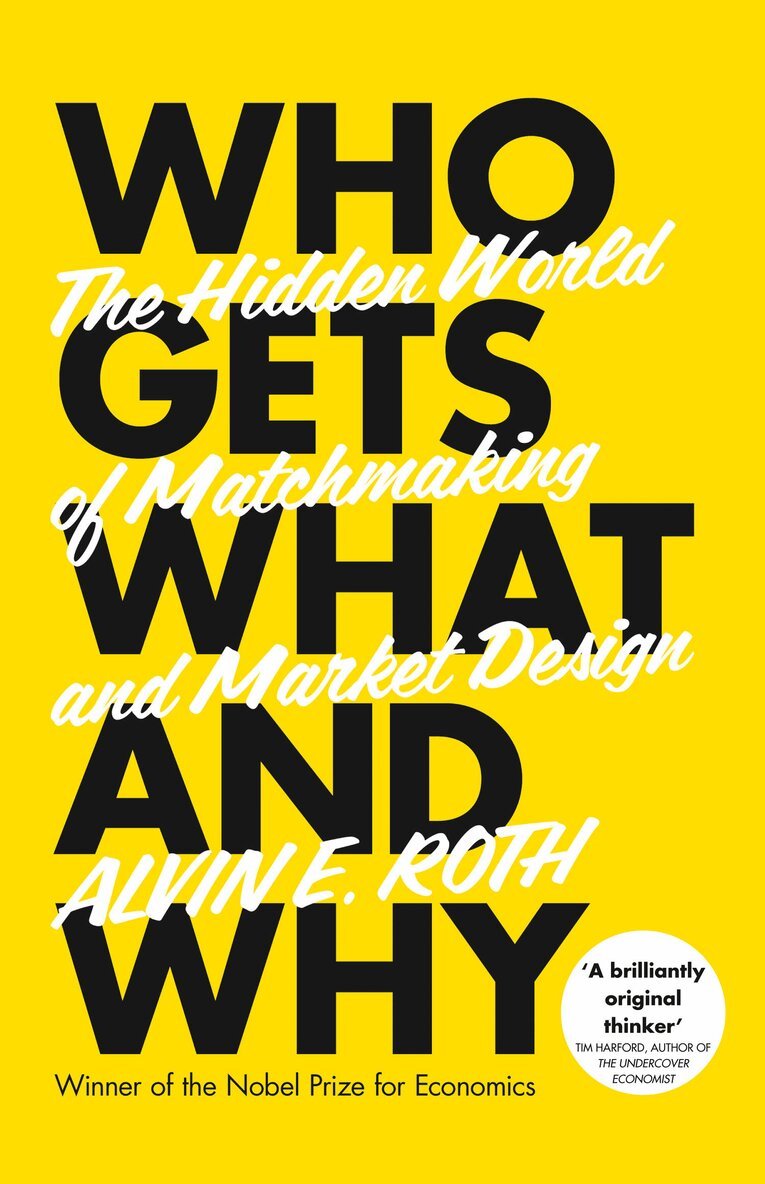
A Nobel laureate reveals the often surprising rules that govern a vast array of activities — both mundane and life-changing — in which money may play little or no role.If you''ve ever sought a job or hired someone, applied to college or guided your child into a good kindergarten, asked someone out on a date or been asked out, you''ve participated in a kind of market. Most of the study of economics deals with commodity markets, where the price of a good connects sellers and buyers. But what about other kinds of "goods,” like a spot in the Yale freshman class or a position at Google? This is the territory of matching markets, where "sellers” and "buyers” must choose each other, and price isn''t the only factor determining who gets what.Alvin E. Roth is one of the world''s leading experts on matching markets. He has even designed several of them, including the exchange that places medical students in residencies and the system that increases the number of kidney transplants by better matching donors to patients. In Who Gets What — And Why, Roth reveals the matching markets hidden around us and shows how to recognize a good match and make smarter, more confident decisions.
Häftad, Engelska, 2015
221 kr
Tillfälligt slut
How our lives are shaped not only by the choices we make, but by the choices we have.In many parts of life – jobs, housing, medical care, education, even a date on the internet – price is not the only determinant of who gets what. So how do the other processes that influence who gets which goods, jobs, university places and partners really work?In ‘Who Gets What’, Nobel Prize winning economist Alvin Roth uncovers the global rules of how markets allocate, how matchmaking shapes lives, where markets exist that we may not even realise, and how everything about our biggest experiences – from getting accepted at university or living where we want – can be better understood and negotiated when one understands the design of those matching markets. The distribution of rewards is often unfair, but it’s seldom as random as it seems, and Roth reveals just how much of our life takes place in marketplaces, and leads us to a new understanding of who gets what and why.For fans of ‘Freakonomics’ and ‘Thinking Fast and Slow’ this groundbreaking book sheds new light on the politics of free markets, and how many things that we choose in life also must choose us.