Ananda Bhattacharyya – författare
Visar alla böcker från författaren Ananda Bhattacharyya. Handla med fri frakt och snabb leverans.
13 produkter
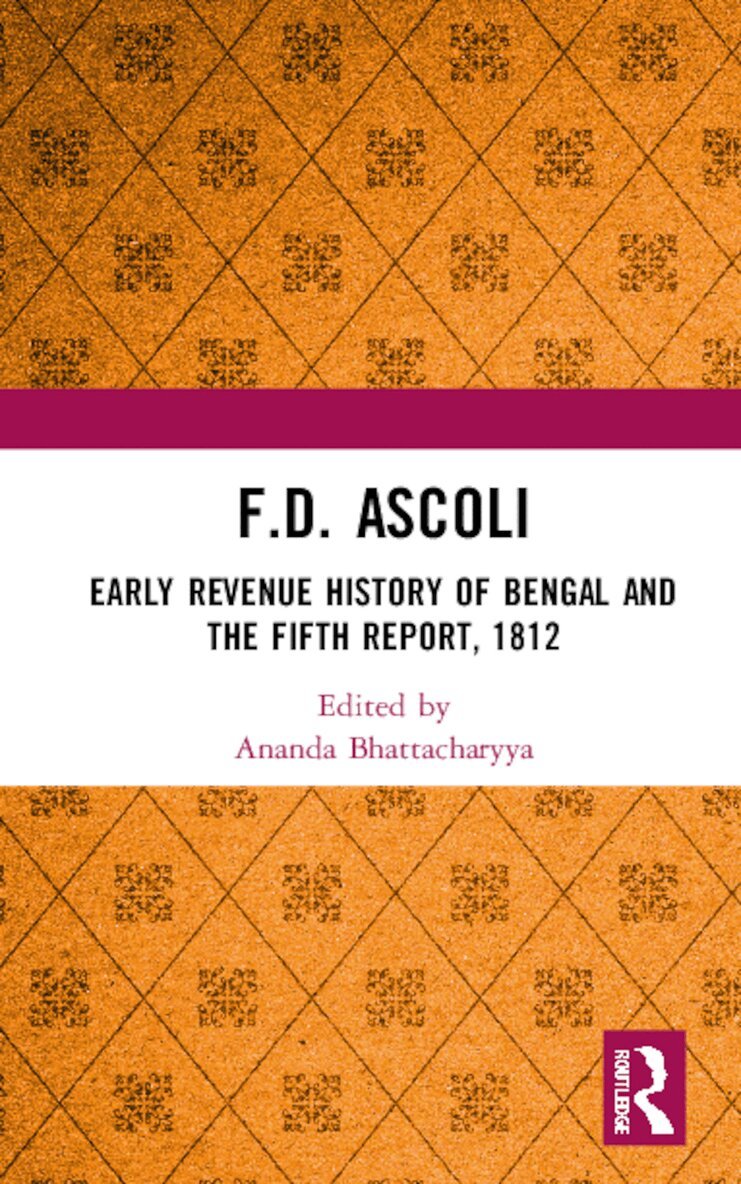
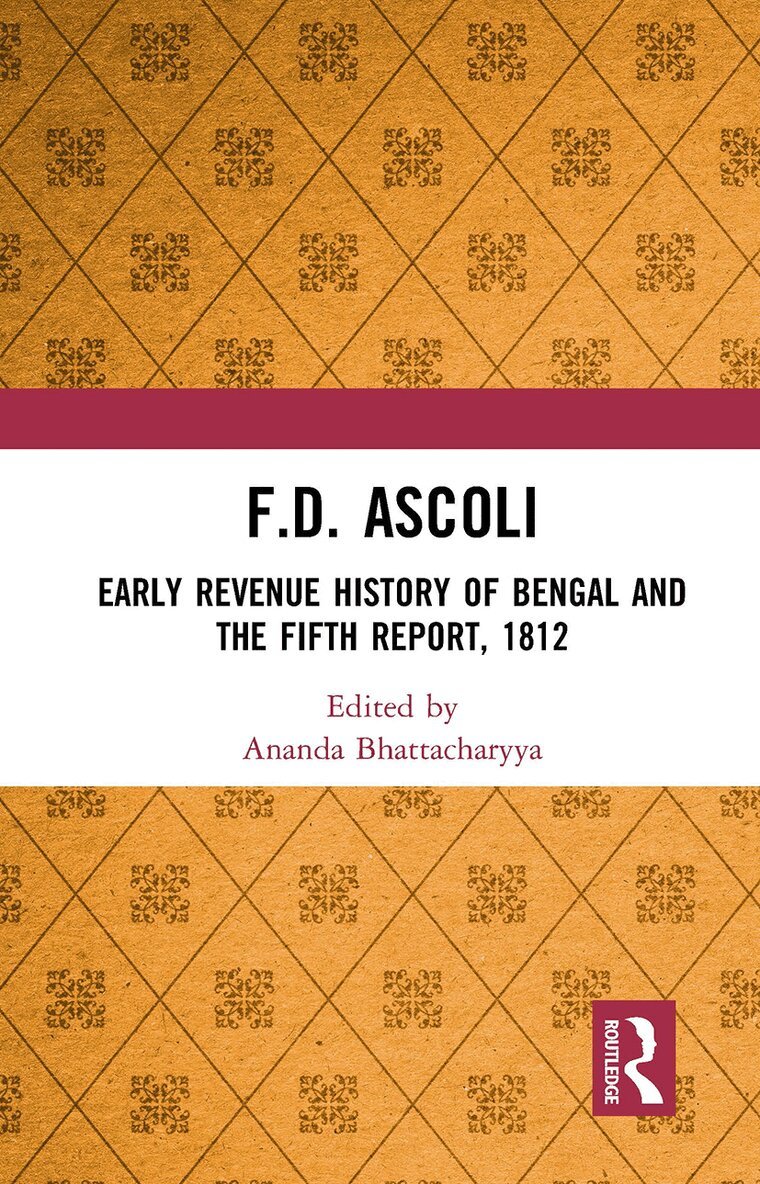
F.D. Ascoli
Early Revenue History of Bengal and The Fifth Report, 1812
Inbunden, 2019
2585 kr
Lägg i varukorg
Early Revenue History of Bengal and the Fifth Report, 1812 was the outcome of a series of four lectures delivered at the Dacca College by the distinguished Bengali civil servant, F.D. Ascoli. It embodies the text of the Fifth Report on the affairs of the East India Company by the Select Committee …
Frederick Eden Pargiter
A Revenue History of the Sundarbans from 1765 to 1870
Inbunden, 2019
2824 kr
Lägg i varukorg
The Sundarban stretches from the brackish waters of the broad Hooghly on the west, to the fresh waters of the still broader Meghna to the east; the turbid waters of the Bay of Bengal on its southern limits, to the zamindari or pargana lands on its northern extremity and includes in its southern …
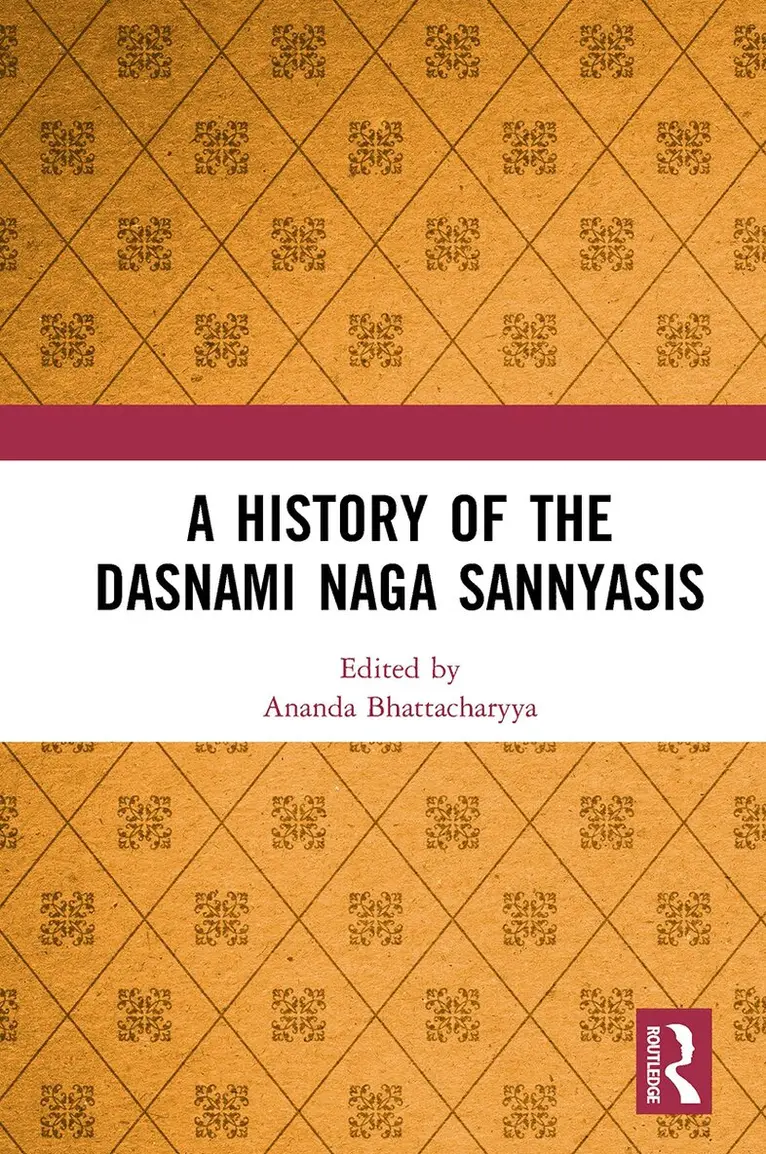
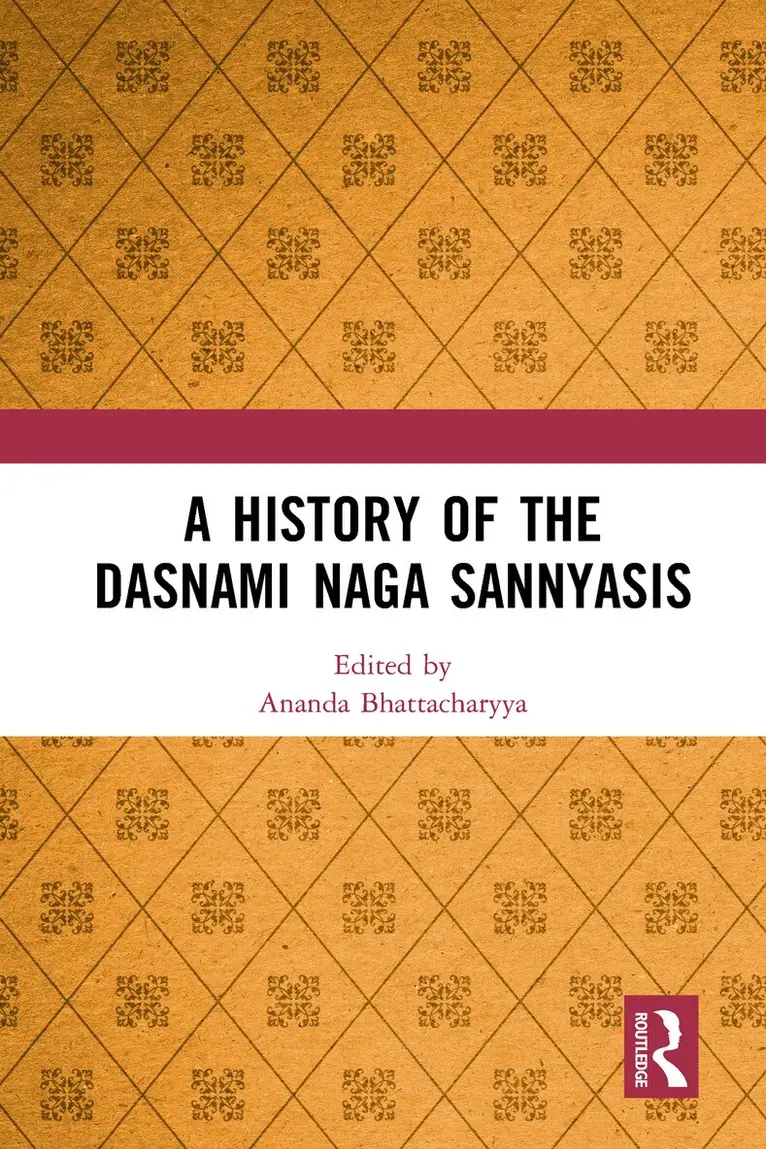
History of the Dasnami Naga Sannyasis
E-bok, 2018
814 kr
Lägg i varukorg
Organized Naga military activity originally flourished under state patronage. During the latter half of the sixteenth century and the early part of the seventeenth century, a number of bands of fighting ascetics formed into akharas with sectarian names and identities. The Dasnami Sannyasis …
History of the Dasnami Naga Sannyasis
E-bok, 2018
814 kr
Lägg i varukorg
Organized Naga military activity originally flourished under state patronage. During the latter half of the sixteenth century and the early part of the seventeenth century, a number of bands of fighting ascetics formed into akharas with sectarian names and identities. The Dasnami Sannyasis …
F.D. Ascoli
Early Revenue History of Bengal and The Fifth Report, 1812
E-bok, 2019
838 kr
Lägg i varukorg
Early Revenue History of Bengal and the Fifth Report, 1812 was the outcome of a series of four lectures delivered at the Dacca College by the distinguished Bengali civil servant, F.D. Ascoli. It embodies the text of the Fifth Report on the affairs of the East India Company by the Select Committee …
F.D. Ascoli
Early Revenue History of Bengal and The Fifth Report, 1812
E-bok, 2019
820 kr
Lägg i varukorg
Early Revenue History of Bengal and the Fifth Report, 1812 was the outcome of a series of four lectures delivered at the Dacca College by the distinguished Bengali civil servant, F.D. Ascoli. It embodies the text of the Fifth Report on the affairs of the East India Company by the Select Committee …
Frederick Eden Pargiter
A Revenue History of the Sundarbans from 1765 to 1870
E-bok, 2019
838 kr
Lägg i varukorg
The Sundarban stretches from the brackish waters of the broad Hooghly on the west, to the fresh waters of the still broader Meghna to the east; the turbid waters of the Bay of Bengal on its southern limits, to the zamindari or pargana lands on its northern extremity and includes in its southern …
Frederick Eden Pargiter
A Revenue History of the Sundarbans from 1765 to 1870
E-bok, 2019
838 kr
Lägg i varukorg
The Sundarban stretches from the brackish waters of the broad Hooghly on the west, to the fresh waters of the still broader Meghna to the east; the turbid waters of the Bay of Bengal on its southern limits, to the zamindari or pargana lands on its northern extremity and includes in its southern …
History of the Dasnami Naga Sannyasis
Häftad, 2024
711 kr
Lägg i varukorg
Organized Naga military activity originally flourished under state patronage. During the latter half of the sixteenth century and the early part of the seventeenth century, a number of bands of fighting ascetics formed into akharas with sectarian names and identities.The Dasnami Sannyasis …
Frederick Eden Pargiter
A Revenue History of the Sundarbans from 1765 to 1870
Häftad, 2024
711 kr
Lägg i varukorg
The Sundarban stretches from the brackish waters of the broad Hooghly on the west, to the fresh waters of the still broader Meghna to the east; the turbid waters of the Bay of Bengal on its southern limits, to the zamindari or pargana lands on its northern extremity and includes in its southern …
F.D. Ascoli
Early Revenue History of Bengal and The Fifth Report, 1812
Häftad, 2024
711 kr
Lägg i varukorg
Early Revenue History of Bengal and the Fifth Report, 1812 was the outcome of a series of four lectures delivered at the Dacca College by the distinguished Bengali civil servant, F.D. Ascoli. It embodies the text of the Fifth Report on the affairs of the East India Company by the Select Committee …
History of the Dasnami Naga Sannyasis
Inbunden, 2018
2824 kr
Lägg i varukorg
Organized Naga military activity originally flourished under state patronage. During the latter half of the sixteenth century and the early part of the seventeenth century, a number of bands of fighting ascetics formed into akharas with sectarian names and identities.The Dasnami Sannyasis …
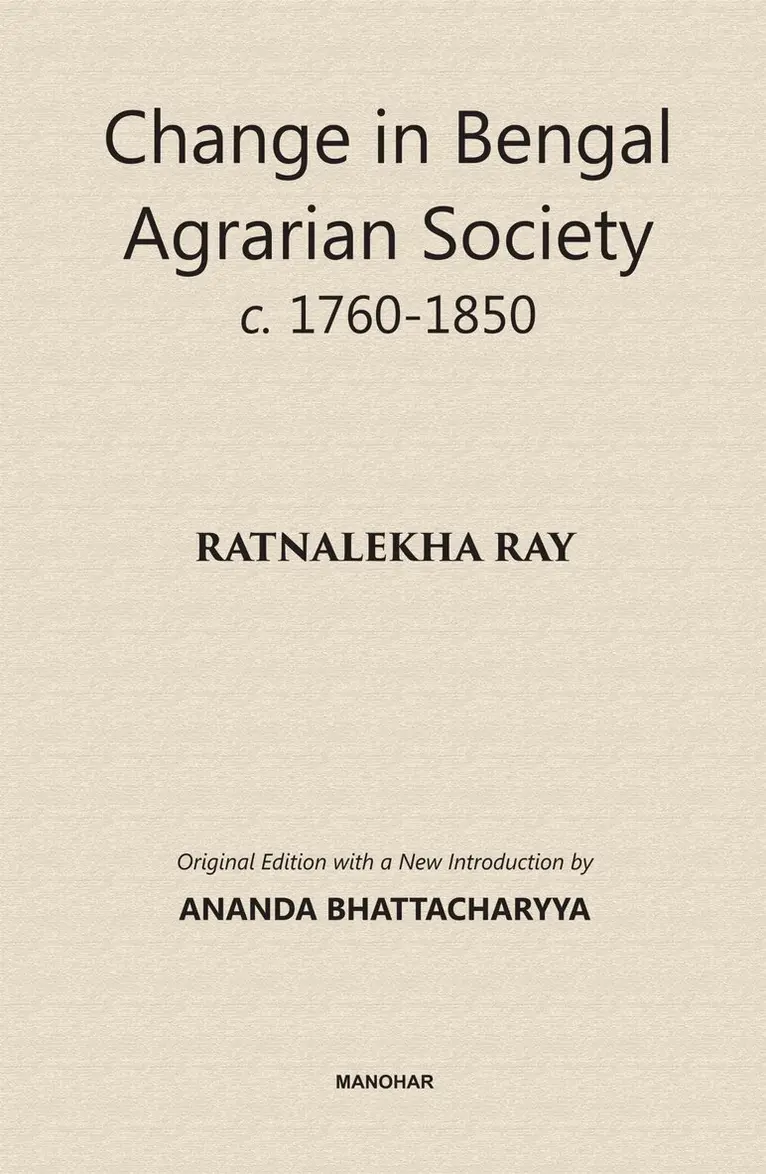
Change in Bengal Agrarian Society C. 1760-1850
Av Ratnalekha Ray, Ananda Bhattacharyya
Inbunden, 2024
1014 kr
Lägg i varukorg
Change in Bengal Agrarian Society c. 1760-1850seeks to trace the course of change in the agrarian society of Bengal under the rule of the East India Company with special reference to the impact of the Permanent Settlement introduced in Bengal and Bihar on 1 May 1793 and later in Madras and Varanasi …