Anatoly Reshetnikov – författare
Visar alla böcker från författaren . Handla med fri frakt och snabb leverans.
3 produkter
3 produkter
Häftad, Engelska, 2024
436 kr
Skickas inom 5-8 vardagar
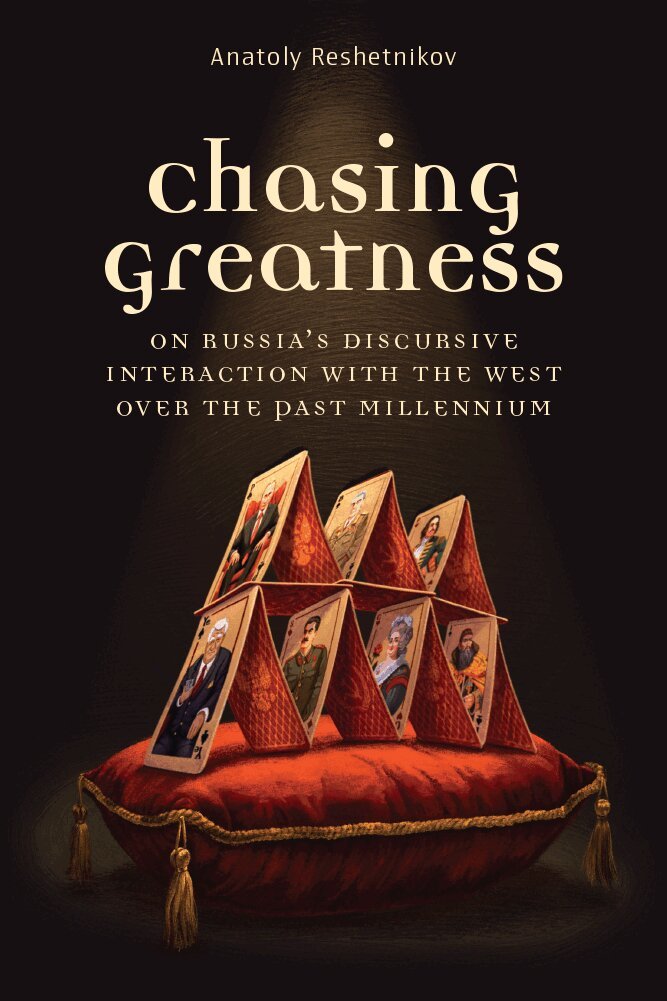
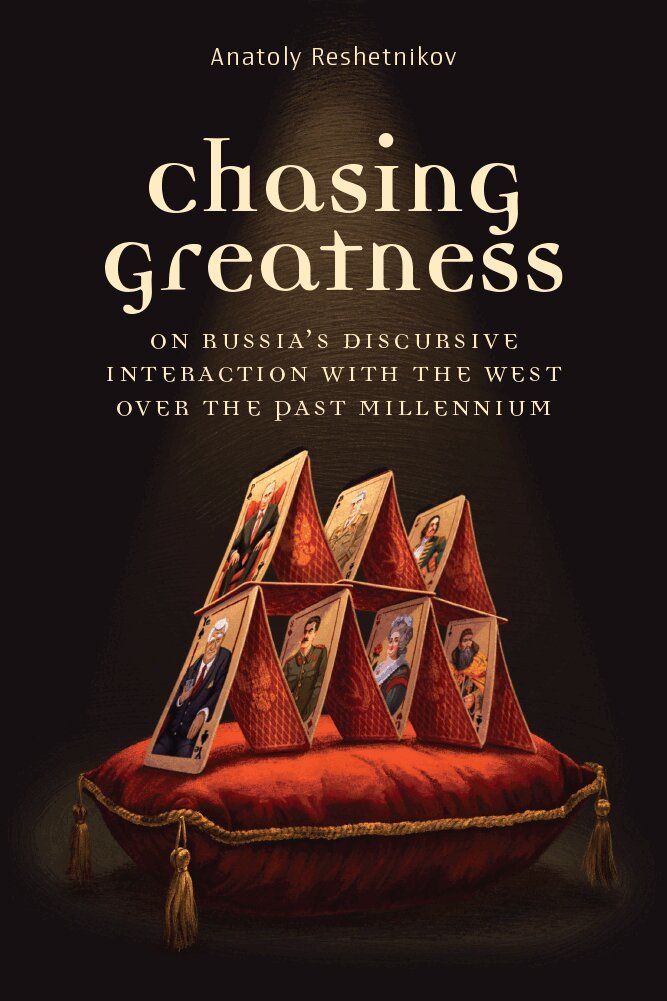
Over the last two decades, it has become clear that Russia insists on its great power status, even at considerable cost. Chasing Greatness provides an interpretive explanation of the tacit rules that shape Russia's great power identity today. Anatoly Reshetnikov argues that this never-ending chase for greatness is a result of how Russia and its predecessors—including the USSR, Russian Empire, Muscovy, and Kievan Rus’—historically interacted with its neighbors to the east, the south, and particularly the west. By analyzing an extensive amount of original source material, including primary sources that have not been previously translated into English, he is able to reconstruct a millennial history of the Russian concepts that express political greatness. He also traces numerous encounters between Russia and the West, as well as Russia’s troubled integration into the European society of states in the eighteenth and nineteenth centuries, to show how these concepts have affected Russia’s interaction with international society. Despite its substantive historical depth, Chasing Greatness is not a book of history. Rather, it is a synthesizing social science work inspired by the continental tradition of the critical history of modernity. As such, the book is more about the present than about the past. Its main aim is to expose and explain the rich conceptual baggage behind Russia’s unceasing great power rhetoric (domestic and international) and how this rhetoric drives the current international crises involving Russia.
Inbunden, Engelska, 2024
1 038 kr
Skickas inom 5-8 vardagar
Over the last two decades, it has become clear that Russia insists on its great power status, even at considerable cost. Chasing Greatness provides an interpretive explanation of the tacit rules that shape Russia's great power identity today. Anatoly Reshetnikov argues that this never-ending chase for greatness is a result of how Russia and its predecessors—including the USSR, Russian Empire, Muscovy, and Kievan Rus’—historically interacted with its neighbors to the east, the south, and particularly the west. By analyzing an extensive amount of original source material, including primary sources that have not been previously translated into English, he is able to reconstruct a millennial history of the Russian concepts that express political greatness. He also traces numerous encounters between Russia and the West, as well as Russia’s troubled integration into the European society of states in the eighteenth and nineteenth centuries, to show how these concepts have affected Russia’s interaction with international society. Despite its substantive historical depth, Chasing Greatness is not a book of history. Rather, it is a synthesizing social science work inspired by the continental tradition of the critical history of modernity. As such, the book is more about the present than about the past. Its main aim is to expose and explain the rich conceptual baggage behind Russia’s unceasing great power rhetoric (domestic and international) and how this rhetoric drives the current international crises involving Russia.
E-bok
PDF, Engelska, 2010240 kr
Läs direkt efter köp
Master's Thesis from the year 2010 in the subject Politics - Region: Russia, grade: A-, Central European University Budapest, language: English, abstract: The problem of political identity is one of the most topical issues in constructivist IR theory. The understanding of identity construction as well as the adequate interpretation of its foreign policy implications can help explain the meanings behind the actions of major international actors. The work deals with the problem of political identity in contemporary Russia, by engaging with and extending the temporal scope of the constructivist analysis, conducted by Ted Hopf in his book Social Construction of International Politics. It suggests that the great projects politics of contemporary Russia, which is linked to the specificity of its political identity and seems to be similar to that of the late-Soviet period, can, in fact, be better understood, if another work on Russian identity (The Ethics of Postcommunism: History and Social Praxis in Russia by Sergei Prozorov) is also taken into account. Hopf's analysis, while providing a valuable theoretical framework and linking the state's identity to the great power status, does not trace the evolution of the latter status and confines itself to two years of Russia's development, namely, 1955 and 1999. Prozorov's book, while thoroughly analyzing the identity of contemporary Russian state, is limited within the domestic realm and fails to address the idea of great power, which Hopf believes to be an integral part of Russian political discourse and which is possible to interpret, only if the analysis extends beyond national borders. The research incorporates Prozorov's theoretical contribution into the framework of Hopf, thus merging the mentioned approaches and making them applicable to the contemporary Russian condition, both domestically and within IR.