Anatoly Yatsimirsky – författare
Visar alla böcker från författaren Anatoly Yatsimirsky. Handla med fri frakt och snabb leverans.
3 produkter
3 produkter
Häftad, Engelska, 1999
1 662 kr
Skickas inom 5-8 vardagar
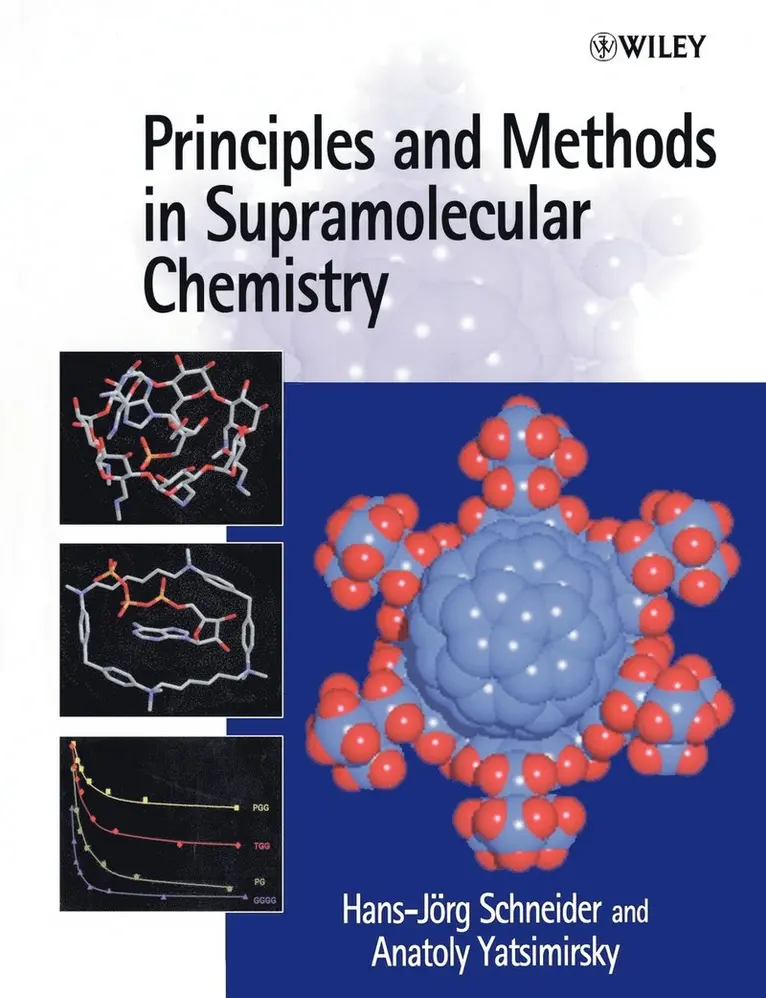
Supramolecular chemistry is one of the most actively pursued fields of science. Its implications reach from molecular recognition in synthetic and natural complexes to exciting new applications in chemical technologies, materials, and biological and medical science. Principles and Methods in Supramolecular Chemistry gives a systematic and concise overview of this diverse subject. Particular emphasis is given to the physical principles and methods which are important in the design, characterization, and application of supramolecular systems. Features that make this monograph essential reading for graduates and researchers in this area include:* A comprehensive overview of non-covalent interactions in supramolecular complexes* A guide to characterizing such complexes by physical methods* Selected applications of synthetic supramolecular systems* Question and answer sections* Illustrations from the Author's webpage which compliment the book.
E-bok
PDF, Engelska, 20102 689 kr
Läs direkt efter köp
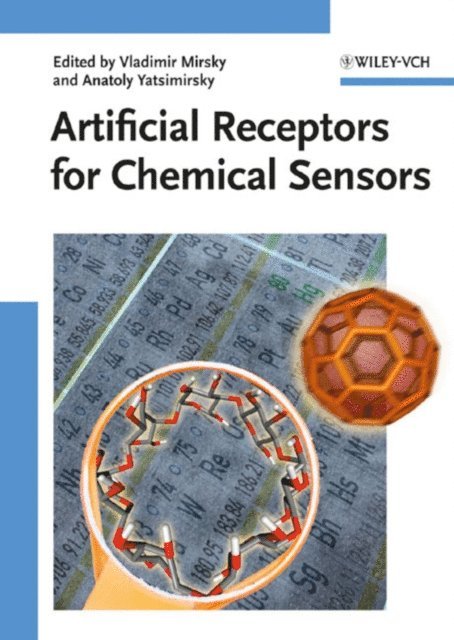
The first to provide systematically organized information on all three important aspects of artificial receptor design, this book brings together knowledge on an exceptionally hot and multidisciplinary field of research. Strong emphasis is placed on the methodology for discovering artificial receptors, with both definitions for chemosensitivity as well as experimental setups supplied. There follows coverage of numerous classes of artificial receptors, including synthesis, immobilization on surfaces, and quantitative data on properties. The third part of the book focuses on receptor arrays for artificial nose and tongue applications and the whole is rounded off with an outlook and an appendix with all relevant quantitative data on artificial receptors.
E-bok
Engelska, 20102 689 kr
Läs direkt efter köp
The first to provide systematically organized information on all three important aspects of artificial receptor design, this book brings together knowledge on an exceptionally hot and multidisciplinary field of research. Strong emphasis is placed on the methodology for discovering artificial receptors, with both definitions for chemosensitivity as well as experimental setups supplied. There follows coverage of numerous classes of artificial receptors, including synthesis, immobilization on surfaces, and quantitative data on properties. The third part of the book focuses on receptor arrays for artificial nose and tongue applications and the whole is rounded off with an outlook and an appendix with all relevant quantitative data on artificial receptors.