
AndrA!s SajA³ – författare
Visar alla böcker från författaren AndrA!s SajA³. Handla med fri frakt och snabb leverans.
3 produkter
3 produkter
E-bok
PDF, Engelska, 2017411 kr
Läs direkt efter köp
Constitutional democracy is more fragile and less ''natural'' than autocracy. While this may sound surprising to complacent democrats, more and more people find autocracy attractive, because they were never forced to understand or imagine what despotism is. Generations who have lived in stable democracies with the promise that their enviable world will become the global ''normal'' find government rule without constitutionalism difficult to conceive. It is difficult, butnever too late, to see one''s own constitutional system as something that is fragile, or up for grabs and in need of constant attention and care. In this book, Andras Sajo and Renata Uitz explore how constitutionalism protects us and how it might be undone by its own means.Sajo and Uitz''s intellectual history of the constitutional ideal is rich in contextual detail and informed by case studies that give an overview of both the theory and practice of constitutionalism worldwide. Classic constitutions are contrasted with twentieth-century and contemporary endeavours, and experimentations in checks and balances. Their endeavour is neither apologetic (and certainly not celebratory), nor purely defensive: this book demonstrates why constitutionalism should continue tomatter. Between the rise of populist, anti-constitutional sentiment and the normalization of the apparatus of counter-terrorism, it is imperative that the political communities who seek to sustain democracy as freedom understand the importance of constitutionalism. This book is essential reading forstudents of law and general readers without prior knowledge of the field, as well as those in politics who believe they know how government works. It shows what is at stake in the debate on constitutionalism.
E-bok
PDF, Engelska, 20121 896 kr
Läs direkt efter köp
The field of comparative constitutional law has grown immensely over the past couple of decades. Once a minor and obscure adjunct to the field of domestic constitutional law, comparative constitutional law has now moved front and centre. Driven by the global spread of democratic government and the expansion of international human rights law, the prominence and visibility of the field, among judges, politicians, and scholars has grown exponentially. Even in the United States, where domestic constitutional exclusivism has traditionally held a firm grip, use of comparative constitutional materials has become the subject of a lively and much publicized controversy among various justices of the U.S. Supreme Court.The trend towards harmonization and international borrowing has been controversial. Whereas it seems fair to assume that there ought to be great convergence among industrialized democracies over the uses and functions of commercial contracts, that seems far from the case in constitutional law. Can a parliamentary democracy be compared to a presidential one? A federal republic to a unitary one? Moreover, what about differences in ideology or national identity? Can constitutional rights deployed in a libertarian context be profitably compared to those at work in a social welfare context? Is it perilous to compare minority rights in a multi-ethnic state to those in its ethnically homogeneous counterparts? These controversies form the background to the field of comparative constitutional law, challenging not only legal scholars, but also those in other fields, such as philosophy and political theory.Providing the first single-volume, comprehensive reference resource, the ''Oxford Handbook of Comparative Constitutional Law'' will be an essential road map to the field for all those working within it, or encountering it for the first time. Leading experts in the field examine the history and methodology of the discipline, the central concepts of constitutional law, constitutional processes, and institutions - from legislative reform to judicial interpretation, rights, and emerging trends.
Häftad, Engelska, 2019
486 kr
Skickas inom 7-10 vardagar
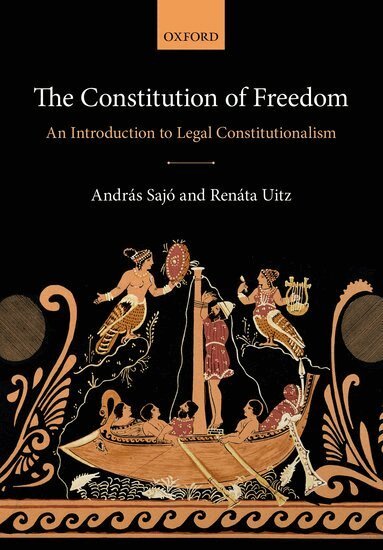
Constitutional democracy is more fragile and less 'natural' than autocracy. While this may sound surprising to complacent democrats, more and more people find autocracy attractive, because they were never forced to understand or imagine what despotism is. Generations who have lived in stable democracies with the promise that their enviable world will become the global 'normal' find government rule without constitutionalism difficult to conceive. It is difficult, but never too late, to see one's own constitutional system as something that is fragile, or up for grabs and in need of constant attention and care. In this book, Andras Sajo and Renata Uitz explore how constitutionalism protects us and how it might be undone by its own means.Sajo and Uitz's intellectual history of the constitutional ideal is rich in contextual detail and informed by case studies that give an overview of both the theory and practice of constitutionalism worldwide. Classic constitutions are contrasted with twentieth-century and contemporary endeavours, and experimentations in checks and balances. Their endeavour is neither apologetic (and certainly not celebratory), nor purely defensive: this book demonstrates why constitutionalism should continue to matter. Between the rise of populist, anti-constitutional sentiment and the normalization of the apparatus of counter-terrorism, it is imperative that the political communities who seek to sustain democracy as freedom understand the importance of constitutionalism. This book is essential reading for students of law and general readers without prior knowledge of the field, as well as those in politics who believe they know how government works. It shows what is at stake in the debate on constitutionalism.