André Laks – författare
Visar alla böcker från författaren André Laks. Handla med fri frakt och snabb leverans.
22 produkter
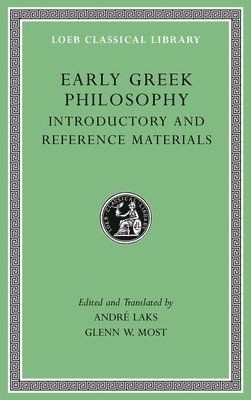
Early Greek Philosophy, Volume I
Introductory and Reference Materials
Av André Laks
Inbunden, 2016
323 kr
Lägg i varukorg
A major new edition of the so-called Presocratics.The fragments and testimonia of the early Greek philosophers (often labeled the ‘Presocratics’) have always been not only a fundamental source for understanding archaic Greek culture and ancient philosophy but also a perennially fresh resource that …
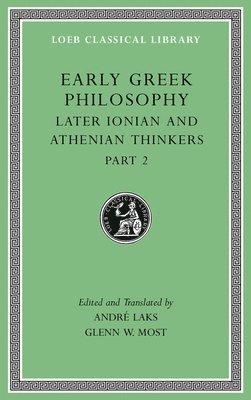
Early Greek Philosophy, Volume VII
Later Ionian and Athenian Thinkers, Part 2
Av André Laks, Glenn W. Most m. fl.
Inbunden, 2016
417 kr
Lägg i varukorg
A major new edition of the so-called Presocratics.The fragments and testimonia of the early Greek philosophers (often labeled the ‘Presocratics’) have always been not only a fundamental source for understanding archaic Greek culture and ancient philosophy but also a perennially fresh resource that …
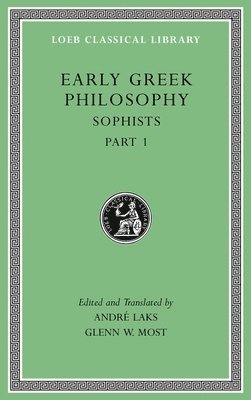
Early Greek Philosophy, Volume VIII
Sophists, Part 1
Av André Laks, Glenn W. Most m. fl.
Inbunden, 2016
373 kr
Lägg i varukorg
A major new edition of the so-called Presocratics.The fragments and testimonia of the early Greek philosophers (often labeled the ‘Presocratics’) have always been not only a fundamental source for understanding archaic Greek culture and ancient philosophy but also a perennially fresh resource that …
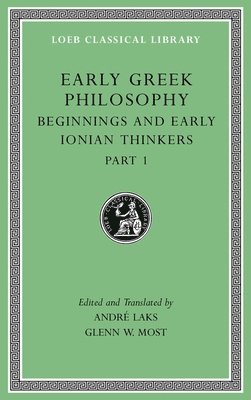
Early Greek Philosophy, Volume II
Beginnings and Early Ionian Thinkers, Part 1
Av André Laks
Inbunden, 2016
325 kr
Lägg i varukorg
A major new edition of the so-called Presocratics.The fragments and testimonia of the early Greek philosophers (often labeled the ‘Presocratics’) have always been not only a fundamental source for understanding archaic Greek culture and ancient philosophy but also a perennially fresh resource that …
Early Greek Philosophy, Volume III
Early Ionian Thinkers, Part 2
Av André Laks
Inbunden, 2016
325 kr
Lägg i varukorg
A major new edition of the so-called Presocratics.The fragments and testimonia of the early Greek philosophers (often labeled the ‘Presocratics’) have always been not only a fundamental source for understanding archaic Greek culture and ancient philosophy but also a perennially fresh resource that …
Aristotle's Metaphysics Beta
Symposium Aristotelicum
Av Andre Laks, Michel Crubellier
E-bok, 2009
1302 kr
Lägg i varukorg
Nine leading scholars of ancient philosophy from Europe, the UK, and North America offer a systematic study of Book Beta of Aristotle''s Metaphysics . The work takes the form of a series of aporiai or ''difficulties'' which Aristotle presents as necessary points of engagement for those who wish to …
Aristotle's Metaphysics Beta
Symposium Aristotelicum
Av Andre Laks, Michel Crubellier
E-bok, 2009
1302 kr
Lägg i varukorg
Nine leading scholars of ancient philosophy from Europe, the UK, and North America offer a systematic study of Book Beta of Aristotle''s Metaphysics . The work takes the form of a series of aporiai or ''difficulties'' which Aristotle presents as necessary points of engagement for those who wish to …
Studies on the Derveni Papyrus
Av Laks/Most, André Laks m. fl.
Inbunden, 1997
3074 kr
Lägg i varukorg
The Derveni papyrus is the oldest literary papyrus ever found, and one of the very few from Greece itself, which makes it one of the most interesting new texts from the ancient Greek world to have been discovered this century. The eschatological doctrines and an allegorical commentary on an Orphic …
Aristotle's Metaphysics Beta
Symposium Aristotelicum
Av Michel Crubellier, André Laks
Inbunden, 2009
2031 kr
Lägg i varukorg
Nine leading scholars of ancient philosophy from Europe, the UK, and North America offer a systematic study of Book Beta of Aristotle's Metaphysics. The work takes the form of a series of aporiai or 'difficulties' which Aristotle presents as necessary points of engagement for those who wish to …
Justice and Generosity
Studies in Hellenistic Social and Political Philosophy - Proceedings of the Sixth Symposium Hellenisticum
Av Andre Laks, Malcolm Schofield
Häftad, 2007
732 kr
Lägg i varukorg
Hegel's often-echoed verdict on the apolitical character of philosophy in the Hellenistic age is challenged in this collection of essays, originally presented at the sixth meeting of the Symposium Hellenisticum. An international team of leading scholars reveals a vigorous intellectual scene of …
Justice and Generosity
Studies in Hellenistic Social and Political Philosophy - Proceedings of the Sixth Symposium Hellenisticum
Av Andre Laks, Malcolm Schofield
Inbunden, 1995
1481 kr
Lägg i varukorg
Hegel's often-echoed verdict on the apolitical character of philosophy in the Hellenistic age is challenged in this collection of essays, originally presented at the sixth meeting of the Symposium Hellenisticum. An international team of leading scholars reveals a vigorous intellectual scene of …
Early Greek Philosophy, Volume IV
Western Greek Thinkers, Part 1
Av André Laks
Inbunden, 2016
325 kr
Lägg i varukorg
A major new edition of the so-called Presocratics.The fragments and testimonia of the early Greek philosophers (often labeled the ‘Presocratics’) have always been not only a fundamental source for understanding archaic Greek culture and ancient philosophy but also a perennially fresh resource that …
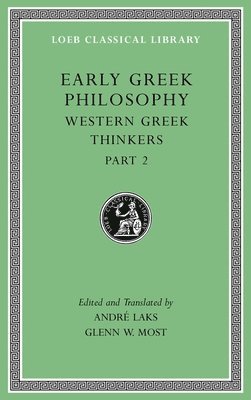
Early Greek Philosophy, Volume V
Western Greek Thinkers, Part 2
Av André Laks, Glenn W. Most m. fl.
Inbunden, 2016
373 kr
Lägg i varukorg
A major new edition of the so-called Presocratics.The fragments and testimonia of the early Greek philosophers (often labeled the ‘Presocratics’) have always been not only a fundamental source for understanding archaic Greek culture and ancient philosophy but also a perennially fresh resource that …
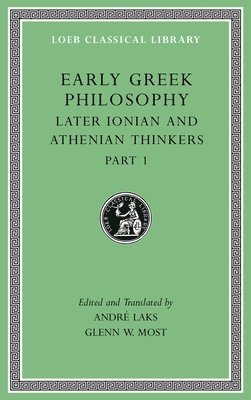
Early Greek Philosophy, Volume VI
Later Ionian and Athenian Thinkers, Part 1
Av André Laks, Glenn W. Most m. fl.
Inbunden, 2016
373 kr
Lägg i varukorg
A major new edition of the so-called Presocratics.The fragments and testimonia of the early Greek philosophers (often labeled the ‘Presocratics’) have always been not only a fundamental source for understanding archaic Greek culture and ancient philosophy but also a perennially fresh resource that …
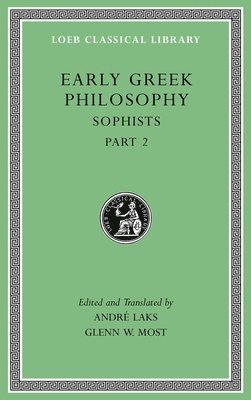
Early Greek Philosophy, Volume IX
Sophists, Part 2
Av André Laks, Glenn W. Most m. fl.
Inbunden, 2016
373 kr
Lägg i varukorg
A major new edition of the so-called Presocratics.The fragments and testimonia of the early Greek philosophers (often labeled the ‘Presocratics’) have always been not only a fundamental source for understanding archaic Greek culture and ancient philosophy but also a perennially fresh resource that …
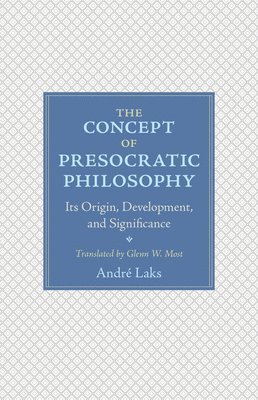
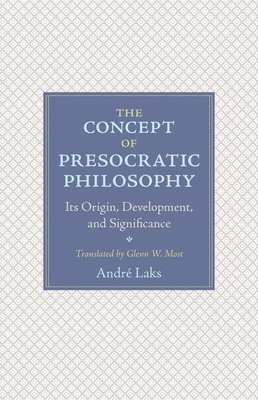
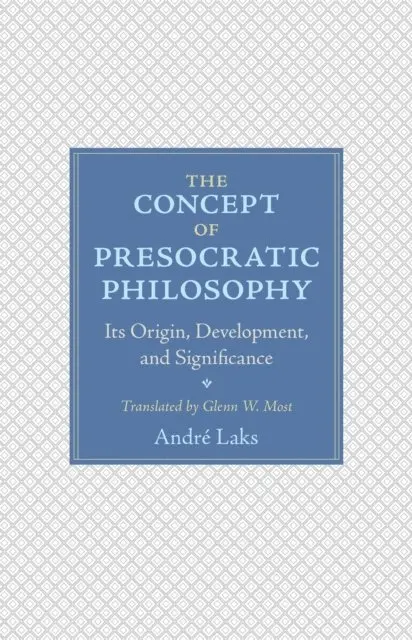
Concept of Presocratic Philosophy
Its Origin, Development, and Significance
Av André Laks
Inbunden, 2018
460 kr
Lägg i varukorg
When we talk about Presocratic philosophy, we are speaking about the origins of Greek philosophy and Western rationality itself. But what exactly does it mean to talk about "Presocratic philosophy" in the first place? How did early Greek thinkers come to be considered collectively as Presocratic …
Concept of Presocratic Philosophy
Its Origin, Development, and Significance
Av André Laks
Häftad, 2019
246 kr
Lägg i varukorg
When we talk about Presocratic philosophy, we are speaking about the origins of Greek philosophy and Western rationality itself. But what exactly does it mean to talk about “Presocratic philosophy” in the first place? How did early Greek thinkers come to be considered collectively as Presocratic …
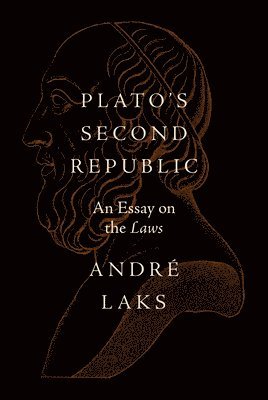
Plato's Second Republic
An Essay on the Laws
Av André Laks
Inbunden, 2022
341 kr
Lägg i varukorg
An argument for why Plato’s Laws can be considered his most important political dialogueIn Plato's Second Republic, André Laks argues that the Laws, Plato’s last and longest dialogue, is also his most important political work, surpassing the Republic in historical relevance. Laks offers a thorough …
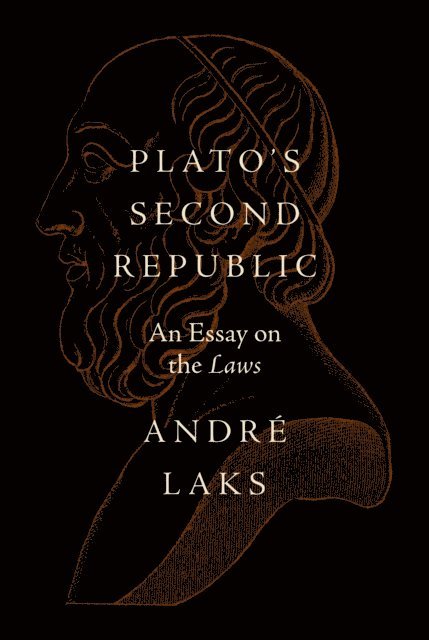
Plato's Second Republic
An Essay on the Laws
Av Andre Laks
E-bok, 2022
286 kr
Lägg i varukorg
An argument for why Plato’s Laws can be considered his most important political dialogue In Plato''s Second Republic, André Laks argues that the Laws , Plato’s last and longest dialogue, is also his most important political work, surpassing the Republic in historical relevance. Laks offers a …
Plato's Second Republic
An Essay on the Laws
Av André Laks
Häftad, 2025
221 kr
Lägg i varukorg
An argument for why Plato’s Laws can be considered his most important political dialogueIn Plato's Second Republic, André Laks argues that the Laws, Plato’s last and longest dialogue, is also his most important political work, surpassing the Republic in historical relevance. Laks offers a thorough …
Concept of Presocratic Philosophy
Its Origin, Development, and Significance
Av Andre Laks
E-bok, 2018
314 kr
Lägg i varukorg
When we talk about Presocratic philosophy, we are speaking about the origins of Greek philosophy and Western rationality itself. But what exactly does it mean to talk about “Presocratic philosophy” in the first place? How did early Greek thinkers come to be considered collectively as Presocratic …