Andre Weil - Böcker
Visar alla böcker från författaren Andre Weil. Handla med fri frakt och snabb leverans.
13 produkter
13 produkter
905 kr
Skickas inom 10-15 vardagar
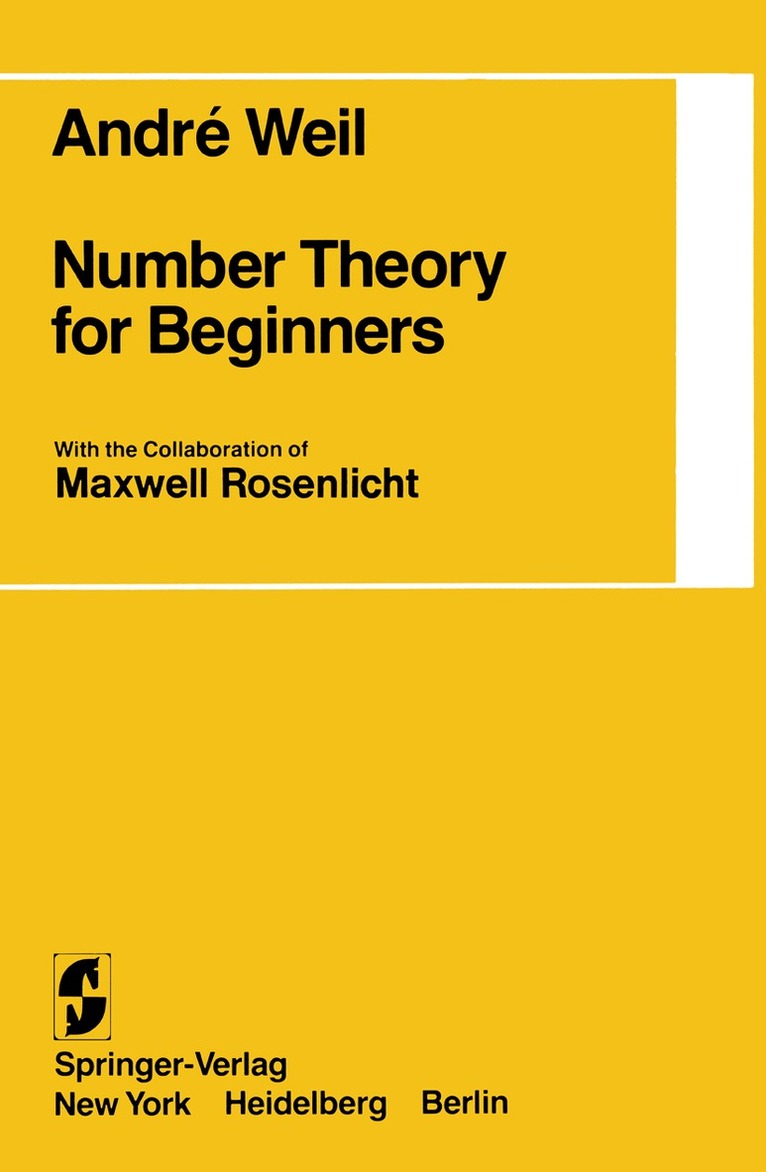
In the summer quarter of 1949, I taught a ten-weeks introductory course on number theory at the University of Chicago; it was announced in the catalogue as "Alge bra 251". What made it possible, in the form which I had planned for it, was the fact that Max Rosenlicht, now of the University of California at Berkeley, was then my assistant. According to his recollection, "this was the first and last time, in the his tory of the Chicago department of mathematics, that an assistant worked for his salary". The course consisted of two lectures a week, supplemented by a weekly "laboratory period" where students were given exercises which they were. asked to solve under Max's supervision and (when necessary) with his help. This idea was borrowed from the "Praktikum" of German universi ties. Being alien to the local tradition, it did not work out as well as I had hoped, and student attendance at the problem sessions so on became desultory. v vi Weekly notes were written up by Max Rosenlicht and issued week by week to the students. Rather than a literal reproduction of the course, they should be regarded as its skeleton; they were supplemented by references to stan dard text-books on algebra. Max also contributed by far the larger part of the exercises. None of ,this was meant for publication.
1 275 kr
Skickas inom 10-15 vardagar
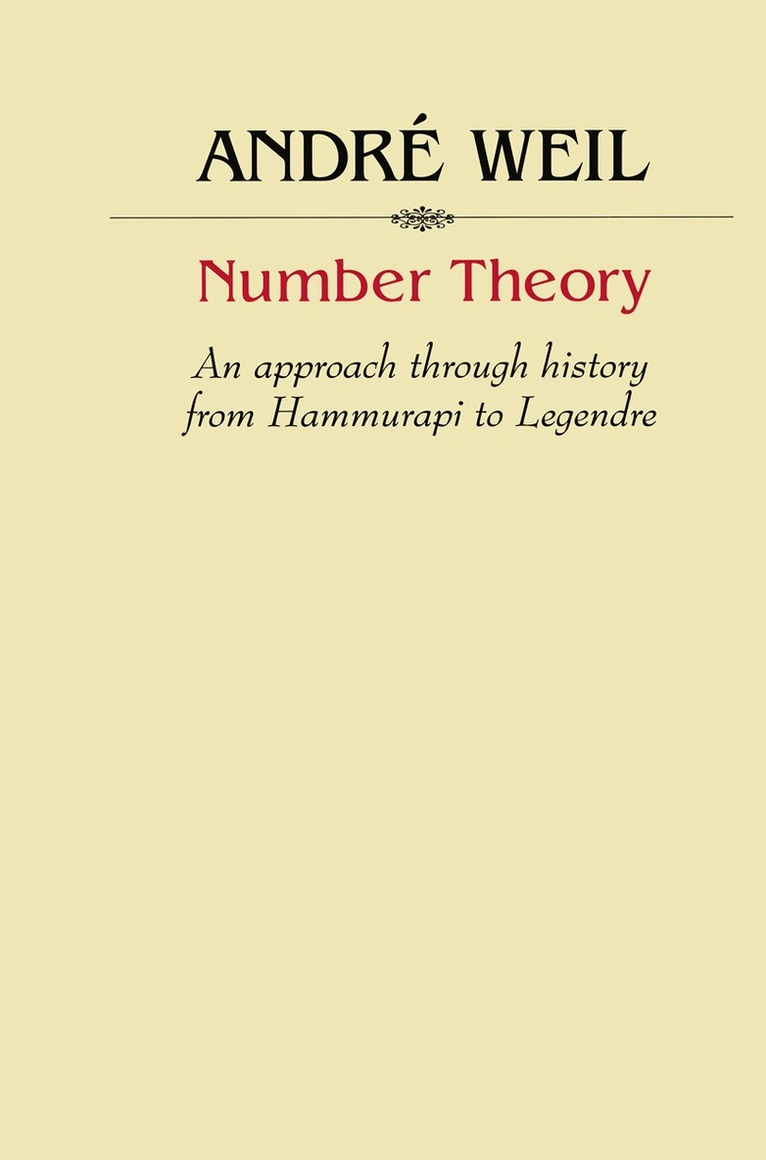
Number Theory or arithmetic, as some prefer to call it, is the oldest, purest, liveliest, most elementary yet sophisticated field of mathematics. It is no coincidence that the fundamental science of numbers has come to be known as the "Queen of Mathematics." Indeed some of the most complex conventions of the mathematical mind have evolved from the study of basic problems of number theory.André Weil, one of the outstanding contributors to number theory, has written an historical exposition of this subject; his study examines texts that span roughly thirty-six centuries of arithmetical work – from an Old Babylonian tablet, datable to the time of Hammurapi to Legendre’s Essai sur la Théorie des Nombres (1798). Motivated by a desire to present the substance of his field to the educated reader, Weil employs an historical approach in the analysis of problems and evolving methods of number theory and their significance within mathematics. In the course of his study Weil accompanies the reader into the workshops of four major authors of modern number theory (Fermat, Euler, Lagrange and Legendre) and there he conducts a detailed and critical examination of their work. Enriched by a broad coverage of intellectual history, Number Theory represents a major contribution to the understanding of our cultural heritage.
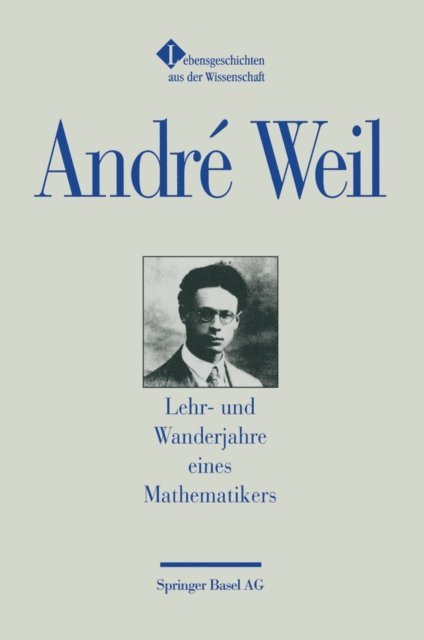
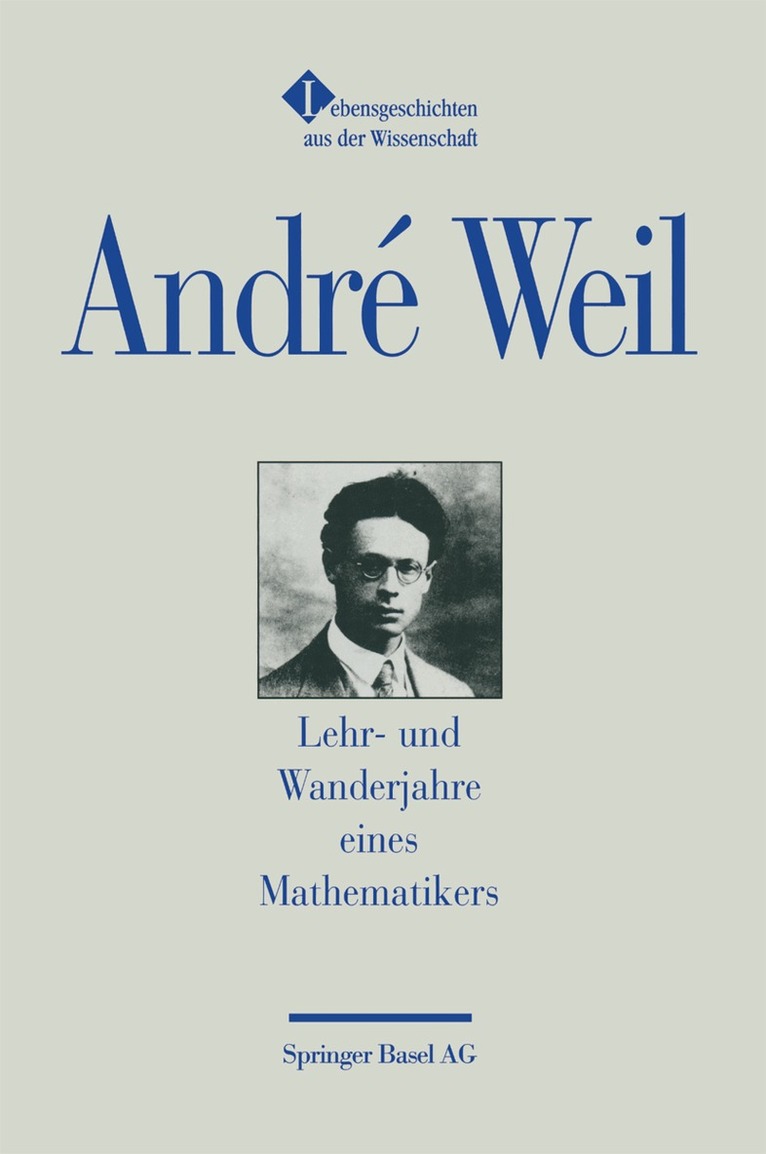
Lehr- und Wanderjahre eines Mathematikers
Aus dem Französischen von Theresia Übelhör
Häftad, Tyska, 2014
550 kr
Skickas inom 10-15 vardagar
Mein Leben, oder zumindest das, was diesen Namen verdient -ein außer gewöhnlich glückliches Leben mit einigen Schicksalsschlägen -erstreckte sich auf die Zeit zwischen dem 6. Mai 1906, dem Tag meiner Geburt, und dem 24. Mai 1986, dem Todestag meiner Frau und Gefährtin Eveline. Wenn auf diesen Seiten, die ihr gewidmet sind, von meiner Frau recht wenig die Rede sein wird, heißt das nicht, daß sie in meinem Leben und in meinen Gedanken einen geringen Platz eingenommen hätte. Sie war im Gegenteil, beinahe vom Tag unserer ersten Begegnung an, so eng damit verwoben, daß von mir oder von ihr zu sprechen ein und dasselbe ist. Ihre Anwesenheit beziehungsweise ihre Abwesenheit bestimmte die Textur meines ganzen Lebens. Was könnte ich anderes dazu sagen, als daß unsere Ehe eine von jenen war, die La Rochefoucauld Lügen strafen? »Fulsere vere candidi mihi soles . . . . « Ebenso wird meine Schwester kaum erwähnt werden. Es ist schon lange her, daß ich meine Erinnerungen an sie Simone Petrement mitgeteilt habe, die sie in ihre gute Biographie La vie de Simone Weil einfließen ließ, wo man viele Einzelheiten über unsere gemeinsame Kindheit erfahren kann, und es wäre unnötig, dies hier zu wiederholen. Als Kinder waren wir unzertrennlich, aber ich war der große Bruder und sie die kleine Schwester. Später waren wir selten zusammen, und meist sprachen wir in scherzhaftem Ton miteinander, denn sie hatte ein fröhliches und humorvolles Naturell, wie alle, die sie kannten, bestätigt haben.
1 275 kr
Skickas inom 10-15 vardagar
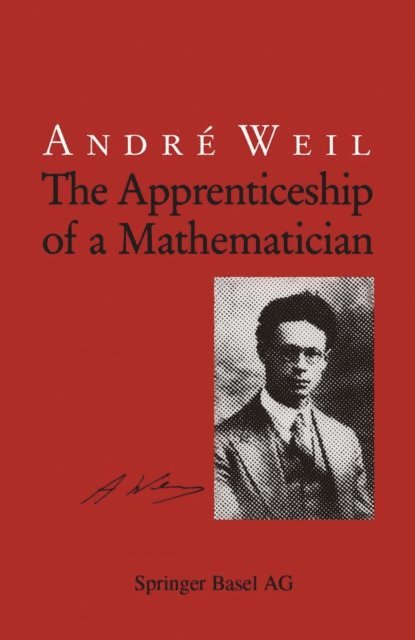
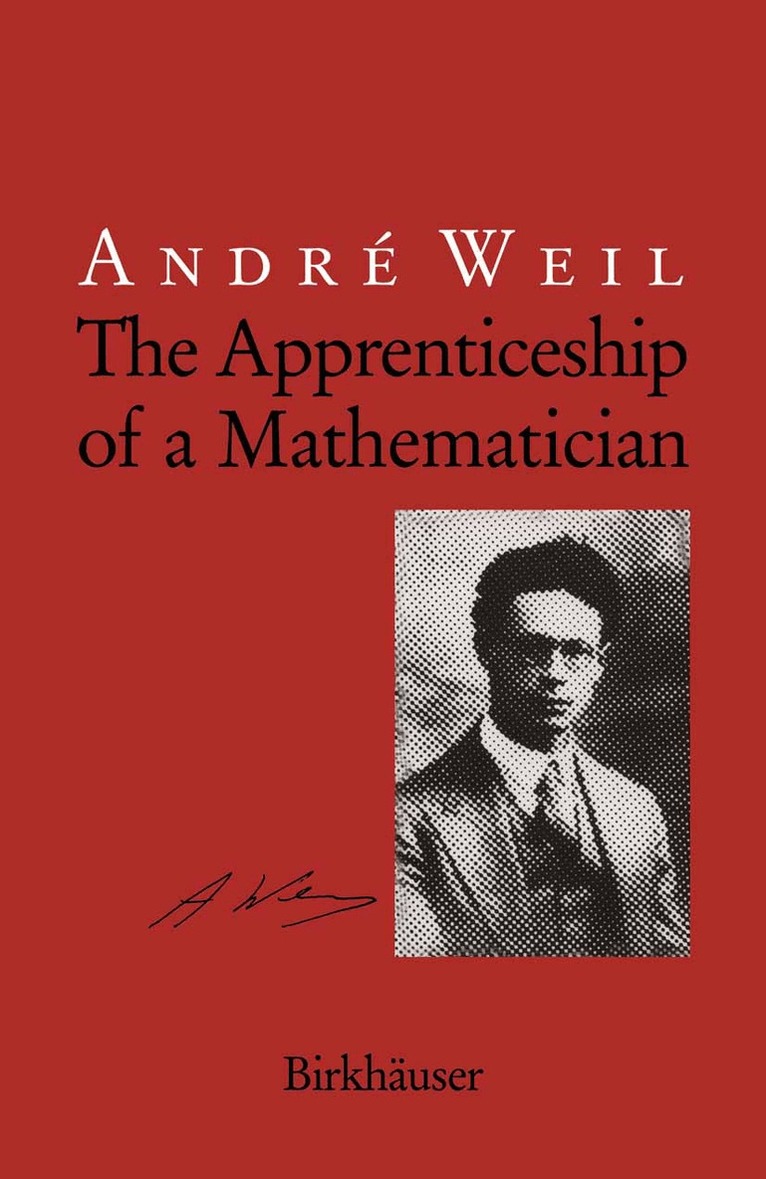
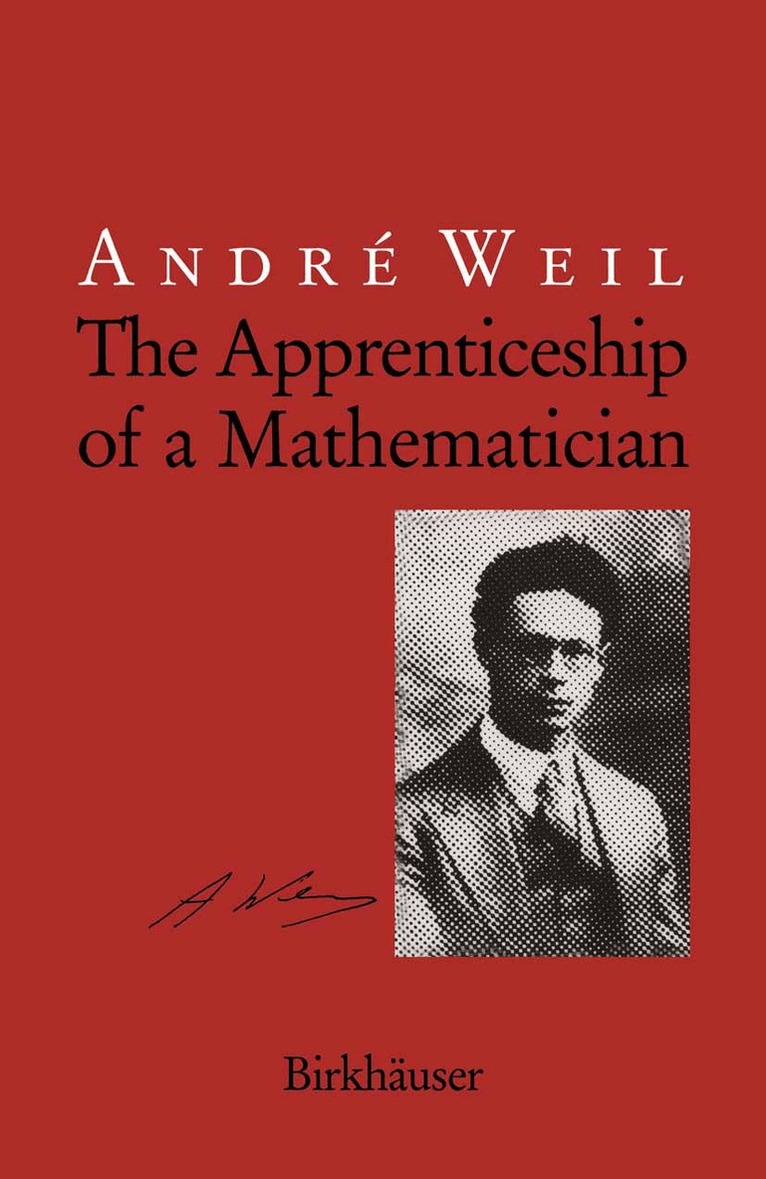
"Extremely readable recollections of the author... A rare testimony of a period of the history of 20th century mathematics. Includes very interesting recollections on the author's participation in the formation of the Bourbaki Group, tells of his meetings and conversations with leading mathematicians, reflects his views on mathematics. The book describes an extraordinary career of an exceptional man and mathematicians. Strongly recommended to specialists as well as to the general public."EMS Newsletter (1992)"This excellent book is the English edition of the author's autobiography. … This very enjoyable reading is recommended to all mathematicians."Acta Scientiarum Mathematicarum (1992)
747 kr
Skickas inom 7-10 vardagar
at that time, an excellent set of notes was prepared by David Cantor, and it was originally my intention to make these notes available to the mathematical public with only quite minor changes.
694 kr
Skickas inom 10-15 vardagar
From the reviews:"…All of Weil’s works except for books and lecture notes are compiled here, in strict chronological order for easy reference.But the value … goes beyond the convenience of easy reference and accessibility. In the first place, these volumes contain several essays, letters, and addresses which were either published in obscure places (…) or not published at all. Even more valuable are the lengthy commentaries on many of the articles, written by Weil himself. These remarks serve as a guide, helping the reader place the papers in their proper context. Moreover, we have the rare opportunity of seeing a great mathematician in his later life reflecting on the development of his ideas and those of his contemporaries at various stages of his career.The sheer number of mathematical papers of fundamental significance would earn Weil’s Collected Papers a place in the library of a mathematician with an interest in number theory, algebraic geometry, representations theory, or related areas. The additional import of the mathematical history and culture in these volumes makes them even more essential." Neal Koblitz in Mathematical Reviews"…André Weil’s mathematical work has deeply influenced the mathematics of the twentieth century and the monumental (...) "Collected papers" emphasize this influence." O. Fomenko in Zentralblatt der Mathematik
694 kr
Skickas inom 10-15 vardagar
From the reviews"All of Weil’s works except for books and lecture notes are compiled here, in strict chronological order for easy reference.But the value … goes beyond the convenience of easy reference and accessibility. In the first place, these volumes contain several essays, letters, and addresses which were either published in obscure places (…) or not published at all. Even more valuable are the lengthy commentaries on many of the articles, written by Weil himself. These remarks serve as a guide, helping the reader place the papers in their proper context. Moreover, we have the rare opportunity of seeing a great mathematician in his later life reflecting on the development of his ideas and those of his contemporaries at various stages of his career.The sheer number of mathematical papers of fundamental significance would earn Weil’s Collected Papers a place in the library of a mathematician with an interest in number theory, algebraic geometry, representations theory, or related areas. The additional import of the mathematical history and culture in these volumes makes them even more essential." Neal Koblitz in Mathematical Reviews"André Weil’s mathematical work has deeply influenced the mathematics of the twentieth century and the monumental (...) "Collected papers" emphasize this influence." O. Fomenko in Zentralblatt der Mathematik
694 kr
Skickas inom 10-15 vardagar
From the reviews"…All of Weil’s works except for books and lecture notes are compiled here, in strict chronological order for easy reference.But the value … goes beyond the convenience of easy reference and accessibility. In the first place, these volumes contain several essays, letters, and addresses which were either published in obscure places (…) or not published at all. Even more valuable are the lengthy commentaries on many of the articles, written by Weil himself. These remarks serve as a guide, helping the reader place the papers in their proper context. Moreover, we have the rare opportunity of seeing a great mathematician in his later life reflecting on the development of his ideas and those of his contemporaries at various stages of his career.The sheer number of mathematical papers of fundamental significance would earn Weil’s Collected Papers a place in the library of a mathematician with an interest in number theory, algebraic geometry, representations theory, or related areas. The additional import of the mathematical history and culture in these volumes makes them even more essential." Neal Koblitz in Mathematical Reviews"…André Weil’s mathematical work has deeply influenced the mathematics of the twentieth century and the monumental (...) "Collected papers" emphasize this influence." O. Fomenko in Zentralblatt der Mathematik
694 kr
Skickas inom 10-15 vardagar
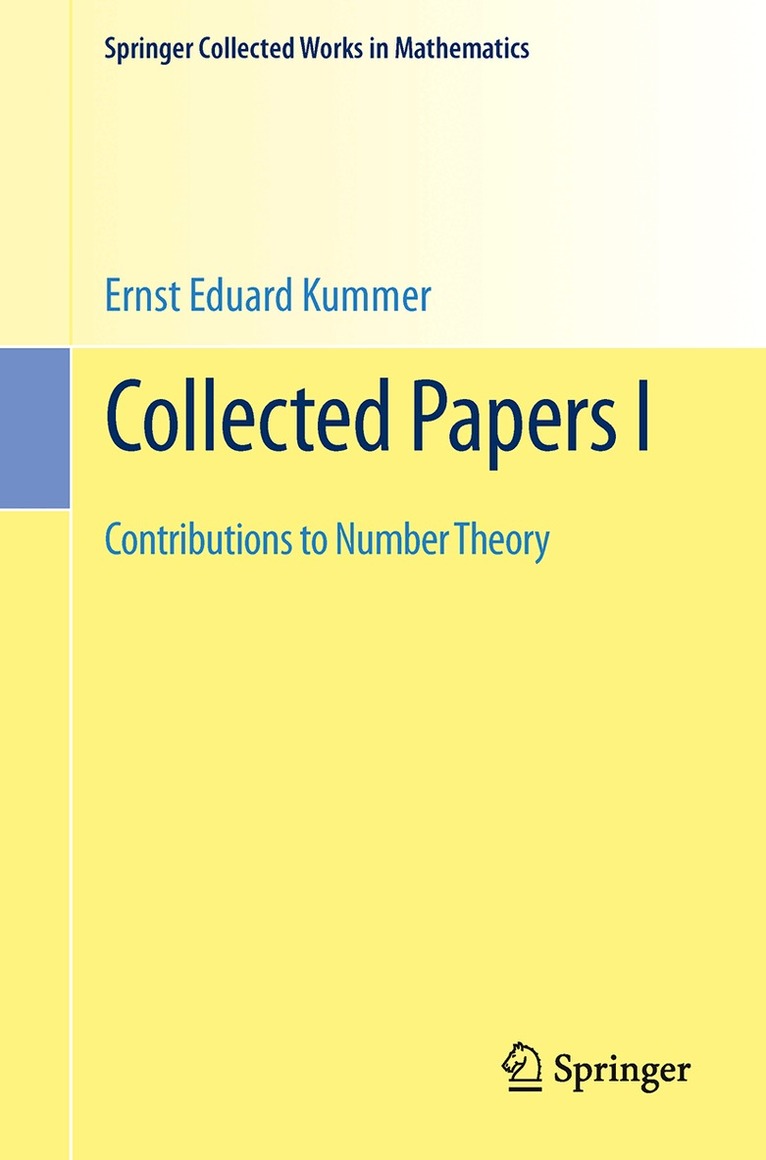
From the reviews: "The broad lines of Kummer'snumber-theoretic ideas now form an essential part of our heritage: it isfascinating to follow the details of their evolution... Volume I consists of Kummer'snumber theory. It constitutes a unity of thought and spirit almost from firstsentence to last. One of the joys of reading it is in the double spectacle: thesteady train of mathematical content, unimpeded by lack of basic algebraicnumber theory; while here and there, to serve problems at hand, the deft,unobtrusive forging of pieces of present day technique. It is not hard to getinto, even for those of us who have had little contact with the history of oursubject. Cleft though one may think one is from historical sources, on readingKummer one finds that the rift is jumpable, the jump pleasurable. The readeris greatly helped in this jump in two ways. Firstly, included in the volume is acontinuum of well-written, moving letters from Kummer to Kronecker givingthe details of manyof Kummer's important discoveries as they freshlyoccurred to him (these, together with some letters from Kummer to his mother, form part of a description of Kummer's work by Hensel on theoccasion of the centenary of Kummer's birth, also included in the volume).Secondly, there is an excellent introduction, in which Weil describes the mainlines of Kummer's work, and explains its relations to Kummer's contemporaries,and to us."
694 kr
Skickas inom 10-15 vardagar
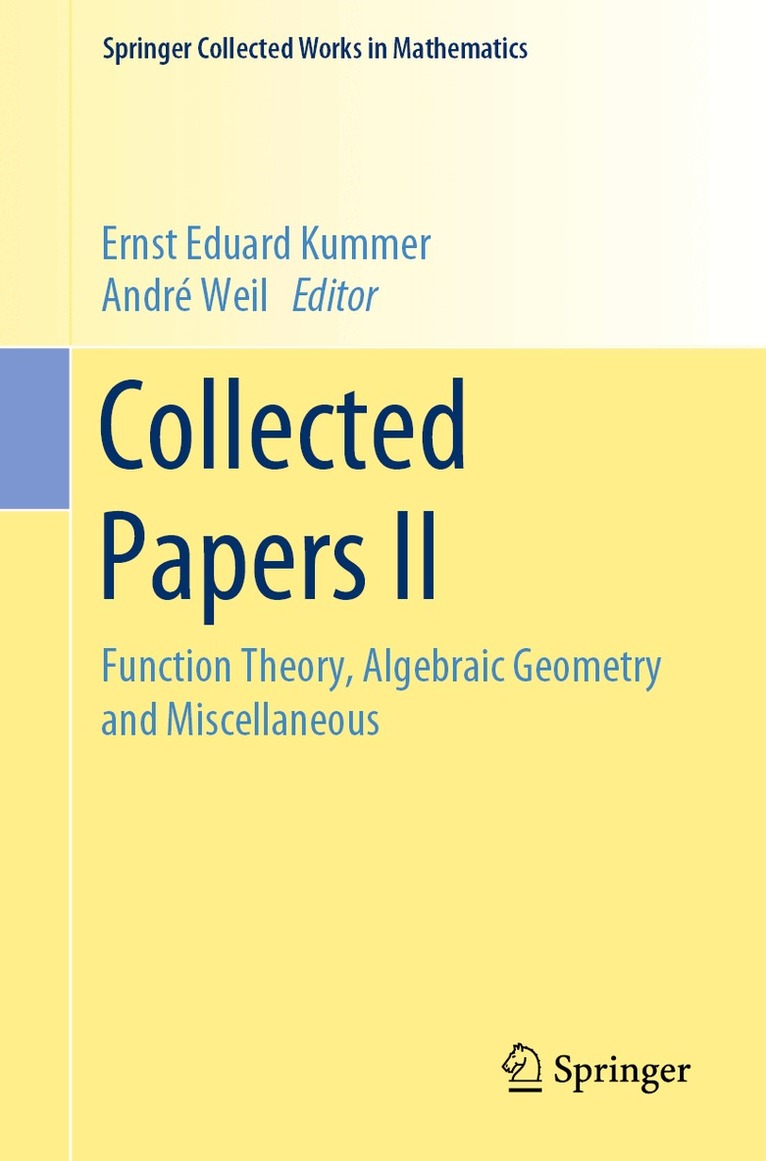
Volume II of Ernst Kummer's Collected Papers can be divided into four different parts. In the second part (Algebraic Geometry), we see how the discovery of Kummer surfaces seems to have been an outgrowth of the authors interest in optical properties of biaxial crystals, and in the "cyclides" of Dupin.
961 kr
Skickas inom 10-15 vardagar
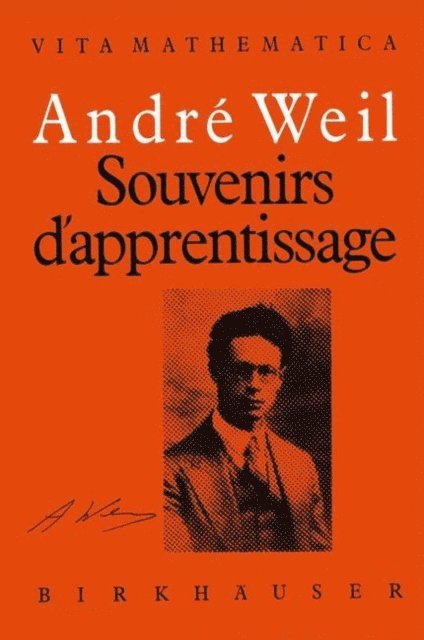
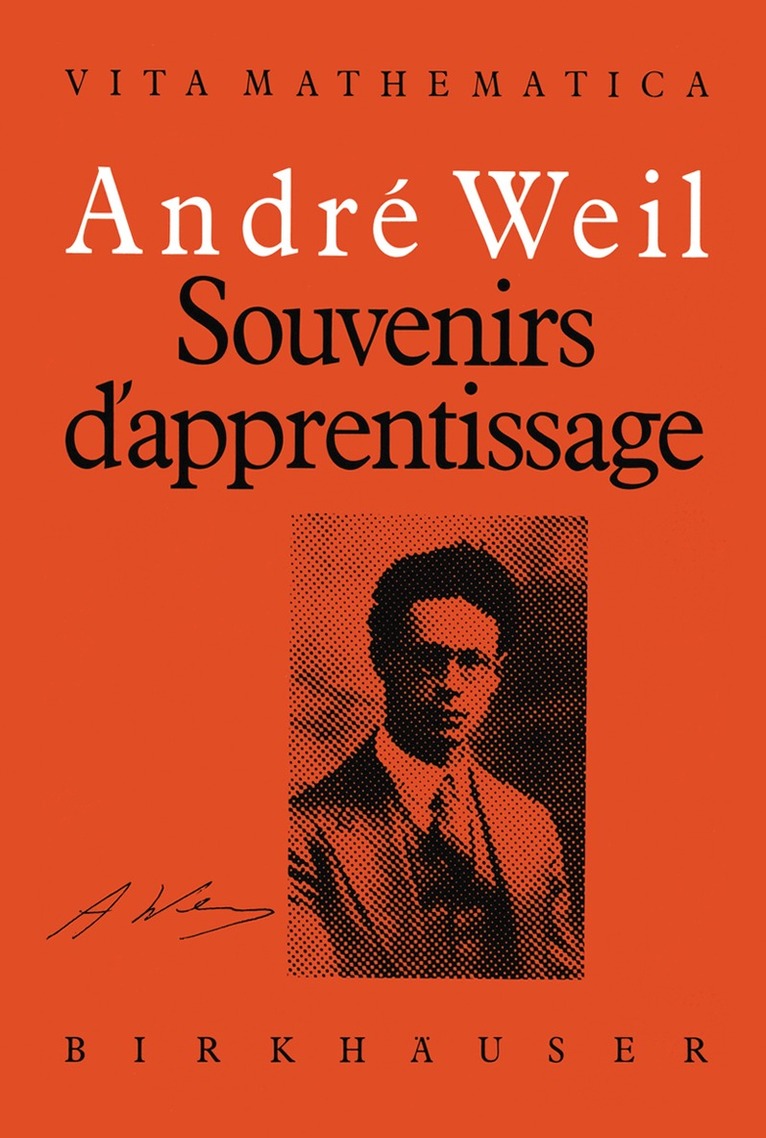
L’auteur, mathématicien, mais dont l‘horizon ne s‘est jamais borné aux mathématiques, évoque ici les souvenirs d’une carrière qui l’a mené dans plusieurs continents : Italie et Allemagne d’abord, puis l’Inde où il séjourna et enseigna à une époque décisive pour l’histoire de ce pays, et où il rencontra brièvement Ghandi, et plus longuement Jawaharlal Nehru ; l’U.R.S.S., à un moment où le stalinisme semblait se relâcher avant de rependre bientôt en toute férocité ; Princeton, le « clearing house » moderne des idées mathématiques, dit parfois le paradis des mathématiciens ; la prison, en Finlande, où, pris pour un espion soviétique, il manqua de peu le poteau d’exécution, puis en France où il fut condamné pour avoir tenté de se soustraire à ses obligations militaires, et où il eut le temps de rédiger à la prison de Rouen l’un de ses meilleurs travaux mathématiques ; l’Angleterre où il vécut la bataille de Londres avant de se retrouver en France et d’en repartir pour l’Amérique ; le Brésil enfin, terme de ses vicissitudes. A travers ces épisodes souvent pittoresques s’est déroulé un destin de mathématicien dont l’un des points saillants fut sa participation à la fondation du groupe Bourbaki, auteur collectif d’un traité déjà devenu classique.
1 241 kr
Skickas inom 10-15 vardagar
"Extremely readable recollections of the author... A rare testimony of a period of the history of 20th century mathematics. Includes very interesting recollections on the author's participation in the formation of the Bourbaki Group, tells of his meetings and conversations with leading mathematicians, reflects his views on mathematics. The book describes an extraordinary career of an exceptional man and mathematicians. Strongly recommended to specialists as well as to the general public."EMS Newsletter (1992)"This excellent book is the English edition of the author's autobiography. … This very enjoyable reading is recommended to all mathematicians."Acta Scientiarum Mathematicarum (1992)
1 577 kr
Skickas inom 7-10 vardagar
This volume contains the work of the great Swiss mathematician on differential geometry, a field marked by some of his greatest achievements. In the 1680s, Leibniz had given the first public hints of his "new method", differential and integral calculus. Together with Huygens, Tschirnhaus and L'Hopital, Jacob Bernoulli and his younger brother Johann belonged to the small group of scientists who developed these cryptic ideas and made use of them in their research. In the intense, sometimes competitive intellectual exchange that followed in their publications and correspondence, Leibnizian infinitesimal calculus evolved into the analytical method that was to dominate mathematical thinking for two centuries. Between 1690 and 1700, Jacob Bernoulli published 12 treatises in the scientific journal "Acta Eruditorum" on the use of infinitesimal methods to answer geometrical questions. Preparatory notes for most of these papers and on many other themes are found in Bernoulli's scientific diary "Meditationes", from which 29 texts are published here for the first time.Among the curves considered are the isochrones (lines of constant descent), the parabolic spiral, the loxodrome, the cycloid, the tractrix and the logarithmic spiral (Bernoulli's "spira mirabilis", which also adorns his tombstone). The description of these curves by differential equations and by geometrical constructions, their rectification and quadrature, and the determination of the evolutes and caustics offered Bernoulli and his colleagues a range of challenging problems, many of them relevant for mechanical or optical applications. At the same time, questions of a more general nature that were to shape the development of calculus in the 18th century gradually came into focus: the local geometry of general planar curves, their curvature and singularities; elliptic integrals and their transformation properties; and the search for algorithms for integrating algebraic functions. Through mutual suggestions, challenges and critiques, the small group of the first champions of infinitesimal calculus developed the techniques that shape differential geometry to this day.The volume concludes with Bernoulli's previously unpublished work on the classification of planar cubic curves as presented by his students Jacob Hermann and Nicolaus I Bernoulli. Though it was surpassed by Newton's contemporary research, the background of Bernoulli's contribution is of no small interest.