Andrea Fumagalli – författare
Visar alla böcker från författaren Andrea Fumagalli. Handla med fri frakt och snabb leverans.
10 produkter
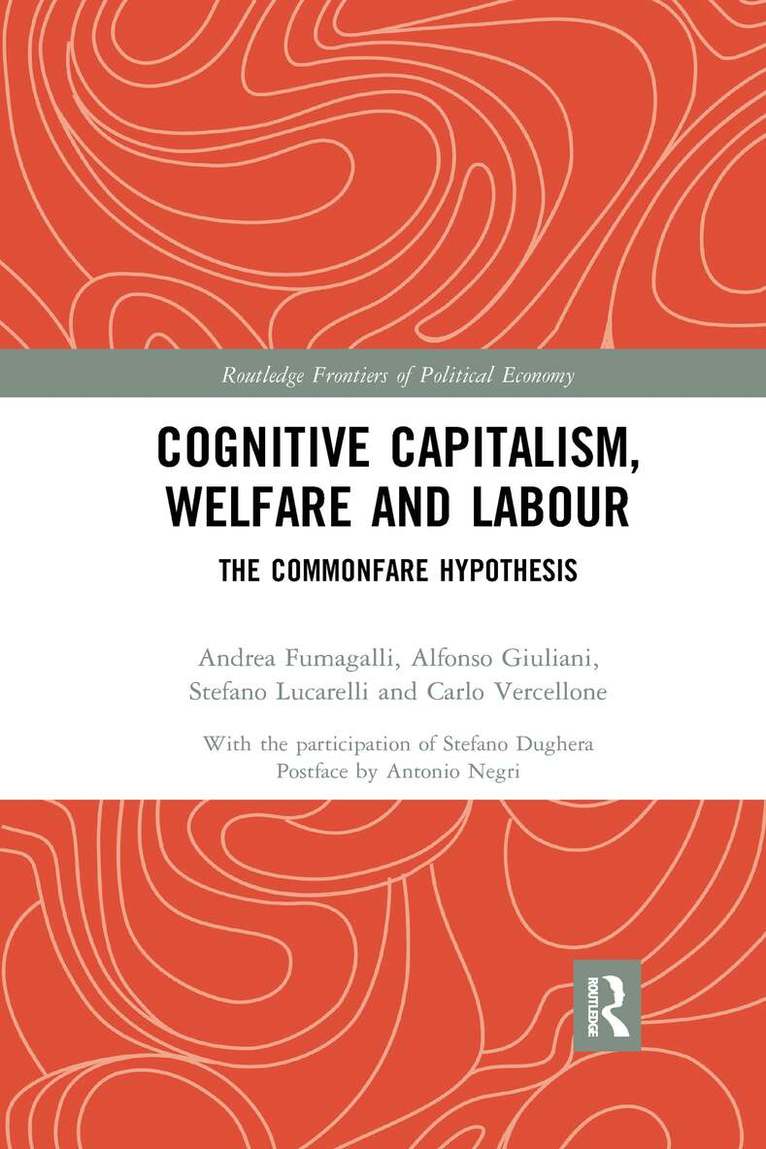
Cognitive Capitalism, Welfare and Labour
The Commonfare Hypothesis
Av Andrea Fumagalli, Alfonso Giuliani m. fl.
Häftad, 2020
691 kr
Lägg i varukorg
This book deals with the transformations of both accumulation process and labour in the transition from a Fordist to a cognitive capitalism paradigm, with specific regard to Western economies. It outlines the advent, after industrial capitalism, of a new phase of the capitalist system in which the …
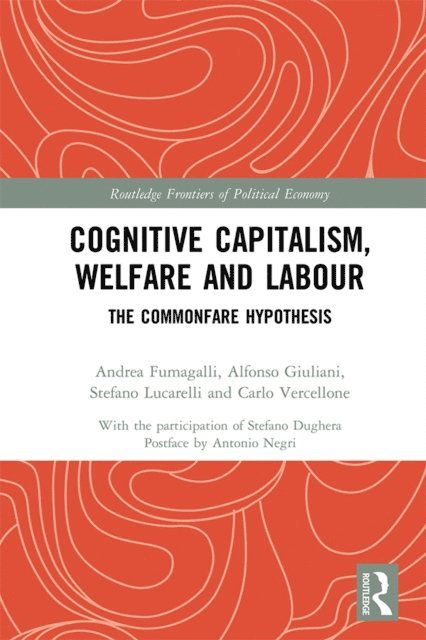
Cognitive Capitalism, Welfare and Labour
The Commonfare Hypothesis
Av Andrea Fumagalli, Alfonso Giuliani m. fl.
Inbunden, 2019
2512 kr
Lägg i varukorg
This book deals with the transformations of both accumulation process and labour in the transition from a Fordist to a cognitive capitalism paradigm, with specific regard to Western economies. It outlines the advent, after industrial capitalism, of a new phase of the capitalist system in which the …
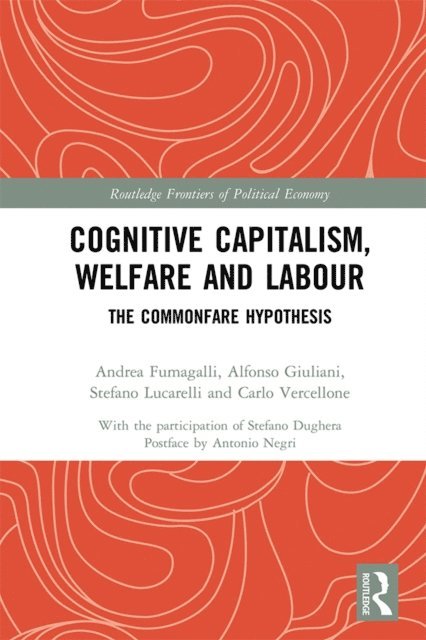
Cognitive Capitalism, Welfare and Labour
The Commonfare Hypothesis
Av Carlo Vercellone, Stefano Lucarelli m. fl.
E-bok, 2019
814 kr
Lägg i varukorg
This book deals with the transformations of both accumulation process and labour in the transition from a Fordist to a cognitive capitalism paradigm, with specific regard to Western economies. It outlines the advent, after industrial capitalism, of a new phase of the capitalist system in which the …
Cognitive Capitalism, Welfare and Labour
The Commonfare Hypothesis
Av Carlo Vercellone, Stefano Lucarelli m. fl.
E-bok, 2019
790 kr
Lägg i varukorg
This book deals with the transformations of both accumulation process and labour in the transition from a Fordist to a cognitive capitalism paradigm, with specific regard to Western economies. It outlines the advent, after industrial capitalism, of a new phase of the capitalist system in which the …
Financial Psychedelia and the Commons
Av Andrea Fumagalli, Massimo De Angelis
Häftad, 2026
269 kr
Lägg i varukorg
This book pays homage to a rock band that has most influenced alternative culture, the Grateful Dead. It critically discussing the evolution of the libertarian spirit in the USA, which was born and developed in the 1960s and merged in the last three decades into a libertarian ideology, based on …
Financial Psychedelia and the Commons
Av Andrea Fumagalli, Massimo De Angelis
Inbunden, 2026
953 kr
Lägg i varukorg
This book pays homage to a rock band that has most influenced alternative culture, the Grateful Dead. It critically discussing the evolution of the libertarian spirit in the USA, which was born and developed in the 1960s and merged in the last three decades into a libertarian ideology, based on …
Financial Psychedelia and the Commons
E-bok, 2026
353 kr
Lägg i varukorg
This book pays homage to a rock band that has most influenced alternative culture, the Grateful Dead. It critically discussing the evolution of the libertarian spirit in the USA, which was born and developed in the 1960s and merged in the last three decades into a libertarian ideology, based on …
Financial Psychedelia and the Commons
E-bok, 2026
353 kr
Lägg i varukorg
This book pays homage to a rock band that has most influenced alternative culture, the Grateful Dead. It critically discussing the evolution of the libertarian spirit in the USA, which was born and developed in the 1960s and merged in the last three decades into a libertarian ideology, based on …
Cognitive Capitalism and its Reflections in South-Eastern Europe
Av Vladimir Cvijanovic, Andrea Fumagalli m. fl.
Inbunden, 2010
730 kr
Lägg i varukorg
Cognitive capitalism is considered to be a new stage in the historical evolution of capitalism which is undergoing a metamorphosis affecting most of the laws and tendencies characteristic of industrial capitalism. This raises a series of issues tackled in the theoretical part, especially regarding …
Crisis in the Global Economy
Financial Markets, Social Struggles, and New Political Scenarios
Av Andrea Fumagalli, Sandro Mezzadra
Häftad, 2010
175 kr
Tillfälligt slut