Andreas-Holger Maehle - Böcker
Visar alla böcker från författaren Andreas-Holger Maehle. Handla med fri frakt och snabb leverans.
6 produkter
6 produkter
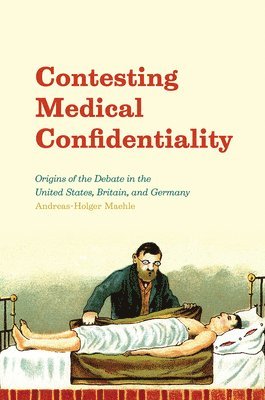
Contesting Medical Confidentiality
Origins of the Debate in the United States, Britain, and Germany
Inbunden, Engelska, 2016
355 kr
Skickas inom 7-10 vardagar
Medical confidentiality is an essential cornerstone of effective public health systems, and for centuries societies have struggled to maintain the illusion of absolute privacy. In this age of health databases and increasing connectedness, however, the confidentiality of patient information is rapidly becoming a concern at the forefront of worldwide ethical and political debate. In Contesting Medical Confidentiality, Andreas-Holger Maehle travels back to the origins of this increasingly relevant issue. He offers the first comparative analysis of professional and public debates on medical confidentiality in the United States, Britain, and Germany during the late nineteenth and early twentieth centuries, when traditional medical secrecy first came under pressure from demands of disclosure in the name of public health. Maehle structures his study around three representative questions of the time that remain salient today: Do physicians have a privilege to refuse court orders to reveal confidential patient details? Is there a medical duty to report illegal procedures to the authorities? Should doctors breach confidentiality in order to prevent the spread of disease?Considering these debates through a unique historical perspective, Contesting Medical Confidentiality illuminates the ethical issues and potentially grave consequences that continue to stir up public debate.
398 kr
Kommande
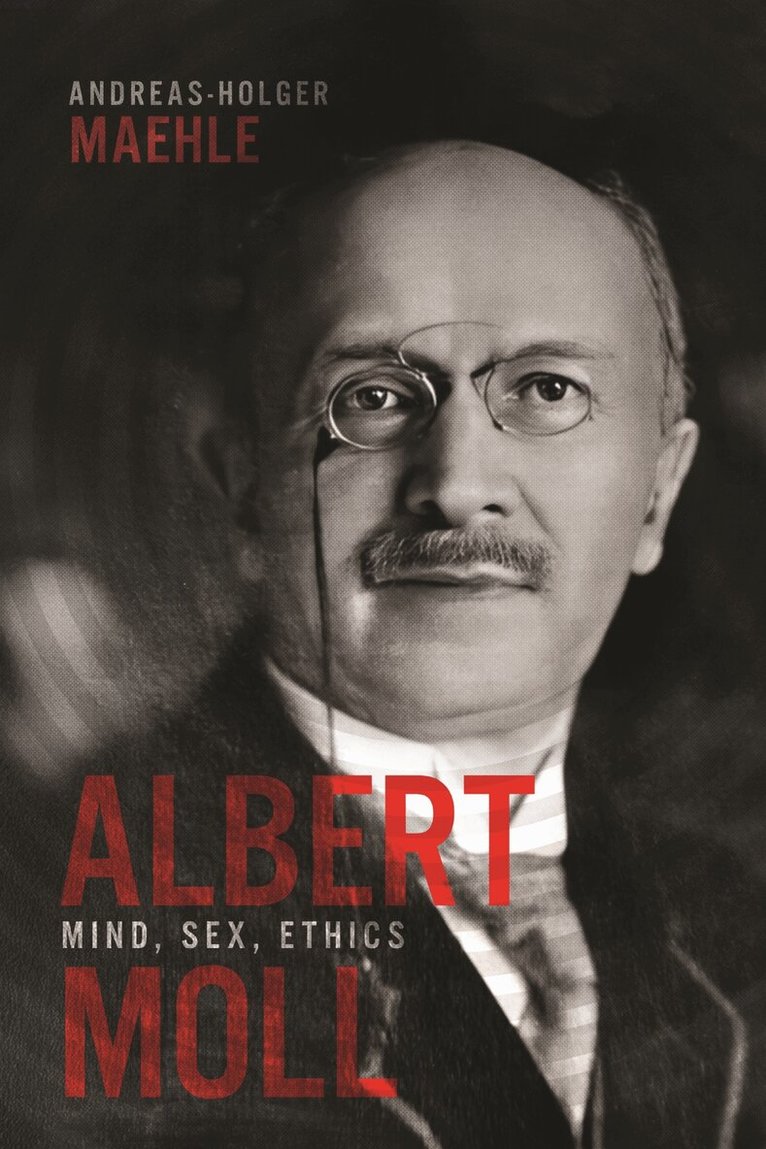
Albert Moll (1862–1939) was a Berlin psychiatrist and neurologist whose work helped establish psychotherapy, sexology, and medical ethics as scientific disciplines. In Andreas-Holger Maehle’s first scientific biography, Moll, who has often remained in the shadow of eminent contemporaries, emerges as a pivotal and controversial figure who merits sustained scholarly attention.Moll made influential contributions to the treatment of nervous and sexual disorders, most notably by introducing hypnotic suggestion therapy in Germany despite strong resistance. Working outside Sigmund Freud’s psychoanalysis, he developed his own theory of sexuality and a distinctive therapeutic approach to what were then labeled deviant desires. As a founder of sexual science, he served as a medical expert in court cases, and his distinction between physical and affectionate components of desire proved enduring. Moll’s intellectual independence was connected with uncompromising commitment to scientific objectivity, and this set him apart from his contemporaries. He rejected Freud’s emphasis on childhood sexuality; criticized Magnus Hirschfeld’s activist sexual politics; opposed parapsychology and occultism; and, in Ärztliche Ethik (1902), he reconceived the doctor-patient relationship as a tacit contract centred on patient self-determination, particularly in hospital experimentation. Moll’s ideas anticipated later principles of autonomy and informed consent, while his public criticism of unethical practices in Berlin hospitals, alongside his other public disputes, marginalized him.Drawing on scientific and popular writings, as well as archival sources including Moll’s forensic reports, this engaging biography offers a compelling account of an innovator and fierce critic in the medical world of Imperial and Weimar Germany.Top of FormBottom of Form
Historical and Philosophical Perspectives on Biomedical Ethics
From Paternalism to Autonomy?
Häftad, Engelska, 2019
429 kr
Skickas inom 10-15 vardagar
This title was first published in 2002: This volume discusses the subject of biomedical ethics. Various views, historical and contemporary, are discussed, with the editors using the contrasting concepts in the shift from paternalism to autonomy in 20th-century medicine as a heuristic tool for the critical study of ethics in medicine.As far as the evidence in this volume goes, paternalistic medical practices and patient autonomy had an uneasy relationship by the beginning of the 20th century. A hundred years later, full autonomy in decisions on medical treatment is still subject to numerous caveats. The text pays close attention to the interplay between various players, noting how factors such as social contexts, governmental organizations and the biotechnological industry influence and shape responses to the principle of bioethics.
Historical and Philosophical Perspectives on Biomedical Ethics: From Paternalism to Autonomy?
From Paternalism to Autonomy?
Inbunden, Engelska, 2017
1 627 kr
Skickas inom 10-15 vardagar
This title was first published in 2002: This volume discusses the subject of biomedical ethics. Various views, historical and contemporary, are discussed, with the editors using the contrasting concepts in the shift from paternalism to autonomy in 20th-century medicine as a heuristic tool for the critical study of ethics in medicine.As far as the evidence in this volume goes, paternalistic medical practices and patient autonomy had an uneasy relationship by the beginning of the 20th century. A hundred years later, full autonomy in decisions on medical treatment is still subject to numerous caveats. The text pays close attention to the interplay between various players, noting how factors such as social contexts, governmental organizations and the biotechnological industry influence and shape responses to the principle of bioethics.
169 kr
Skickas inom 5-8 vardagar
Del 53 - Clio Medica
Drugs on Trial
Experimental Pharmacology and Therapeutic Innovation in the Eighteenth-Century
Inbunden, Engelska, 1999
3 216 kr
Skickas inom 3-6 vardagar
Experimental pharmacology is often portrayed as a creation of the nineteenth century, the age of the sciences in medicine. This book demonstrates that the basic methodology of the field, including chemical analysis, in vitro testing, animal experimentation and human research, was already developed in the course of the seventeenth and eighteenth centuries. Putting remedies on trial was stimulated by the challenge to Galenism through new chemical, mechanical and vitalist concepts of disease, by the import of exotic drugs and the flourishing trade with secret medicines. The book describes the main issues of eighteenth-century pharmacology and therapeutics and provides detailed case studies of three key areas: lithontriptics (remedies against urinary stones), opium, and Peruvian bark (quinine). It shows how pharmacological knowledge and therapeutic change were promoted in medical centres of the time, such as Edinburgh, London, Paris, Halle and Göttingen. Yet it also reveals how by publication of medical case histories many otherwise little-known practitioners contributed to this scientific enterprise as well.