Andreas Peters – författare
Visar alla böcker från författaren Andreas Peters. Handla med fri frakt och snabb leverans.
8 produkter
8 produkter
E-bok
PDF, Engelska, 2026769 kr
Läs direkt efter köp
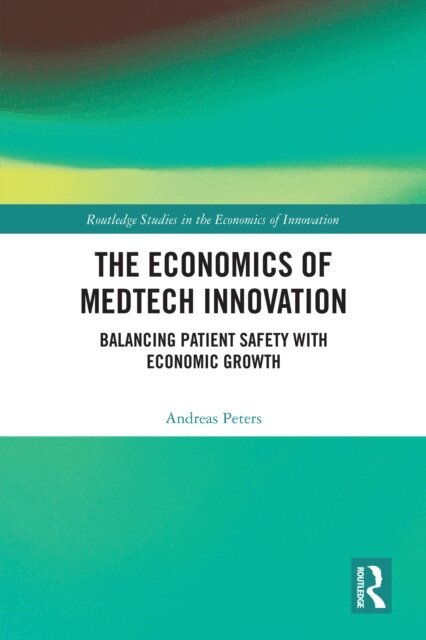
In an era where medical technology advances rapidly yet faces mounting regulatory hurdles, this book explores the critical interplay between patent law and regulatory frameworks that shapes the future of healthcare. It examines a fundamental problem in European medical technology innovation: the disconnect between patent protection periods and increasingly lengthy regulatory approval processes, demonstrating that Europe's current system forces companies to abandon breakthrough innovations in favor of incremental improvements. It compares the European Union's Medical Device Regulation with the United States' integrated patent-regulatory system, revealing how temporal misalignment between approval and protection discourages investment in complex medical devices. The book develops the first quantitative model linking patent-regulatory interaction and innovation effort in medical devices and demonstrates empirically, through Monte Carlo simulations and elasticity analysis, a significant improvement in development effort and increase in innovation value. It provides actionable policy guidance for aligning European patent law with regulatory timelines while maintaining high safety standards and offers cross-sectoral insights from renewable energy and biotechnology as benchmarks for successful regulatory-innovation alignment. Further, it addresses an urgent policy debate in the European Union concerning innovation incentives in the health-technology sector. By combining legal analysis, mathematical modelling, and policy evaluation, the book bridges law, economics, and health-technology governance. It provides a policy blueprint for balancing innovation incentives, regulatory efficiency, and patient safety, addressing a structural weakness at the heart of Europe's medtech competitiveness. With its quantitative rigour and policy relevance, the book targets a multidisciplinary readership of academics in law, economics, and innovation policy, policymakers, regulators at European Union institutions, and industry professionals.
E-bok
Engelska, 2026797 kr
Läs direkt efter köp
In an era where medical technology advances rapidly yet faces mounting regulatory hurdles, this book explores the critical interplay between patent law and regulatory frameworks that shapes the future of healthcare. It examines a fundamental problem in European medical technology innovation: the disconnect between patent protection periods and increasingly lengthy regulatory approval processes, demonstrating that Europe's current system forces companies to abandon breakthrough innovations in favor of incremental improvements. It compares the European Union's Medical Device Regulation with the United States' integrated patent-regulatory system, revealing how temporal misalignment between approval and protection discourages investment in complex medical devices. The book develops the first quantitative model linking patent-regulatory interaction and innovation effort in medical devices and demonstrates empirically, through Monte Carlo simulations and elasticity analysis, a significant improvement in development effort and increase in innovation value. It provides actionable policy guidance for aligning European patent law with regulatory timelines while maintaining high safety standards and offers cross-sectoral insights from renewable energy and biotechnology as benchmarks for successful regulatory-innovation alignment. Further, it addresses an urgent policy debate in the European Union concerning innovation incentives in the health-technology sector. By combining legal analysis, mathematical modelling, and policy evaluation, the book bridges law, economics, and health-technology governance. It provides a policy blueprint for balancing innovation incentives, regulatory efficiency, and patient safety, addressing a structural weakness at the heart of Europe's medtech competitiveness. With its quantitative rigour and policy relevance, the book targets a multidisciplinary readership of academics in law, economics, and innovation policy, policymakers, regulators at European Union institutions, and industry professionals.
Inbunden, Engelska, 2026
2 008 kr
Skickas inom 10-15 vardagar
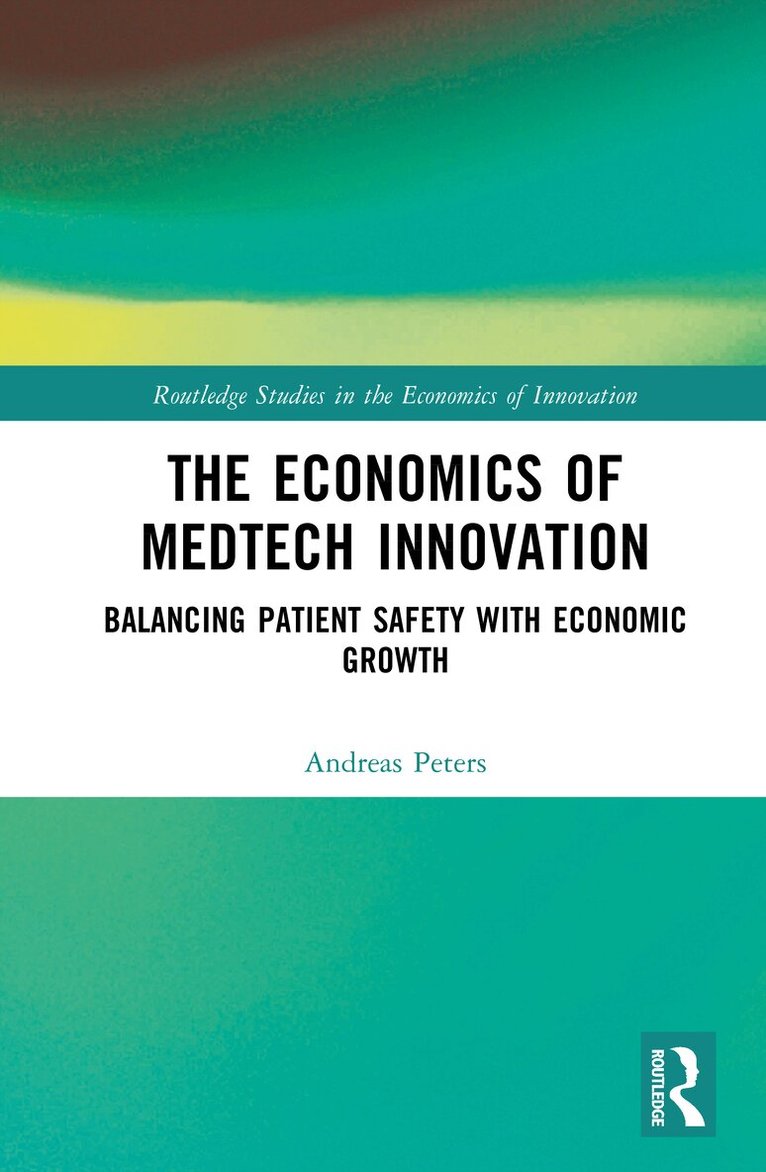
In an era where medical technology advances rapidly yet faces mounting regulatory hurdles, this book explores the critical interplay between patent law and regulatory frameworks that shapes the future of healthcare. It examines a fundamental problem in European medical technology innovation: the disconnect between patent protection periods and increasingly lengthy regulatory approval processes, demonstrating that Europe's current system forces companies to abandon breakthrough innovations in favor of incremental improvements. It compares the European Union’s Medical Device Regulation with the United States’ integrated patent–regulatory system, revealing how temporal misalignment between approval and protection discourages investment in complex medical devices. The book develops the first quantitative model linking patent–regulatory interaction and innovation effort in medical devices and demonstrates empirically, through Monte Carlo simulations and elasticity analysis, a significant improvement in development effort and increase in innovation value. It provides actionable policy guidance for aligning European patent law with regulatory timelines while maintaining high safety standards and offers cross-sectoral insights from renewable energy and biotechnology as benchmarks for successful regulatory–innovation alignment. Further, it addresses an urgent policy debate in the European Union concerning innovation incentives in the health-technology sector. By combining legal analysis, mathematical modelling, and policy evaluation, the book bridges law, economics, and health-technology governance. It provides a policy blueprint for balancing innovation incentives, regulatory efficiency, and patient safety, addressing a structural weakness at the heart of Europe’s medtech competitiveness. With its quantitative rigour and policy relevance, the book targets a multidisciplinary readership of academics in law, economics, and innovation policy, policymakers, regulators at European Union institutions, and industry professionals.
E-bok
Tyska, 2025105 kr
Läs direkt efter köp
Es geht um die Schwiegermutter... Also um fiktive, lebende, noch lebende oder sogar lange lebende Mutter, die manchmal auch noch - zum Teil widerwillig - Schwiegermutter sind. Reizend, liebenswurdig und charmant konnen sie nie gewesen sein, solange man sich an die Realitaten halt... Naturlich hat jeder so seine eigene Realitat. Deshalb gibt es ja die Relativitatstheorie, die eben gewisse Realitaten relativiert. Das ist das groe Vermachtnis von Albert Einstein, wenn ich es richtig verstanden habe.
Häftad, Tyska, 2012
857 kr
Skickas inom 3-6 vardagar
Häftad, Tyska, 2023
234 kr
Skickas inom 3-6 vardagar
Inbunden, Tyska, 2025
294 kr
Skickas inom 3-6 vardagar