Andrew Blann - Böcker
Visar alla böcker från författaren Andrew Blann. Handla med fri frakt och snabb leverans.
10 produkter
10 produkter
573 kr
Skickas
Biomedical scientists are the foundation of modern healthcare, from cancer screening to diagnosing HIV, from blood transfusion for surgery to food poisoning and infection control. Without biomedical scientists, the diagnosis of disease, the evaluation of the effectiveness of treatment, and research into the causes and cures of disease would not be possible.The Fundamentals of Biomedical Science series has been written to reflect the challenges of practicing biomedical science today. It draws together essential basic science with insights into laboratory practice to show how an understanding of the biology of disease is coupled to the analytical approaches that lead to diagnosis. Assuming only a minimum of prior knowledge, the series reviews the full range of disciplines to which a Biomedical Scientist may be exposed - from microbiology to cytopathology to transfusion science. Data Handling and Analysis is the most relevant and useful statistics and data analysis text for biomedical science students. Providing a broad review of the quantitative skills needed to be an effective biomedical scientist, the text spans the collection, presentation, and analysis of data. It draws on relevant examples throughout, creating an ideal introduction to the subject for any student of biomedical science.
752 kr
Skickas inom 5-8 vardagar
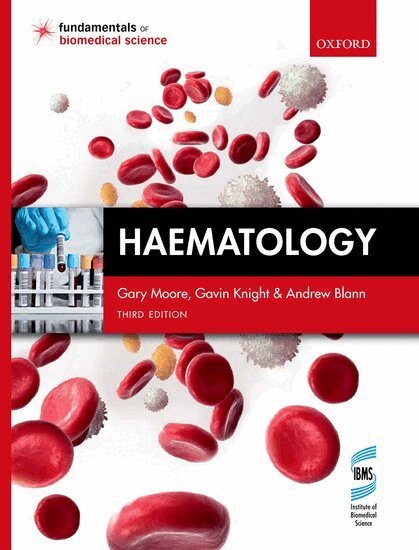
Biomedical Scientists are the foundation of modern healthcare, from cancer screening to diagnosing HIV, from blood transfusion for surgery to food poisoning and infection control. Without Biomedical Scientists, the diagnosis of disease, the evaluation of the effectiveness of treatment, and research into the causes and cures of disease would not be possible. The Fundamentals of Biomedical Science series has been written to reflect the challenges of practicing Biomedical Science today. It draws together essential basic science with insights into laboratory practice to show how an understanding of the biology of disease is coupled to the analytical approaches that lead to diagnosis. Assuming only a minimum of prior knowledge, the series reviews the full range of disciplines to which a Biomedical Scientist may be exposed - from microbiology to cytopathology to transfusion science. Haematology provides a broad-ranging overview of the study of blood, the dynamic fluid that interfaces with all organs and tissues to meditate essential transport and regulatory functions. Written with the needs of the Biomedical Scientist centre-stage, it provides a firm grounding in the physiology of blood, and the key pathophysiological states that can arise. It demonstrates throughout how an understanding of physiology underpins the key investigations carried out by a Biomedical Scientist to forge a clear link between science and practice. The third edition has been thoroughly revised to remain up to date with the latest scientific research, with new sections and case studies added to support your learning. The online resources to accompany Haematology have also been updated and include multiple choice questions to test understanding, a Journal Club which provides discussion questions for relevant research papers, and answers to case study and self-check questions. Students and lecturers will also have access to the FBMS series online resources, which feature video interviews with practicing biomedical scientists and 'in the lab' footage showing biomedical techniques. Also available as an ebook with functionality, navigation features, and links that offer extra learning support.
721 kr
Skickas inom 5-8 vardagar
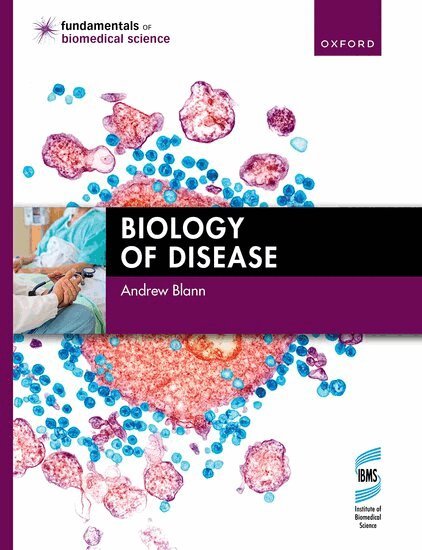
The Fundamentals of Biomedical Science series has been written to reflect the challenges of practising biomedical science today. It draws together essential basic science with insights into laboratory practice to show how an understanding of the biology of disease is coupled to the analytical approaches that lead to diagnosis. Assuming only a minimum of prior knowledge, the series reviews the full range of disciplines to which a biomedical scientist may be exposed - from microbiology to cytopathology to transfusion science.Biology of Disease provides an integrated introduction to the basic cell biology that underlies disease processes and the diagnosis and management of those diseases. By telling the whole story of how a disease develops, how it is diagnosed, and how it is treated, the text provides a thorough understanding of both the molecular and clinical aspects of diseases that are needed to succeed as a practising health care professional. Featuring a wide range of diseases, the text places particular emphasis on diseases that biomedical scientists and other health care professionals are most likely to encounter in a clinical setting and that have the greatest impact on people's lives. This is reflected in the book's detailed coverage of cancer and cardiovascular disease, which have long been causing many deaths each year, and its discussion of the COVID-19 pandemic.The inclusion of clinical case studies throughout shows how the theory of disease processes informs the diagnosis and treatment of different diseases in practice. Self-check questions and discussion questions in the book support active learning and allow students to check their understanding. Multiple-choice questions are embedded into the e-book and Science Trove, allowing students to recap seamlessly on what they have learnt in each chapter. Digital formats and resourcesBiology of Disease is available for students and institutions to purchase in a variety of formats.- The e-book offers a mobile experience and convenient access along with functionality tools, navigation features, and links that offer extra learning support: www.oxfordtextbooks.co.uk/ebooks- E-book and Science Trove products are enriched with digital multiple-choice questions and answers to the self-check questions- Instructor resources include figures from the book, available to download
495 kr
Skickas inom 11-20 vardagar
Aimed specifically at general practitioners, this new addition to the series covers an important area of cardiovascular therapy. It discusses both the mechanisms of antithrombotic therapy and its uses for parents at risk, and will be a highly practical guide in primary care.
1 587 kr
Skickas inom 7-10 vardagar
Blood Science is a relatively new discipline which merges biochemistry, haematology, immunology, transfusion science and genetics. This bringing together of traditional disciplines requires a corresponding change in education and training for healthcare scientists and Blood Science: Principles and Pathology is written in response to this emerging need.An introduction to the subject and an overview of the techniques used in blood science are followed by a series of chapters based on groups of analytes investigated in blood - red blood cells, white blood cells and platelets, followed by the constituents of plasma, including waste products, electrolytes, glucose, lipids, enzymes, hormones, nutrients, drugs, poisons and others.Each chapter is supported by learning objectives, summaries and further information, and a focus is given to chapter specific case studies with interpretation to demonstrate how laboratory data in conjunction with clinical details is utilised when investigating patients with actual or suspected disease. Finally, a separate chapter offers more detailed case reports that integrate the different aspects of blood science.Undergraduate students taking blood science modules as part of their BSc programmes in Biomedical and Healthcare Sciences will appreciate the level of integration between clinical biochemistry and haematology. In addition, this book will provide suitable initial reading for those students embarking on blood science modules on MSc programmes and will be of value to new graduates entering the profession and starting their career in blood science departments by supplementing practice-based training with the required theoretical underpinning.This book is approved by the Institute of Biomedical Science and written by its expert writers, many of whom work on the Institute’s advisory panels.
751 kr
Skickas inom 7-10 vardagar
Blood Science is a relatively new discipline which merges biochemistry, haematology, immunology, transfusion science and genetics. This bringing together of traditional disciplines requires a corresponding change in education and training for healthcare scientists and Blood Science: Principles and Pathology is written in response to this emerging need.An introduction to the subject and an overview of the techniques used in blood science are followed by a series of chapters based on groups of analytes investigated in blood - red blood cells, white blood cells and platelets, followed by the constituents of plasma, including waste products, electrolytes, glucose, lipids, enzymes, hormones, nutrients, drugs, poisons and others.Each chapter is supported by learning objectives, summaries and further information, and a focus is given to chapter specific case studies with interpretation to demonstrate how laboratory data in conjunction with clinical details is utilised when investigating patients with actual or suspected disease. Finally, a separate chapter offers more detailed case reports that integrate the different aspects of blood science.Undergraduate students taking blood science modules as part of their BSc programmes in Biomedical and Healthcare Sciences will appreciate the level of integration between clinical biochemistry and haematology. In addition, this book will provide suitable initial reading for those students embarking on blood science modules on MSc programmes and will be of value to new graduates entering the profession and starting their career in blood science departments by supplementing practice-based training with the required theoretical underpinning.This book is approved by the Institute of Biomedical Science and written by its expert writers, many of whom work on the Institute’s advisory panels.
1 057 kr
Skickas inom 7-10 vardagar
Blood Science The second edition of the leading introduction to blood science, with updated new illustrations and case studies Blood Science: Principles and Pathology integrates hematology and blood transfusion, clinical biochemistry, and immunology to provide a thorough introduction to this rapidly expanding discipline. Reflecting recent changes in education and training for healthcare scientists, this comprehensive textbook covers the analytical techniques used in blood science, the diagnosis and management of various blood disorders, and more. Fully revised, the second edition presents new case studies and high-quality images throughout, illustrating the practical skills and knowledge required by today’s undergraduate students and practitioners. Detailed yet accessible chapters contain learning objectives and summaries, links to further readings and resources, and real-world case studies with easy-to-follow interpretations. Throughout the text, the authors highlight how laboratory data and clinical details are used to investigate patients with actual or suspected diseases in real-world scenarios: Multi-disciplinary view merging biochemical, hematological, immunological, and genetical knowledge into a single discipline: Blood scienceDiscusses advances in molecular genetics identifying mutations resulting in the occurrence of certain pathological conditions such as leukaemiaPresents an expanded concluding chapter with detailed case reports that integrate biochemistry, immunology, and haematology, which all contribute to the investigation of respective conditionsExplains the potentials for developing tests such as non-coding RNAsOffers further reading suggestions to dive even deeper into discussed subjects and conceptsDesigned to meet the needs of undergraduate students taking blood science modules in biomedical, biological, and healthcare science programs, Blood Science: Principles and Pathology, Second Edition is also an invaluable guide for new graduates entering the field, as well as those training for professional qualifications or working with blood samples in laboratory-based environments.
1 180 kr
Skickas inom 7-10 vardagar
Comprehensive textbook on molecular pathology for newcomers to the field, covering history, analytics, types of cancers, and more Molecular Pathology delivers an in-depth outline of molecular pathology appropriate for the undergraduate, postgraduate, or early-stage career lab scientist, drawing from authoritative sources such as NICE, the World Health Organisation, the Office of National Statistics, clinical guidelines, research publications and the National Genomic Test Directory. The text contains numerous tables, diagrams, and photos in each chapter to help elucidate key concepts. The opening chapter provides a general introduction to the subject with a historical perspective of key findings that have led to our current view of molecular pathology. The introduction is followed by a look at the scope of chromosomal disease (such as Down’s syndrome) and genetic disease (such as sickle cell disease). Chapter two describes the numerous analytical tools required in molecular pathology, and how complex genetic data is interpreted – i.e., bioinformatics. The remaining three chapters review the molecular pathology of focused groups of disease, including solid tumor cancer, blood cancer, and metabolic and other genetic diseases. Each of these three chapters explains the role of molecular pathology in the etiology, diagnosis, and management of each particular condition. Sample topics explored in Molecular Pathology include: Generating DNA and RNA for analysis, amplification by PCR, and DNA sequencing through micro-arrays, libraries, and Next Generation SequencingChromosome structure, covering histones and the centromere, abnormal chromosome numbers, and errors within chromosomes such as translocations and deletionsMyelofibrosis, myelodysplasia, essential thrombocythemia, polycythaemia, leukemia, lymphoma, myeloma, and haemopoiesis and maturation arrestMolecular pathology of single organ/organ system disease, such as Huntington’s and cardiomyopathy, and multi-organ disease such as Barth syndromeMolecular Pathology serves as an excellent introduction to the subject for first to third year undergraduate students. Healthcare professionals and biomedical scientists and researchers will also find it valuable.
1 124 kr
Kommande
Essential Genetic Insight for Accurate Blood Cancer Diagnosis and Care Blood cancers are complex and heterogeneous, driven by chromosomal and genetic abnormalities that shape both development and clinical behaviour. Blood Cancer: The Genetics of Aetiology, Diagnosis and Management brings molecular pathology to the forefront, linking aetiology, laboratory investigation and treatment strategies across leukaemia, lymphoma and myeloma within a UK healthcare context. Written by established writer, practitioner and researcher Andrew Blann, this text guides readers from foundational principals to applied clinical practice. Beginning with the constituents and formation of blood, it introduces key laboratory molecular pathology techniques before exploring myeloid and lymphoid malignancies in depth. Later chapters focus on diagnostic genetic markers and evolving treatment modalities, including immunotherapy, molecular therapies, and stem cell transplantation. This integrated resource helps readers connect laboratory science with bedside decision-making, clarifying how abnormal genes and chromosomes underpin classification, prognosis and targeted therapy. Features include: Clear explanations of molecular pathology techniques used in modern haematology and oncology laboratoriesIn-depth discussion of hallmark genetic markers such as the Philadelphia chromosome and their diagnostic significanceCoverage of contemporary treatment approaches, from chemotherapy to advanced immunotherapiesRichly illustrated diagrams, tables, and clinical images to simplify complex concepts Designed for undergraduate and postgraduate students in biomedical science, pathology, haematology, and oncology, Blood Cancer: The Genetics of Aetiology, Diagnosis and Management also supports advanced practitioner nurses, pharmacists, biomedical scientists, and clinicians seeking authoritative guidance on blood cancer genetics.
1 967 kr
Tillfälligt slut