Andrew Brenner – författare
Visar alla böcker från författaren Andrew Brenner. Handla med fri frakt och snabb leverans.
5 produkter
5 produkter
331 kr
Skickas inom 7-10 vardagar
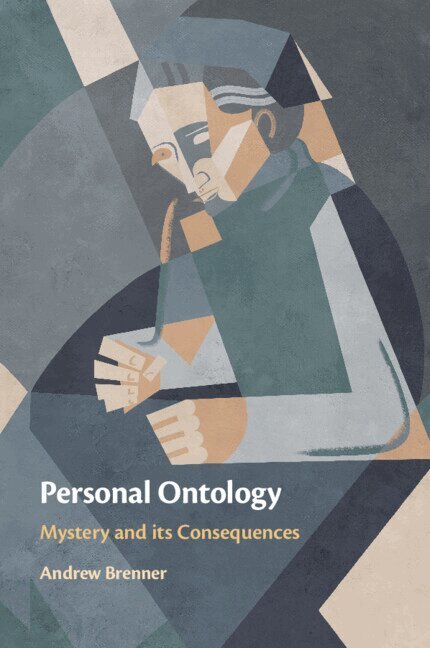
What are we? Are we, for example, souls, organisms, brains, or something else? In this book, Andrew Brenner argues that there are principled obstacles to our discovering the answer to this fundamental metaphysical question. The main competing accounts of personal ontology hold that we are either souls (or composites of soul and body), or we are composite physical objects of some sort, but, as Brenner shows, arguments for either of these options can be parodied and transformed into their opposites. Brenner also examines arguments for and against the existence of the self, offers a detailed discussion of the metaphysics of several afterlife scenarios - resurrection, reincarnation, and mind uploading -- and considers whether agnosticism with respect to personal ontology should lead us to agnosticism with respect to the possibility of life after death.
1 172 kr
Skickas inom 7-10 vardagar
What are we? Are we, for example, souls, organisms, brains, or something else? In this book, Andrew Brenner argues that there are principled obstacles to our discovering the answer to this fundamental metaphysical question. The main competing accounts of personal ontology hold that we are either souls (or composites of soul and body), or we are composite physical objects of some sort, but, as Brenner shows, arguments for either of these options can be parodied and transformed into their opposites. Brenner also examines arguments for and against the existence of the self, offers a detailed discussion of the metaphysics of several afterlife scenarios - resurrection, reincarnation, and mind uploading -- and considers whether agnosticism with respect to personal ontology should lead us to agnosticism with respect to the possibility of life after death.
Why is There Something Rather than Nothing?
The Fundamental Problem of Ontology
Inbunden, Engelska, 2026
1 251 kr
Skickas inom 7-10 vardagar
'Why is there something rather than nothing?' is a question that is arguably as old as philosophy itself. Nevertheless, despite the fact that it is of perennial philosophical, scientific, and religious interest, it receives less attention than many other classic questions in philosophy. And despite continued fascination with 'the Question', and its status as one of the great intellectual mysteries, there are few academic book-length discussions of the subject. This book serves as the definitive guide to the Question. It includes a discussion of the proper interpretation of the Question, whether it can be expected to have an answer, an overview of the major answers which have been proposed, and, most significantly, a new and innovative explanation for why there is something rather than nothing.
639 kr
Kommande
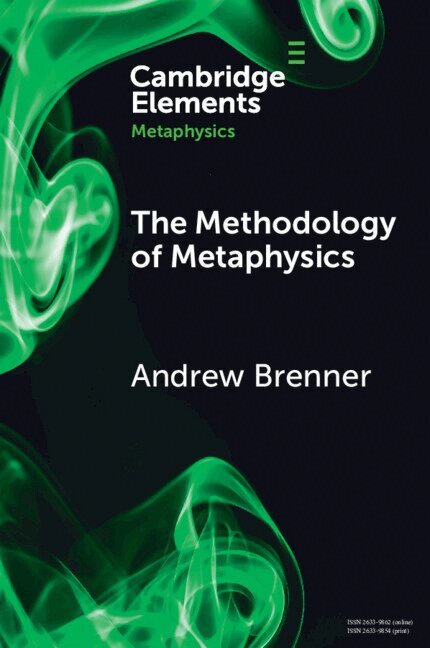
The methodology of metaphysics has come under severe scrutiny from critics who claim that, while metaphysics aims to uncover deep non-conceptual truths regarding reality, its standard methodology is incapable of giving us justified beliefs regarding which metaphysical theses are true. In this Element I investigate whether this criticism of metaphysics is on the right track, by way of an opinionated introduction to the methodology of metaphysics. I give an overview of recent debates concerning the methodology of metaphysics, with special attention paid to the epistemic credentials of appeals to intuitions and non-empirical theoretical virtues. I also examine alternative proposed aims of metaphysics other than that of uncovering deep non-conceptual truths, and with what sorts of methodologies those aims might be associated. These alternative proposed aims of metaphysics include achieving practical benefits, achieving understanding, discovering stable equilibria among possible metaphysical views, and the aim of analyzing and/or engineering our concepts.
212 kr
Kommande
The methodology of metaphysics has come under severe scrutiny from critics who claim that, while metaphysics aims to uncover deep non-conceptual truths regarding reality, its standard methodology is incapable of giving us justified beliefs regarding which metaphysical theses are true. In this Element I investigate whether this criticism of metaphysics is on the right track, by way of an opinionated introduction to the methodology of metaphysics. I give an overview of recent debates concerning the methodology of metaphysics, with special attention paid to the epistemic credentials of appeals to intuitions and non-empirical theoretical virtues. I also examine alternative proposed aims of metaphysics other than that of uncovering deep non-conceptual truths, and with what sorts of methodologies those aims might be associated. These alternative proposed aims of metaphysics include achieving practical benefits, achieving understanding, discovering stable equilibria among possible metaphysical views, and the aim of analyzing and/or engineering our concepts.