Angus Maddison – författare
Visar alla böcker från författaren Angus Maddison. Handla med fri frakt och snabb leverans.
34 produkter
Contours of the World Economy 1-2030 AD
Essays in Macro-Economic History
E-bok, 2007
655 kr
Lägg i varukorg
This book seeks to identify the forces which explain how and why some parts of the world have grown rich and others have lagged behind. Encompassing 2000 years of history, part 1 begins with the Roman Empire and explores the key factors that have influenced economic development in Africa, Asia, the …
Contours of the World Economy 1-2030 AD
Essays in Macro-Economic History
E-bok, 2007
737 kr
Lägg i varukorg
This book seeks to identify the forces which explain how and why some parts of the world have grown rich and others have lagged behind. Encompassing 2000 years of history, part 1 begins with the Roman Empire and explores the key factors that have influenced economic development in Africa, Asia, the …
Contours of the World Economy 1-2030 AD
Essays in Macro-Economic History
Häftad, 2007
843 kr
Lägg i varukorg
This book seeks to identify the forces which explain how and why some parts of the world have grown rich and others have lagged behind. Encompassing 2000 years of history, part 1 begins with the Roman Empire and explores the key factors that have influenced economic development in Africa, Asia, the …
Contours of the World Economy 1-2030 AD
Essays in Macro-Economic History
Inbunden, 2007
3280 kr
Lägg i varukorg
This book seeks to identify the forces which explain how and why some parts of the world have grown rich and others have lagged behind. Encompassing 2000 years of history, part 1 begins with the Roman Empire and explores the key factors that have influenced economic development in Africa, Asia, the …
Unemployment
The European Perspective
Av Angus Maddison, Bote S. Wilpstra
Inbunden, 2018
1263 kr
Lägg i varukorg
First published in 1982. Unemployment was a major scourge of the advanced capitalist countries in the 1930s, but in the golden age of post-war expansion which lasted until 1973, it had seemingly been vanquished by enlightened economic policy. Since 1973, unemployment has re-emerged as a major …
Unemployment
The European Perspective
Av Angus Maddison, Bote S. Wilpstra
Häftad, 2020
396 kr
Lägg i varukorg
First published in 1982. Unemployment was a major scourge of the advanced capitalist countries in the 1930s, but in the golden age of post-war expansion which lasted until 1973, it had seemingly been vanquished by enlightened economic policy. Since 1973, unemployment has re-emerged as a major …
Economic Progress and Policy in Developing Countries
Inbunden, 2005
1027 kr
Lägg i varukorg
First published in 2005. The central issue of our times is the unequal income of nations. Its importance outweighs most of the domestic problems in rich countries, and the division of the world into rich and poor has become more significant than the ideological cleavage between communism and …
Economic Growth in the West
Comparative Experience in Europe and North America
Inbunden, 2005
3156 kr
Lägg i varukorg
Hailed a "an outstanding contribution to our knowledge of the way in which western economies work" [Times Literary Supplement], this penetrating study of economic growth compares and analyzes tic rates of economic advance in the twelve leading countries that comprise the industrial West. Mr. …
Class Structure and Economic Growth
India and Pakistan Since the Moghuls
Inbunden, 2005
3065 kr
Lägg i varukorg
This book was first published in 1971.
Economic Growth in Japan and the USSR
Inbunden, 2005
3156 kr
Lägg i varukorg
In terms of output, the USSR and Japan account for one-fifth of the world's economy, occupying second and third places behind the United States. Japan has the world's fastest growth of per capita income and the USSR has not lagged far behind. But a century ago they were static feudal societies. …
Economic Progress and Policy in Developing Countries
Häftad, 2010
382 kr
Lägg i varukorg
First published in 2005. The central issue of our times is the unequal income of nations. Its importance outweighs most of the domestic problems in rich countries, and the division of the world into rich and poor has become more significant than the ideological cleavage between communism and …
Economic Growth in the West
Comparative Experience in Europe and North America
Häftad, 2010
770 kr
Lägg i varukorg
Hailed a "an outstanding contribution to our knowledge of the way in which western economies work" [Times Literary Supplement], this penetrating study of economic growth compares and analyzes tic rates of economic advance in the twelve leading countries that comprise the industrial West. Mr. …
Class Structure and Economic Growth
India and Pakistan Since the Moghuls
Häftad, 2010
907 kr
Lägg i varukorg
This book was first published in 1971.
Economic Growth in Japan and the USSR
Häftad, 2010
770 kr
Lägg i varukorg
In terms of output, the USSR and Japan account for one-fifth of the world's economy, occupying second and third places behind the United States. Japan has the world's fastest growth of per capita income and the USSR has not lagged far behind. But a century ago they were static feudal societies. …
Unemployment
The European Perspective
Av Bote S. Wilpstra, Angus Maddison
E-bok, 2018
464 kr
Lägg i varukorg
First published in 1982. Unemployment was a major scourge of the advanced capitalist countries in the 1930s, but in the golden age of post-war expansion which lasted until 1973, it had seemingly been vanquished by enlightened economic policy. Since 1973, unemployment has re-emerged as a major …
Unemployment
The European Perspective
Av Bote S. Wilpstra, Angus Maddison
E-bok, 2018
464 kr
Lägg i varukorg
First published in 1982. Unemployment was a major scourge of the advanced capitalist countries in the 1930s, but in the golden age of post-war expansion which lasted until 1973, it had seemingly been vanquished by enlightened economic policy. Since 1973, unemployment has re-emerged as a major …
Growth and Interaction in the World Economy
The Roots of Modernity
Häftad, 2005
216 kr
Lägg i varukorg
In this study, Angus Maddison explores the causes of the West's economic growth over the last 2,000 years and contrasts it with the economic history of the rest of the world. Maddison explores the impact of Western conquest on the Americas and analyzes the indigenous and external forces that …
Economic Progress and Policy in Developing Countries
E-bok, 2013
436 kr
Lägg i varukorg
First published in 2005. The central issue of our times is the unequal income of nations. Its importance outweighs most of the domestic problems in rich countries, and the division of the world into rich and poor has become more significant than the ideological cleavage between communism and …
Economic Progress and Policy in Developing Countries
E-bok, 2013
433 kr
Lägg i varukorg
First published in 2005. The central issue of our times is the unequal income of nations. Its importance outweighs most of the domestic problems in rich countries, and the division of the world into rich and poor has become more significant than the ideological cleavage between communism and …
Class Structure and Economic Growth
India and Pakistan Since the Moghuls
E-bok, 2013
1106 kr
Lägg i varukorg
The purpose of this study is to analyse the relationship between social structure and economic performance in India and Pakistan. It seeks to establish whether the social system had a significant dysfunctional role in hindering growth in the past, and whether the situation has changed since …
Class Structure and Economic Growth
India and Pakistan Since the Moghuls
E-bok, 2013
1082 kr
Lägg i varukorg
The purpose of this study is to analyse the relationship between social structure and economic performance in India and Pakistan. It seeks to establish whether the social system had a significant dysfunctional role in hindering growth in the past, and whether the situation has changed since …
Economic Growth in Japan and the USSR
E-bok, 2013
890 kr
Lägg i varukorg
In terms of output, the USSR and Japan account for one-fifth of the world''s economy, occupying second and third places behind the United States. Japan has the world''s fastest growth of per capita income and the USSR has not lagged far behind. But a century ago they were static feudal societies. …
Economic Growth in Japan and the USSR
E-bok, 2013
910 kr
Lägg i varukorg
In terms of output, the USSR and Japan account for one-fifth of the world''s economy, occupying second and third places behind the United States. Japan has the world''s fastest growth of per capita income and the USSR has not lagged far behind. But a century ago they were static feudal societies. …
Economic Growth in the West
Comparative Experience in Europe and North America
E-bok, 2014
890 kr
Lägg i varukorg
Hailed a "an outstanding contribution to our knowledge of the way in which western economies work" [ Times Literary Supplement ], this penetrating study of economic growth compares and analyzes tic rates of economic advance in the twelve leading countries that comprise the industrial West. Mr. …
Economic Growth in the West
Comparative Experience in Europe and North America
E-bok, 2014
910 kr
Lägg i varukorg
Hailed a "an outstanding contribution to our knowledge of the way in which western economies work" [ Times Literary Supplement ], this penetrating study of economic growth compares and analyzes tic rates of economic advance in the twelve leading countries that comprise the industrial West. Mr. …
Asian Economies in the Twentieth Century
Av Angus Maddison, D. S. Prasada m. fl.
Inbunden, 2002
1970 kr
Lägg i varukorg
The rapidly increasing importance of China, India, Indonesia, Japan, South Korea and Taiwan both in Asia and in the world economy, represents a trend that is set to continue into the 21st century.This book provides an authoritative assessment of the 20th century performance of these countries, and …
EXPLAINING THE ECONOMIC PERFORMANCE OF NATIONS
Essays in Time and Space
Inbunden, 1995
2832 kr
Lägg i varukorg
Angus Maddison has made a major contribution to our understanding of the comparative, historical and quantitative aspects of economic growth. This important collection of his work - including a number of original new essays - offers an authoritative analysis of the economic performance of nations. …
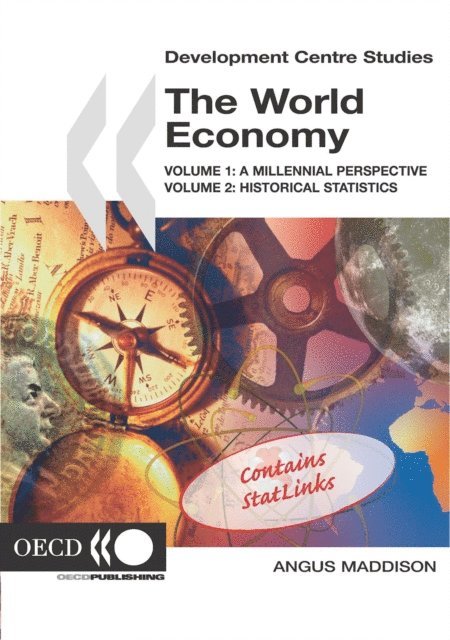
Development Centre Studies The World Economy Volume 1: A Millennial Perspective and Volume 2: Historical Statistics
E-bok, 2006
573 kr
Lägg i varukorg
The World Economy brings together two reference works by Angus Maddison: The World Economy: A Millennial Perspective, first published in 2001 and The World Economy: Historical Statistics, published in 2003. This new edition contains Statlinks, a service providing access to the underlying data in …
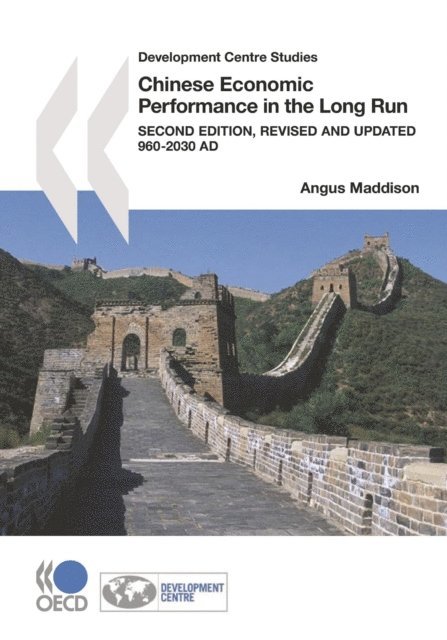
Development Centre Studies Chinese Economic Performance in the Long Run, 960-2030 AD, Second Edition, Revised and Updated
E-bok, 2007
573 kr
Lägg i varukorg
The study provides a major reassessment of the scale and scope of China's resurgence over the past half century, employing quantitative measurement techniques which are standard practice in OECD countries. It uses a comparative approach to explain why China's role in the world economy has changed …
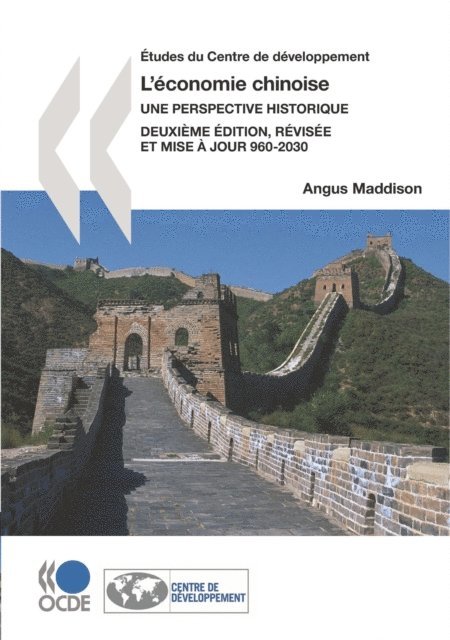
Etudes du Centre de developpement L'economie chinoise: Une perspective historique, 960-2030 AD, Deuxieme edition, revisee et mise a jour
E-bok, 2007
573 kr
Lägg i varukorg
L'etude reevalue la portee et le sens du renouveau de la Chine depuis une cinquantaine d'annees, en se servant de techniques quantitatives couramment utilisees dans les pays de l'OCDE. A partir d'une approche comparative, l'auteur explique pour quelles raisons le role de la Chine dans l'economie …