Anitabha Ghosh – författare
Visar alla böcker från författaren Anitabha Ghosh. Handla med fri frakt och snabb leverans.
4 produkter
4 produkter
Inbunden, Engelska, 2026
2 178 kr
Skickas inom 10-15 vardagar
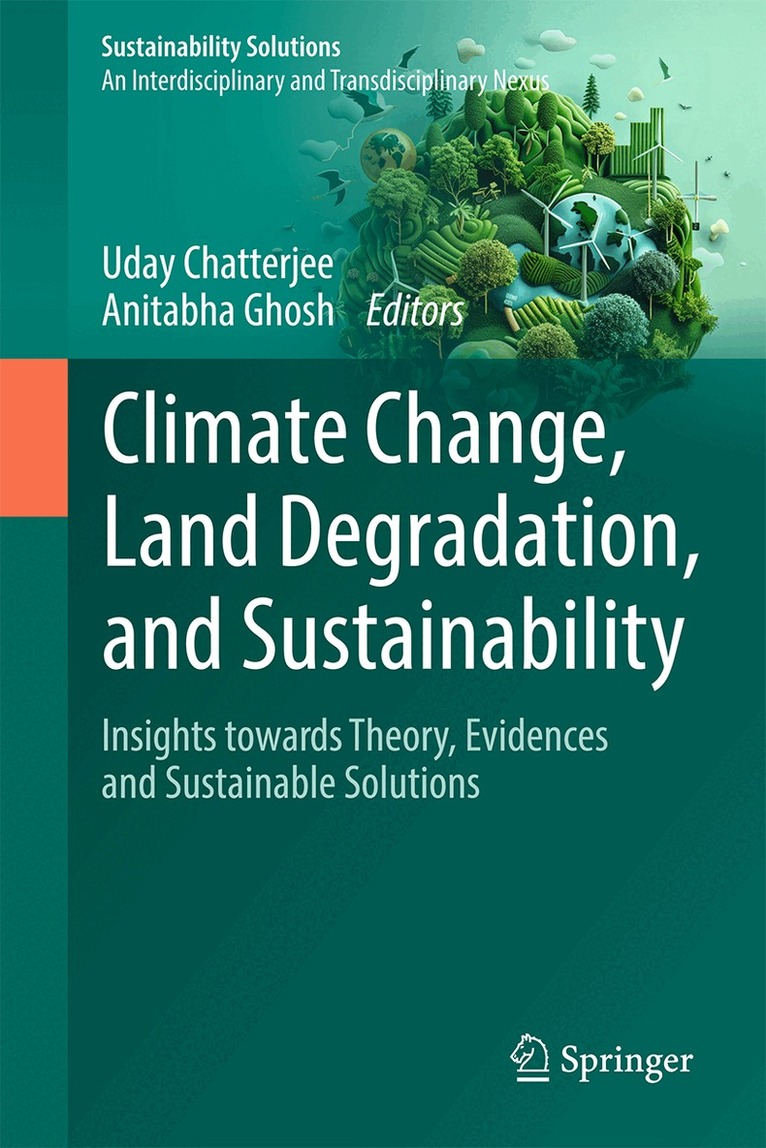
This book seeks to thoroughly examine the interrelated issues of climate change, land degradation, and the crucial need for sustainability. The book will thoroughly analyze these urgent matters, exploring their origins, effects, and possible resolutions. By using a variety of disciplines such as environmental science, ecology, economics, sociology, and policy studies, a comprehensive understanding of the intricate interactions involved will be provided. The initial part of the book will explore the scientific basis of climate change and land degradation, explaining the causes of these occurrences and their extensive impacts. It will examine issues including greenhouse gas emissions, deforestation, soil erosion, loss of biodiversity, and ecosystem degradation. By creating a strong scientific base, readers will comprehend the critical importance and scale of the obstacles we are up against. Expanding on this knowledge, the following parts will explore the socio-economic factors of climate change and land degradation, such as industrialization, unsustainable farming methods, urbanization, and consumption habits. It will emphasize the unequal effects of these actions on susceptible communities and areas, along with the moral aspects of harming the environment and fairness across generations. The main focus of the book will be on offering solutions and ways to achieve sustainability. It will present new approaches and successful examples from various countries, including renewable energy technologies, regenerative agriculture, conservation efforts, and sustainable urban planning. In addition, it will assess how policy interventions, international cooperation, and grassroots movements contribute to driving transformative change. By providing a comprehensive overview of the challenges posed by climate change and land degradation, the book aims to empower readers with the knowledge they need to become informed global citizens. It seeks to foster a deeper appreciation for the interconnectedness of environmental issues and their linkages to social and economic systems. Furthermore, the book aspires to catalyze meaningful action at individual, community, and policy levels. By showcasing successful examples of sustainability initiatives and outlining practical steps for achieving a more resilient future, it aims to embolden readers to become agents of positive change in their own spheres of influence. Ultimately, "Sustainable Earth" seeks to contribute to the collective effort to safeguard the health of our planet and ensure the well-being of present and future generations.
E-bok
Engelska, 20262 765 kr
Läs direkt efter köp
This book seeks to thoroughly examine the interrelated issues of climate change, land degradation, and the crucial need for sustainability. The book will thoroughly analyze these urgent matters, exploring their origins, effects, and possible resolutions. By using a variety of disciplines such as environmental science, ecology, economics, sociology, and policy studies, a comprehensive understanding of the intricate interactions involved will be provided. The initial part of the book will explore the scientific basis of climate change and land degradation, explaining the causes of these occurrences and their extensive impacts. It will examine issues including greenhouse gas emissions, deforestation, soil erosion, loss of biodiversity, and ecosystem degradation. By creating a strong scientific base, readers will comprehend the critical importance and scale of the obstacles we are up against. Expanding on this knowledge, the following parts will explore the socio-economic factors of climate change and land degradation, such as industrialization, unsustainable farming methods, urbanization, and consumption habits. It will emphasize the unequal effects of these actions on susceptible communities and areas, along with the moral aspects of harming the environment and fairness across generations. The main focus of the book will be on offering solutions and ways to achieve sustainability. It will present new approaches and successful examples from various countries, including renewable energy technologies, regenerative agriculture, conservation efforts, and sustainable urban planning. In addition, it will assess how policy interventions, international cooperation, and grassroots movements contribute to driving transformative change. By providing a comprehensive overview of the challenges posed by climate change and land degradation, the book aims to empower readers with the knowledge they need to become informed global citizens. It seeks to foster a deeper appreciation for the interconnectedness of environmental issues and their linkages to social and economic systems. Furthermore, the book aspires to catalyze meaningful action at individual, community, and policy levels. By showcasing successful examples of sustainability initiatives and outlining practical steps for achieving a more resilient future, it aims to embolden readers to become agents of positive change in their own spheres of influence. Ultimately, "e;Sustainable Earth"e; seeks to contribute to the collective effort to safeguard the health of our planet and ensure the well-being of present and future generations.
Inbunden, Engelska, 2025
1 735 kr
Skickas inom 5-8 vardagar
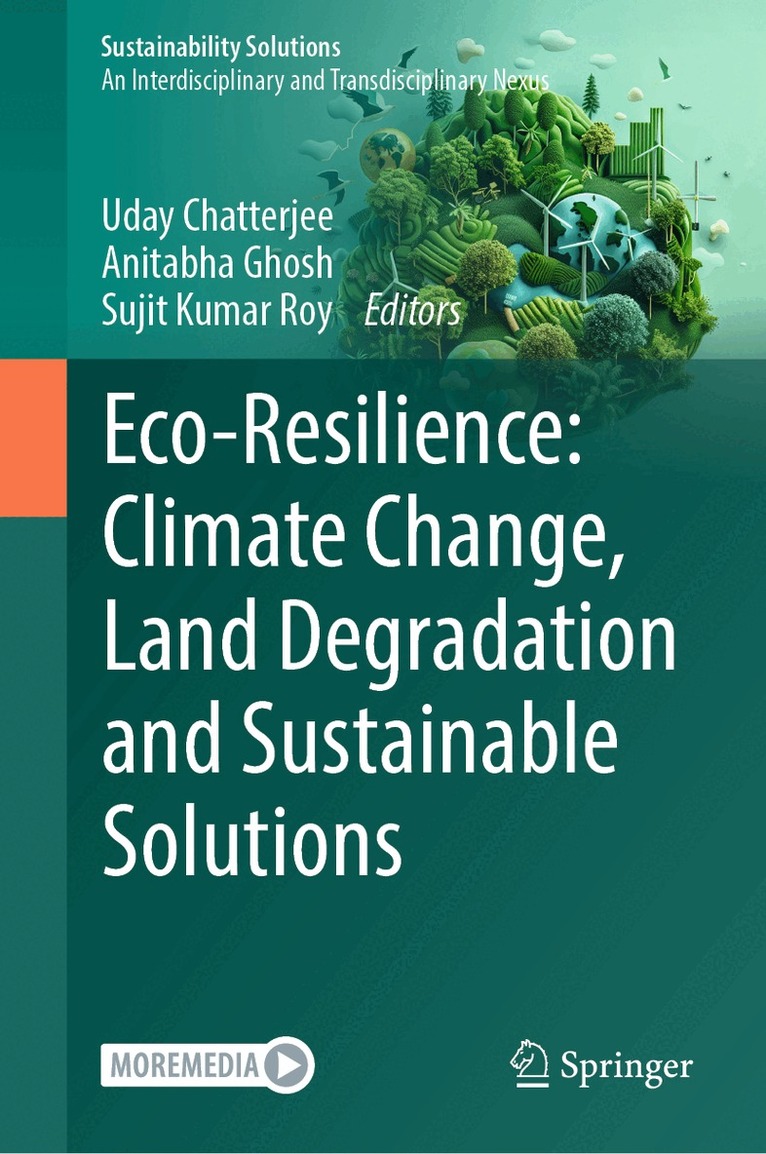
This book offers a critical and timely exploration of two of the most pressing environmental challenges of our time—climate change and land degradation—and the transformative role that eco-resilience can play in addressing them. As global environmental shifts intensify, ecosystems, livelihoods, and development trajectories are increasingly at risk. This volume responds to this urgency by positioning eco-resilience—the capacity of ecosystems to absorb shocks and maintain essential functions—as a guiding principle for sustainable restoration and adaptive management. Drawing upon multidisciplinary perspectives, the book presents a well-structured and accessible synthesis of cutting-edge research, real-world case studies, and policy insights from across the globe. Organized into three thematic sections, the book begins by establishing the foundational concepts and scientific understanding of the climate–land nexus. It then moves into detailed regional and global perspectives on climate-induced land degradation, highlighting vulnerable ecosystems and emerging trends. The final section turns toward solutions—showcasing community-based practices, technological innovations, nature-based strategies, and inclusive governance models that promote long-term ecological and socio-economic resilience. From the wetlands of Cameroon to the urban landscapes of India, from fragile hill ecosystems in the Nilgiris to coastal mangrove belts, the case studies provide localized yet globally relevant insights. Techniques like remote sensing, GIS-based suitability analysis, RUSLE modeling, and phenological monitoring are coupled with participatory approaches and traditional knowledge systems to create actionable, adaptive pathways.This book is designed for senior undergraduate and graduate students, academic researchers, policy-makers, and professionals in environmental sciences, agriculture, urban and regional planning, civil and environmental engineering, and climate policy. It offers not only an in-depth analysis of the drivers and consequences of climate change and land degradation but also a roadmap for building sustainable and resilient landscapes in the face of a rapidly changing planet. Eco-Resilience is more than a scholarly resource—it is a call to action for a shared future where ecological integrity and human well-being go hand in hand.
E-bok
Engelska, 20252 130 kr
Läs direkt efter köp
This book offers a critical and timely exploration of two of the most pressing environmental challenges of our time—climate change and land degradation—and the transformative role that eco-resilience can play in addressing them. As global environmental shifts intensify, ecosystems, livelihoods, and development trajectories are increasingly at risk. This volume responds to this urgency by positioning eco-resilience—the capacity of ecosystems to absorb shocks and maintain essential functions—as a guiding principle for sustainable restoration and adaptive management. Drawing upon multidisciplinary perspectives, the book presents a well-structured and accessible synthesis of cutting-edge research, real-world case studies, and policy insights from across the globe. Organized into three thematic sections, the book begins by establishing the foundational concepts and scientific understanding of the climate–land nexus. It then moves into detailed regional and global perspectives on climate-induced land degradation, highlighting vulnerable ecosystems and emerging trends. The final section turns toward solutions—showcasing community-based practices, technological innovations, nature-based strategies, and inclusive governance models that promote long-term ecological and socio-economic resilience. From the wetlands of Cameroon to the urban landscapes of India, from fragile hill ecosystems in the Nilgiris to coastal mangrove belts, the case studies provide localized yet globally relevant insights. Techniques like remote sensing, GIS-based suitability analysis, RUSLE modeling, and phenological monitoring are coupled with participatory approaches and traditional knowledge systems to create actionable, adaptive pathways.This book is designed for senior undergraduate and graduate students, academic researchers, policy-makers, and professionals in environmental sciences, agriculture, urban and regional planning, civil and environmental engineering, and climate policy. It offers not only an in-depth analysis of the drivers and consequences of climate change and land degradation but also a roadmap for building sustainable and resilient landscapes in the face of a rapidly changing planet. Eco-Resilience is more than a scholarly resource—it is a call to action for a shared future where ecological integrity and human well-being go hand in hand.