Ann duCille – författare
Visar alla böcker från författaren Ann duCille. Handla med fri frakt och snabb leverans.
5 produkter
5 produkter
E-bok
PDF, Engelska, 1993778 kr
Läs direkt efter köp
What does the tradition of marriage mean for people who have historically been deprived of its legal status? Generally thought of as a convention of the white middle class, the marriage plot has received little attention from critics of African-American literature. In this study, Ann duCille uses texts such as Nella Larsen''s Quicksand (1928) and Zora Neale Hurston''s Their Eyes Were Watching God (1937) to demonstrate that the African-American novel, like its European and Anglo-American counterparts, has developed around the marriage plot--what she calls "the coupling convention." Exploring the relationship between racial ideology and literary and social conventions, duCille uses the coupling convention to trace the historical development of the African-American women''s novel. She demonstrates the ways in which black women appropriated this novelistic device as a means of expressing and reclaiming their own identity. More than just a study of the marriage tradition in black women''s fiction, however, The Coupling Convention takes up and takes on many different meanings of tradition. It challenges the notion of a single black literary tradition, or of a single black feminist literary canon grounded in specifically black female language and experience, as it explores the ways in which white and black, male and female, mainstream and marginalized "traditions" and canons have influenced and cross-fertilized each other. Much more than a period study, The Coupling Convention spans the period from 1853 to 1948, addressing the vital questions of gender, subjectivity, race, and the canon that inform literary study today. In this original work, duCille offers a new paradigm for reading black women''s fiction.
Häftad, Engelska, 1996
377 kr
Skickas inom 10-15 vardagar
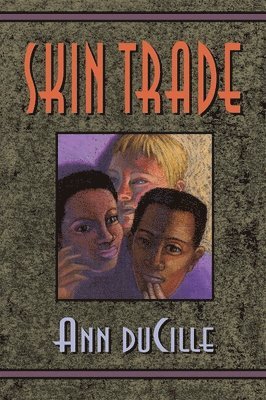
How does the notion of colorblind equality fit with the social and economic realities of black Americans? Challenging the increasingly popular argument that blacks should settle down, stop whining, and get jobs, Skin Trade insists that racism remains America's premier national story and its grossest national product. From Aunt Jemima Pancakes to ethnic Barbie dolls, corporate America peddles racial and gender stereotypes, packaging and selling them to us as breakfast food or toys for our kids.Moving from the realm of child's play through the academy and the justice system, Ann duCille draws on icons of popular culture to demonstrate that it isn't just race and gender that matter in America but race and gender as reducible to skin color, body structure, and other visible signs of difference. She reveals that Mattel, Inc., uses stereotypes of gender, race, and cultural difference to mark--and market--its Barbie dolls as female, white, black, Asian, and Hispanic. The popularity of these dolls suggests the degree to which we have internalized dominant definitions of self and other.In a similar move, Skin Trade interrogates the popular discourse surrounding the trial of O. J. Simpson, arguing that much of the mainstream coverage of the case was a racially coded message equally dependent on stereotypes. Focusing on Newsweek and Time in particular, duCille shows how the former All-American was depicted as un-American. She explores other collusions and collisions among race, gender, and capital as well. Especially concerned with superficial distinctions perpetuated within the academic community, the author argues that the academy indulges in its own skin trade in which both race and gender are hot properties.By turns biting, humorous, and hopeful, Skin Trade is always riveting, full of strange connections and unexpected insights.
Inbunden, Engelska, 2018
1 815 kr
Skickas inom 5-8 vardagar
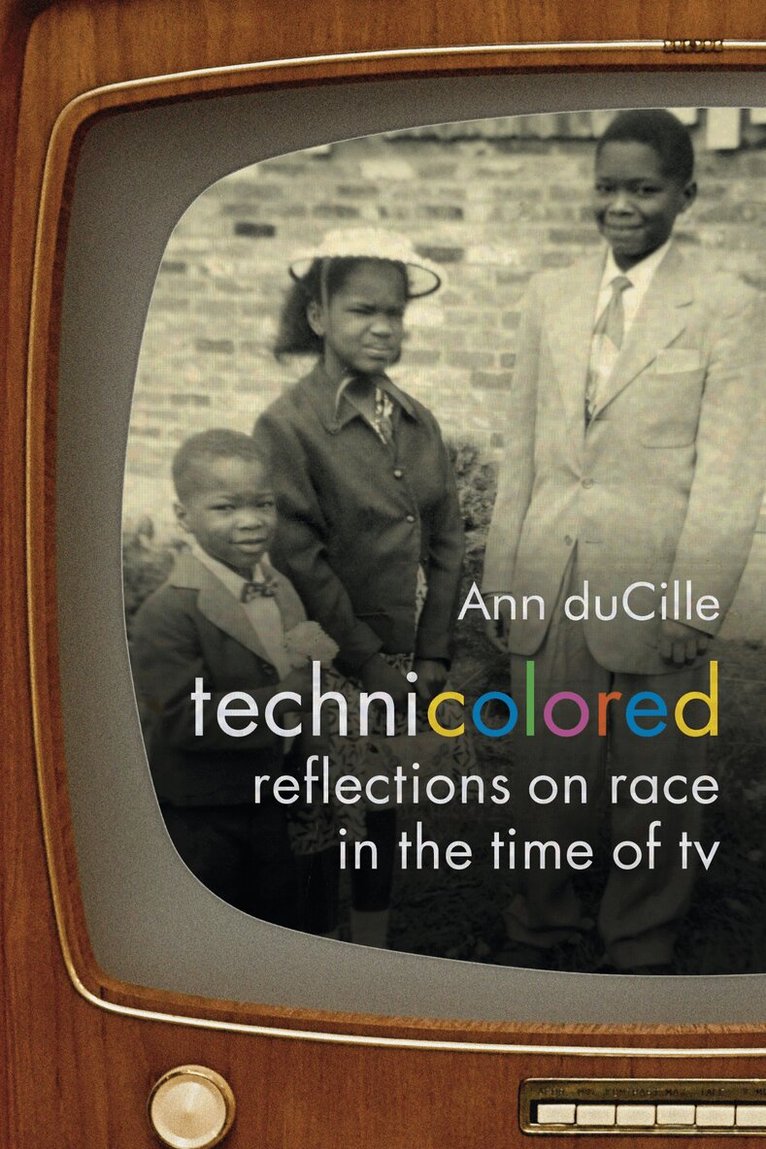
From early sitcoms such as I Love Lucy to contemporary prime-time dramas like Scandal and How to Get Away with Murder, African Americans on television have too often been asked to portray tired stereotypes of blacks as villains, vixens, victims, and disposable minorities. In Technicolored black feminist critic Ann duCille combines cultural critique with personal reflections on growing up with the new medium of TV to examine how televisual representations of African Americans have changed over the last sixty years. Whether explaining how watching Shirley Temple led her to question her own self-worth or how televisual representation functions as a form of racial profiling, duCille traces the real-life social and political repercussions of the portrayal and presence of African Americans on television. Neither a conventional memoir nor a traditional media study, Technicolored offers one lifelong television watcher's careful, personal, and timely analysis of how television continues to shape notions of race in the American imagination.
Häftad, Engelska, 2018
445 kr
Skickas inom 5-8 vardagar
From early sitcoms such as I Love Lucy to contemporary prime-time dramas like Scandal and How to Get Away with Murder, African Americans on television have too often been asked to portray tired stereotypes of blacks as villains, vixens, victims, and disposable minorities. In Technicolored black feminist critic Ann duCille combines cultural critique with personal reflections on growing up with the new medium of TV to examine how televisual representations of African Americans have changed over the last sixty years. Whether explaining how watching Shirley Temple led her to question her own self-worth or how televisual representation functions as a form of racial profiling, duCille traces the real-life social and political repercussions of the portrayal and presence of African Americans on television. Neither a conventional memoir nor a traditional media study, Technicolored offers one lifelong television watcher's careful, personal, and timely analysis of how television continues to shape notions of race in the American imagination.
Häftad, Engelska, 2018
162 kr
Skickas inom 5-8 vardagar
Marriage has been a contested term in African American studies. Contributors to this special issue address the subject of “black marriage,” broadly conceived and imaginatively considered from different vantage points. Historically, some scholars have maintained that the systematic enslavement of Africans completely undermined and effectively destroyed the institutions of heteropatriarchal marriage and family, while others have insisted that slaves found creative ways to be together, love each other, and build enduring conjugal relationships and family networks in spite of forced separations, legal prohibitions against marriage, and other hardships of the plantation system. Still others have pointed out that not all African Americans were slaves and that free black men and women formed stable marriages, fashioned strong nuclear and extended families, and established thriving black communities in antebellum cities in both the North and the South.Against the backdrop of such scholarship, contributors look back to scholarly, legal, and literary treatments of the marriage question and address current concerns, from BeyoncÉ’s music and marriage to the issues of interracial coupling, marriage equality, and the much-discussed decline in African American marriage rates.Contributors: Ann duCille, Oneka LaBennett, Mignon Moore, Kevin Quashie, Renee Romano, Hortense Spillers, Kendall Thomas, Rebecca Wanzo, Patricia Williams