Ann M. Ryan – författare
Visar alla böcker från författaren . Handla med fri frakt och snabb leverans.
2 produkter
2 produkter
Häftad, Engelska, 2011
312 kr
Skickas inom 5-8 vardagar
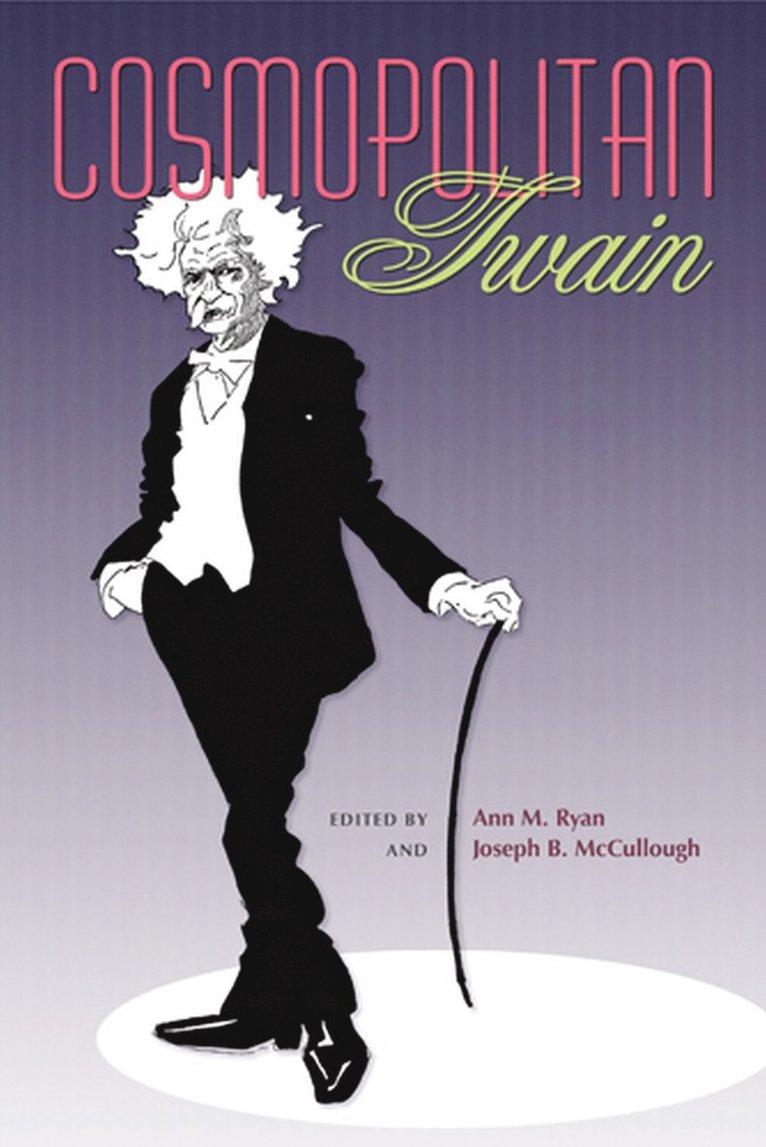
Cosmopolitan Twain takes seriously Mark Twain’s life as a citizen of urban landscapes: from the streets of New York City to the palaces of Vienna to the suburban utopia of Hartford. Traditional readings of Mark Twain orient his life and work by distinctly rural markers such as the Mississippi River, the Wild West, and small-town America; yet as this collection shows, Twain’s sensibilities were equally formed in the urban centres of the world. These essays represent Twain both as a product of urban frontiers and as a prophet of American modernity, situating him squarely within the context of an evolving international and cosmopolitan community.As Twain travelled and lived in these locales, he acquired languages, costumes, poses, and politics that made him one of the first truly cosmopolitan world citizens. Beginning with New York City—where Twain spent more of his life than in Hannibal—we learn that his early experiences there fed his fascination with racial identity and economic privilege. While in St. Louis and New Orleans, Twain developed a strategic detachment that became a part of his cosmopolitan persona. His contact with bohemian writers in San Francisco excited his ambitions to become more than a humorist, while sojourns in Buffalo and Hartford marked Twain’s uneasy accommodation to domesticity and cultural prominence. London finally liberated him from his narrowly constructed national identity, while Vienna allowed him to fully achieve his transnational voice. The volume ends by presenting Elmira, New York, as a complement, and something of a counterpart, to Twain’s cosmopolitan life, creating a domestic retreat from the pace and complexity of an increasingly urban, modern America. In response to each of these cities, Twain generated writings that marked America’s movement into the twentieth century and toward the darker realities that made possible this cosmopolitan state. Cosmopolitan Twain presents Twain’s eventual descent into scepticism and despair not as a departure from his early values but rather as a dark awakening into the new terms of American identity, history, and moral authority. This collection reveals a writer who is decidedly less static than the iconic portrait that dominates popular culture. It offers a corrective to the familiar image of Twain as the nostalgic voice of America’s rural past, presenting Twain as a citizen of modernity and a visionary of a global and cosmopolitan future.
Inbunden, Engelska, 2025
530 kr
Skickas inom 5-8 vardagar
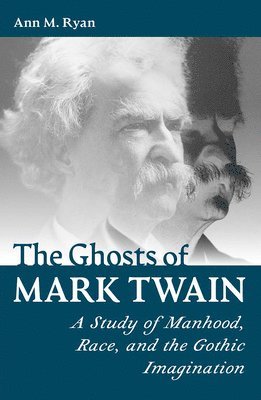
In his autobiography, Mark Twain confesses that “from the cradle up I have been like the rest of the race—never quite sane in the night.” Of all the memories and fears that disturbed Twain’s peace of mind, none are more intractable than those associated with White fathers, Black men, the histories they reflect, and the future they promise. The Ghosts of Mark Twain: A Study of Manhood, Race, and the Gothic Imagination investigates these tense intersections in Twain’s life and work. Ann M. Ryan maps Twain’s resistance to ideals of white masculinity and his occasional capitulation to them. While Twain reflects upon the history of White men—including the intimate memory of his father’s failures and abuses—he also imagines a future in which Black men will gain an authentic voice and agency. Preferring the messy humanity of Mark Twain, Ryan calls into question the “St. Mark” school of criticism, which glosses—among other themes—Twain’s uneasy relation to Black culture. In unpublished works and excised material, Twain conjures memories and specters of Black men that are far from comforting. No longer “friends and allies” like fictive Ol’ Uncle Dan’l; these Black ghosts will settle for revenge if they can’t get justice.Some of the works considered in The Ghosts of Mark Twain are not widely known: “Which Was It?,” “The United States of Lyncherdom,” No. 44: The Mysterious Stranger, and the Morgan manuscript of Pudd’nhead Wilson. Written into the record of these fragments is Twain’s desire to be a different kind of White man, just as their incomplete nature demonstrates how often he stumbled in that effort. When Jim describes the White and Black spirits hovering over Pap Finn, Twain reveals his own conflicted position in America’s racial history. And as Jim declares to Huck, “A body can’t tell yit which one gwyne to fetch him at de las.’”