
Anna Dalos – författare
Visar alla böcker från författaren Anna Dalos. Handla med fri frakt och snabb leverans.
2 produkter
2 produkter
Del 27 - California Studies in 20th-Century Music
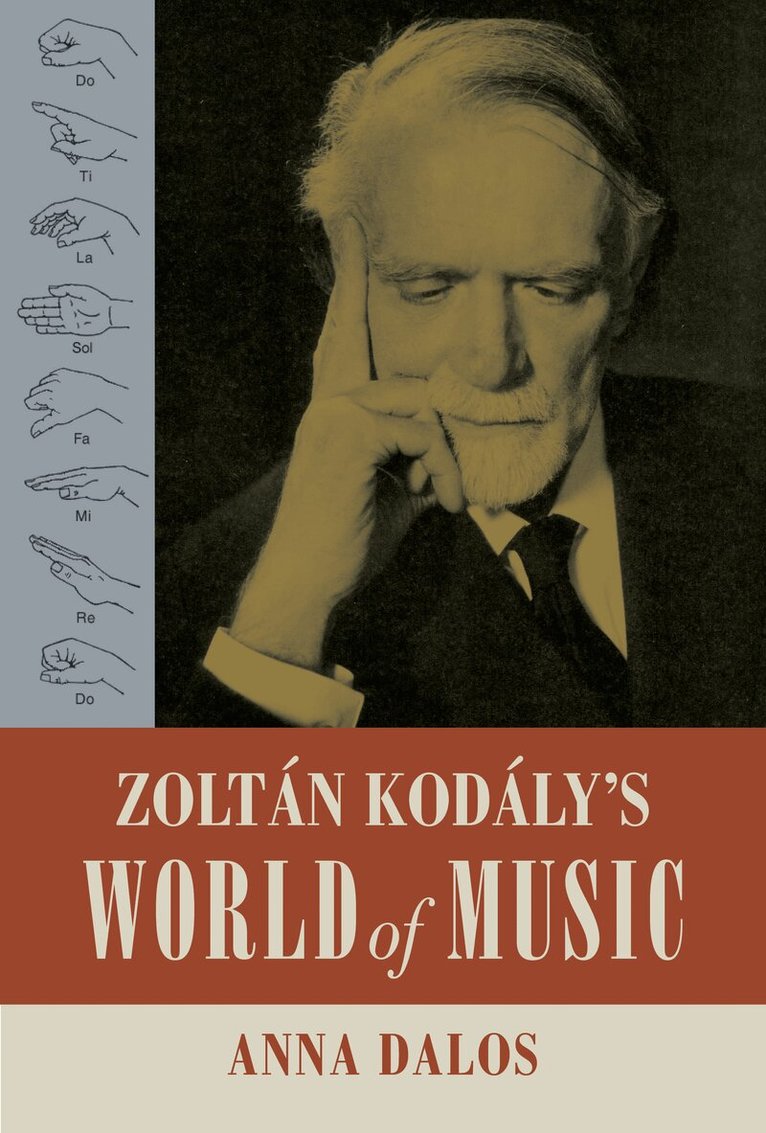
Zoltan Kodaly’s World of Music
Inbunden, Engelska, 2020
577 kr
Skickas inom 7-10 vardagar
Hungarian composer and musician Zoltán Kodály (1882–1967) is best known for his pedagogical system, the Kodály Method, which has been influential in the development of music education around the world. Author Anna Dalos considers, for the first time in publication, Kodály’s career beyond the classroom and provides a comprehensive assessment of his works as a composer. A noted collector of Hungarian folk music, Kodály adapted the traditional heritage musics in his own compositions, greatly influencing the work of his contemporary, Béla Bartók. Highlighting Kodály’s major music experiences, Dalos shows how his musical works were also inspired by Brahms, Wagner, Debussy, Palestrina, and Bach. Set against the backdrop of various oppressive regimes of twentieth-century Europe, this study of Kodály’s career also explores decisive, extramusical impulses, such as his bitter experiences of World War I, Kodály’s reception of classical antiquity, and his interpretation of the male and female roles in his music. Written by the leading Kodály expert, this impressive work of historical and musical insight provides a timely and much-needed English-language treatment of the twentieth-century composer.
811 kr
Skickas inom 5-8 vardagar
This volume presents the compositions written in Hungary in the period between 1956 and 1989 and examines the entire repertoire of the composers of the period. In just over three decades of the so-called "Kádár era"—a period characterized by historians with the terms "goulash communism" or "the happiest barracks" due to the liberal nature of the system compared to the other countries behind the Iron Curtain—all generations of Hungarian composers had the opportunity to get acquainted with the current trends of modern music. This made it possible to modify their compositional perspective significantly influenced hitherto by Bartók’s and Kodály’s model. The book mainly follows the discourses about new music hidden in the background of the stylistic changes, and the careers of the four generations that were active during this period. The work takes a look at the reception of the most important compositional techniques or forms of thinking, like dodecaphony, serialism, electronic music, post-serialism, experimentalism, minimalism, neo-styles, neo-conservatism, and points out the individual features of Hungarian composition, such as, for example, the changes of the concept of national music. The book does not only analyse the works written in this period, but also interprets them in the context of contemporary criticism, using in the interpretation the contemporary statements or later recollections of the composers as well.