Anna Siri – författare
Visar alla böcker från författaren Anna Siri. Handla med fri frakt och snabb leverans.
2 produkter
2 produkter
1 793 kr
Läs direkt efter köp
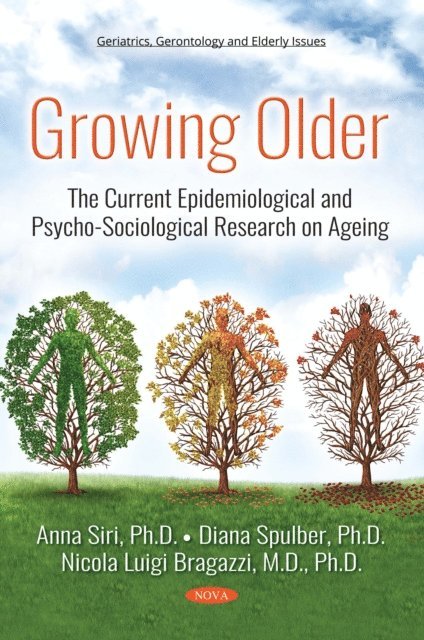
What does it mean for a person to move from work to retirement? What characterizes this experience? The significant demographic, economic and socio-cultural changes that have taken place recently have also had an impact on ways of achieving full withdrawal from work.Retirement is a difficult transition in which people lose some material and psychosocial resources, but they can experience new opportunities for enrichment and define new projects. However, this potential positive outcome is not promptly achievable and requires personal commitment as well as social and organizational facilities to master it.Retirement is not an event, but a process that begins to foresee progressive forms of exit and re-entry into a social reality to be defined by the person. Therefore, we do not refer to a simple or automatic conclusion of "e;active life"e;, but to the possible construction of a new composite system of self-manageable activities that has to be supported by organizations and institutions.In the cultural imaginary, in fact, the condition of the elderly is associated with the idea of a general process of decay, deriving from a progressive loss of psychophysical, social and productive functions. The traits that are most frequently attributed to older people are those of weakness and disengagement, starting from the fact that the birth of the separation of old age from adulthood is anchored to the escape of the subject from the productive system.The lengthening of a lifespan is reshaping the structure and demographic profile of our society and the generational system, with consequences on the economic and social system. It represents one of the great challenges with important consequences for contemporary societies.
E-bok
PDF, Engelska, 20203 728 kr
Läs direkt efter köp
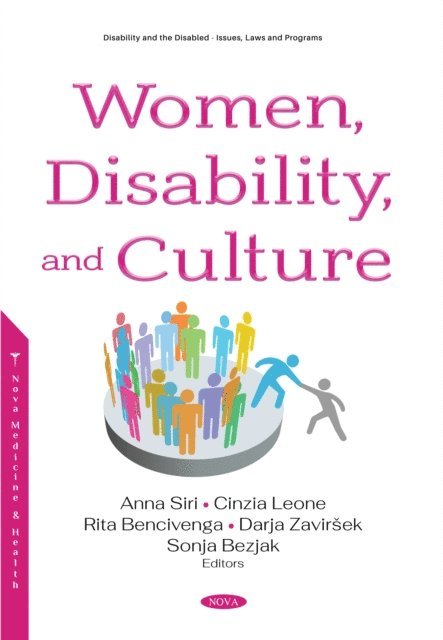
Women and girls with disabilities find themselves constantly having to deal with multiple, intersectional discrimination due to both their gender and their disability, as well as social conditioning. Indeed, the intersection made up of factors such as race, ethnic origin, social background, cultural substrate, age, sexual orientation, nationality, religion, gender, disability, status as refugee or migrant and others besides, has a multiplying effect that increases discrimination yet further. Where conditions are equal, women with disabilities do not enjoy equal opportunities in terms of their participation in all aspects of society; rather, they are all too often excluded, amongst others from education, employment, access to poverty reduction programmes, from taking part in political and public lives and, moreover, some legislative deeds actually prevent them from making decisions regarding their own lives, also as regards sexual and reproductive rights. History, attitudes and prejudices of the societies to which we belong, including of families, have created and continue to feed into a negative stereotypical image of women and girls with disabilities, thereby helping further isolate and marginalise them yet more. Very often, they are also ignored by information media and, when they do gain media attention, the approach tends to considers them from the perspective of medical-assistance needs, silencing their abilities and valuable contribution to the society in which they live. The book seeks to pay the right attention to the condition of women with disabilities, offering points for reflection, also on the different, often invisible, cultural and social undertones that continue today to feed into prejudicial stereotypes.