
Anne Eakin Moss – författare
Visar alla böcker från författaren Anne Eakin Moss. Handla med fri frakt och snabb leverans.
2 produkter
2 produkter
Häftad, Engelska, 2019
493 kr
Skickas inom 5-8 vardagar
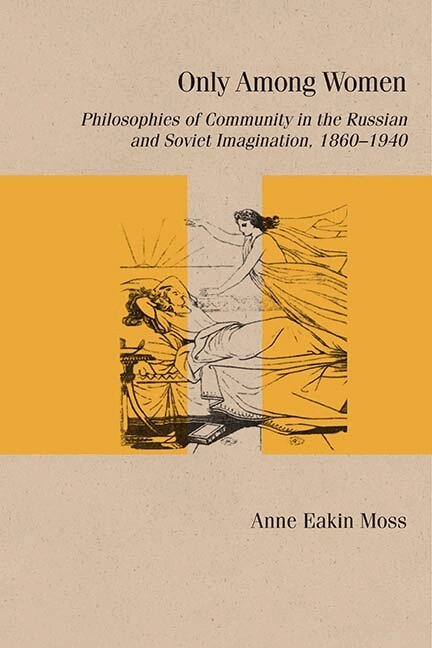
Only Among Women examines idealized relationships between women in Russian literature and culture from the age of the classic Russian novel to socialist realism and Stalinist film. It reveals how the idea of a community of women—a social sphere ostensibly free from the taint of money, sex, or self-interest—originates in the classic Russian novel, fuels mystical notions of unity in turn-of-the-century modernism, and finally assumes a place of privilege in Stalinist culture, especially cinema. Rethinking the significance and surprising continuities of gender in Russian and Soviet culture, Eakin Moss relates this tradition to Western philosophies of community developed by thinkers from Jean-Jacques Rousseau to Jean-Luc Nancy. She shows that in the 1860s friendship among women came to figure as an organic national collectivity in works such as Tolstoy’s War and Peace and a model for revolutionary organization in Chernyshevsky’s What Is To Be Done?. Only Among Women also traces how women’s community came to be connected with new religious and philosophical notions of a unity transcending the individual at the fin-de-siècle. Finally, in Stalinist propaganda of the 1930s, the notion of women’s community inherited from the Russian novel reemerged in the image of harmonious female workers serving as a patriarchal model for loyal Communist citizenship.
Inbunden, Engelska, 2019
1 532 kr
Skickas inom 10-15 vardagar
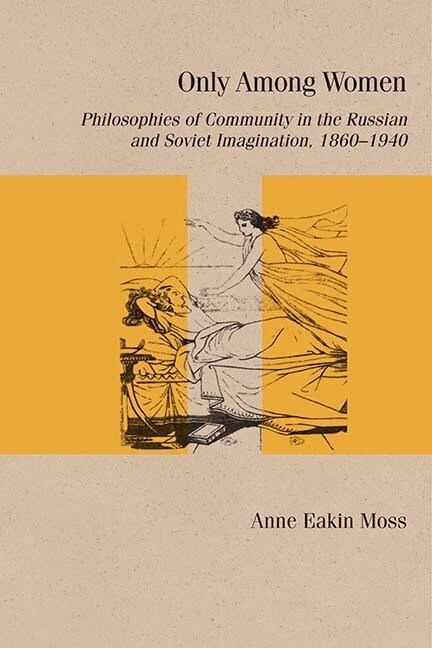
Only Among Women examines idealized relationships between women in Russian literature and culture from the age of the classic Russian novel to socialist realism and Stalinist film. It reveals how the idea of a community of women—a social sphere ostensibly free from the taint of money, sex, or self-interest—originates in the classic Russian novel, fuels mystical notions of unity in turn-of-the-century modernism, and finally assumes a place of privilege in Stalinist culture, especially cinema. Rethinking the significance and surprising continuities of gender in Russian and Soviet culture, Eakin Moss relates this tradition to Western philosophies of community developed by thinkers from Jean-Jacques Rousseau to Jean-Luc Nancy. She shows that in the 1860s friendship among women came to figure as an organic national collectivity in works such as Tolstoy’s War and Peace and a model for revolutionary organization in Chernyshevsky’s What Is To Be Done?. Only Among Women also traces how women’s community came to be connected with new religious and philosophical notions of a unity transcending the individual at the fin-de-siècle. Finally, in Stalinist propaganda of the 1930s, the notion of women’s community inherited from the Russian novel reemerged in the image of harmonious female workers serving as a patriarchal model for loyal Communist citizenship.