Anne Holohan – författare
Visar alla böcker från författaren Anne Holohan. Handla med fri frakt och snabb leverans.
5 produkter
5 produkter
Inbunden, Engelska, 2005
1 143 kr
Skickas inom 10-15 vardagar
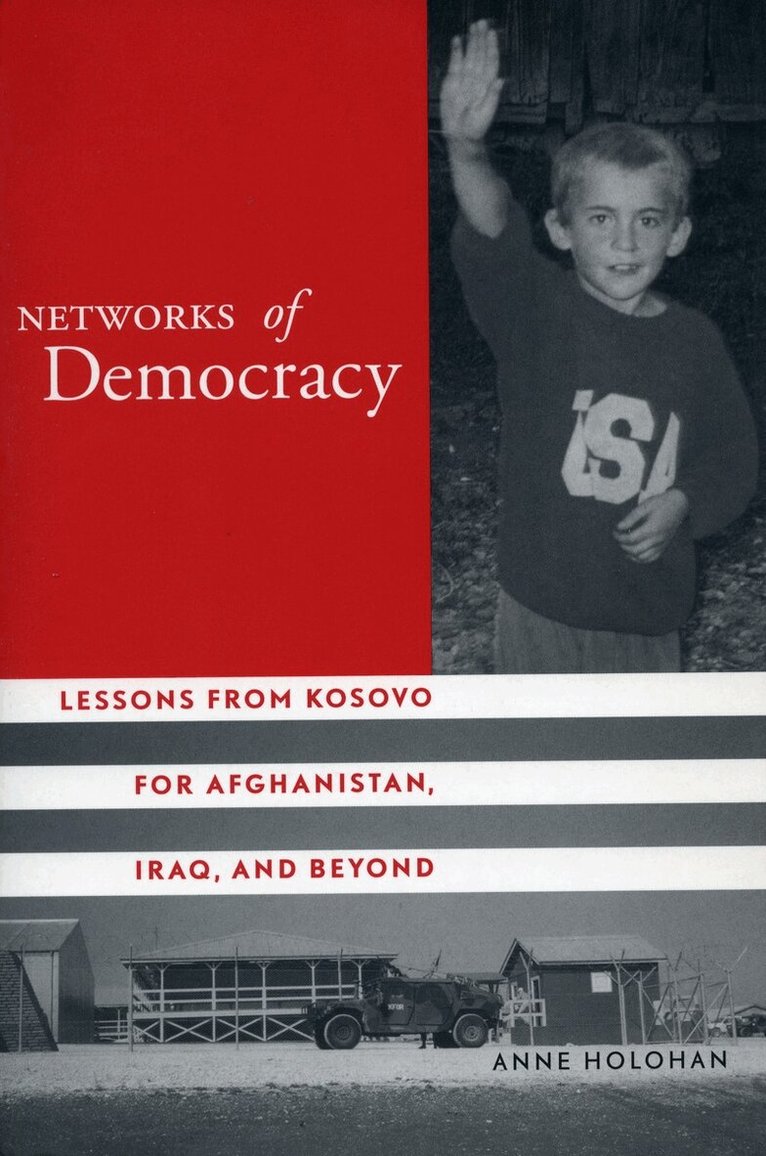
Most work on peacekeeping and peacebuilding focuses almost entirely on policy. Networks of Democracy provides a distinct and important perspective that links daily activities to mission outcomes. This book is an ethnography of the interaction between the diverse people and diverse organizations on the ground in a peacebuilding and reconstruction mission, the United Nations Mission in Kosovo. Anne Holohan asks and answers: how do people from many nationalities and who are part of organizations with diverse structures and cultures—militaries, police, civilian organizations—cooperate? What everyday behaviors and organizational practices facilitate communication and cooperation, and what behaviors and practices impede it?Drawing on extensive research of interactions on the ground, Holohan offers vivid accounts of a flexible, inclusive inter-organizational culture in two municipalities—one where all mission actors are present and participating, the other a rigid, hierarchical, exclusive inter-organizational culture. As she demonstrates, these differences produce a striking contrast in outcomes between the two municipalities, and for the mission overall.
Häftad, Engelska, 2005
274 kr
Skickas inom 5-8 vardagar
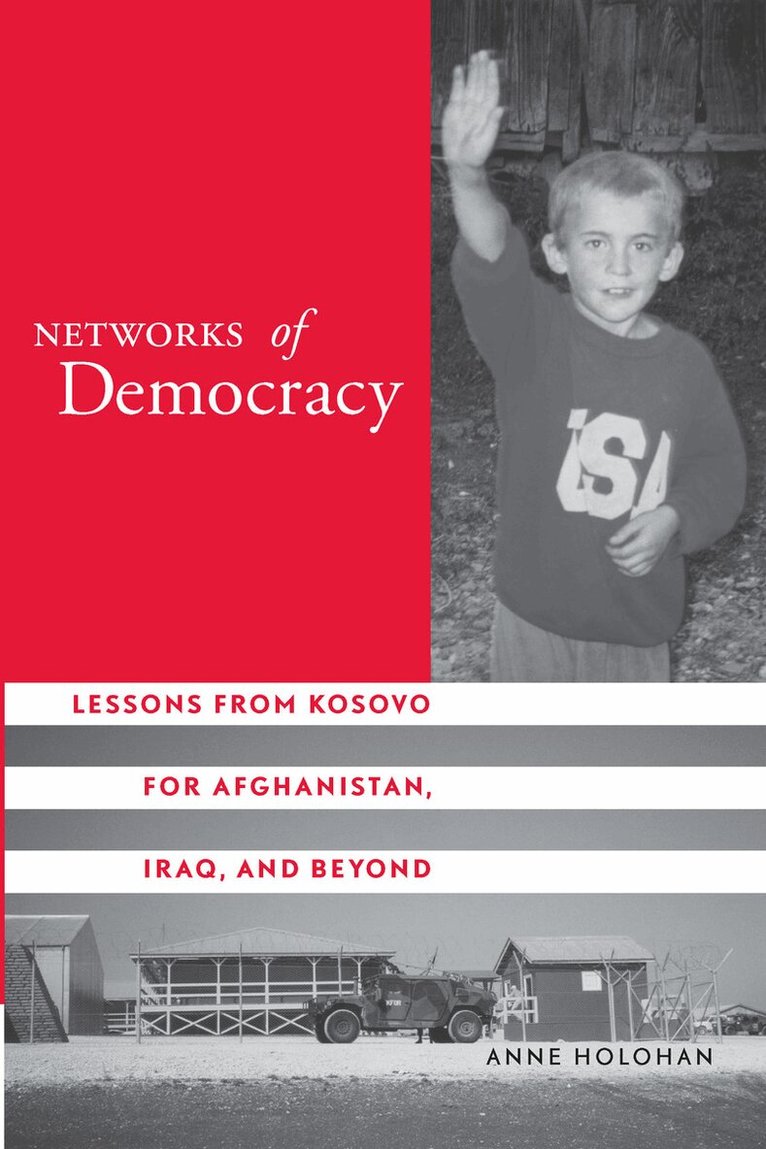
Most work on peacekeeping and peacebuilding focuses almost entirely on policy. Networks of Democracy provides a distinct and important perspective that links daily activities to mission outcomes. This book is an ethnography of the interaction between the diverse people and diverse organizations on the ground in a peacebuilding and reconstruction mission, the United Nations Mission in Kosovo. Anne Holohan asks and answers: how do people from many nationalities and who are part of organizations with diverse structures and cultures—militaries, police, civilian organizations—cooperate? What everyday behaviors and organizational practices facilitate communication and cooperation, and what behaviors and practices impede it?Drawing on extensive research of interactions on the ground, Holohan offers vivid accounts of a flexible, inclusive inter-organizational culture in two municipalities—one where all mission actors are present and participating, the other a rigid, hierarchical, exclusive inter-organizational culture. As she demonstrates, these differences produce a striking contrast in outcomes between the two municipalities, and for the mission overall.
Inbunden, Engelska, 2026
2 225 kr
Kommande
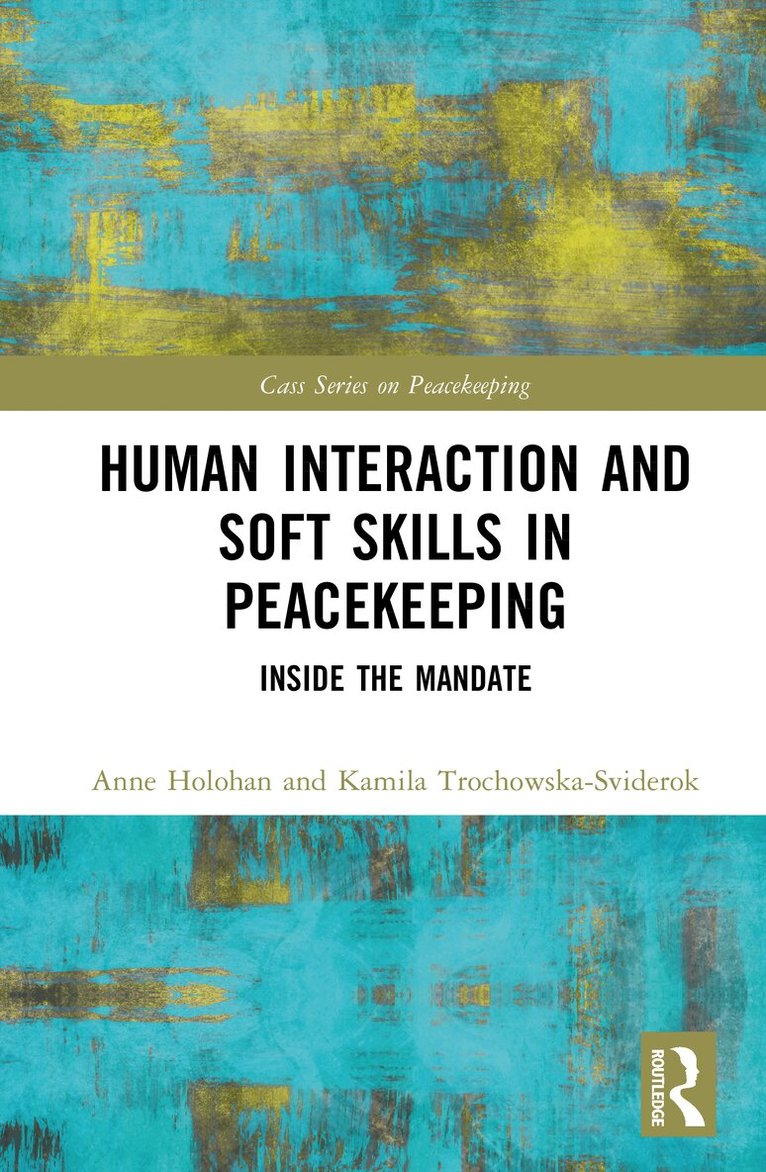
This book challenges the dominant top-down view of peacekeeping by focusing on the individual peacekeeper’s embodied, everyday experiences and interactions in the field, and the soft skills needed to navigate those interactions.Macro-level goals (such as security and stability) often hinge on micro-level dynamics: how peacekeepers perceive, interpret, and navigate interpersonal and inter-organizational encounters. These encounters are shaped by the varied set of meanings brought to every interaction by the embodied individual soldier and police officer. Meanings around gender, culture, and their own roles are drawn from the individual peacekeeper’s organisation and their own society. The other peacekeepers and the members of the local populations bring their own sets of meanings. Interactions can produce common understanding and cooperation, or they can lead to an impasse, damaged relationships and poor cooperation. The book draws on 177 in-depth interviews with experienced male and female military and police peacekeepers from six nations to provide significant insight into how interactions at the micro-level are crucial for effective cooperation and achievement of the mission goals. It delineates and demonstrates through vivid scenarios the soft skills each peacekeeper needs to improve these interactions: awareness of organisational culture, awareness of local culture, awareness of gender, awareness of the role of empathy; and crucially, the willingness and capability to act upon these.This book will be of much interest to students of peacekeeping, conflict studies, security studies, gender studies, sociology, and International Relations in general.
Häftad, Engelska, 2016
214 kr
Skickas inom 10-15 vardagar
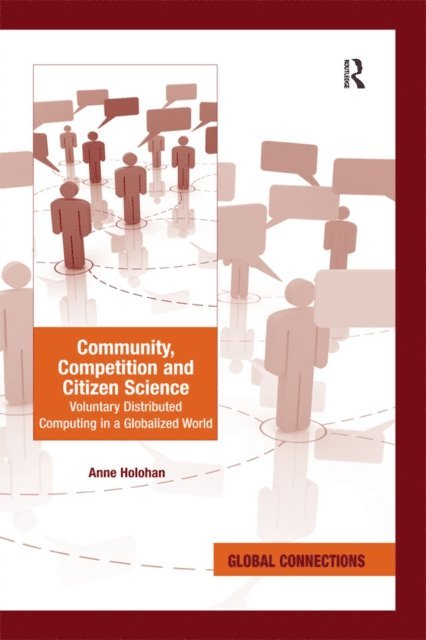
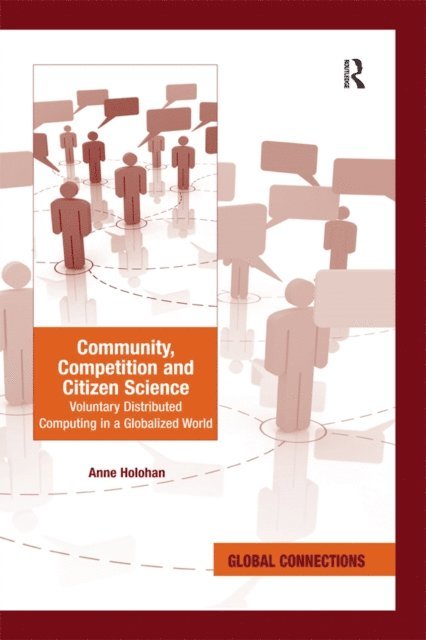
Voluntary distributed computing projects divide large computational tasks into small pieces of data or work that are sent out over the Internet to be processed by individual users, who participate voluntarily in order to provide solutions that would ordinarily require investments of millions of dollars. This approach is contributing to the transformation of computationally heavy scientific research, opening up participation in science to interested lay people and greatly reducing the cost-barriers to computation for financially challenged researchers. Drawing on face-to-face and online ethnographic, survey and interview data with participants in distributed computing projects around the world, this book sheds light on the organizational and social structures of voluntary distributed computing projects, communities and teams, with close attention to questions of motivation in projects that offer little or no traditional forms of reward, either financially or in terms of participants' careers. With its focus on non-market, non-hierarchical cooperation, this book is a case study of networked individuals around the world who are part of a new social production of information. A rich study of the transformative potential inherent in globalization and connectedness, Community, Competition and Citizen Science will appeal to sociologists and political scientists with interests in globalization, networks and science and technology studies, together with scholars and students of media and communication and those working in relevant fields of computing, information systems and scientific collaboration.
Inbunden, Engelska, 2013
629 kr
Skickas inom 10-15 vardagar
Voluntary distributed computing projects divide large computational tasks into small pieces of data or work that are sent out over the Internet to be processed by individual users, who participate voluntarily in order to provide solutions that would ordinarily require investments of millions of dollars. This approach is contributing to the transformation of computationally heavy scientific research, opening up participation in science to interested lay people and greatly reducing the cost-barriers to computation for financially challenged researchers. Drawing on face-to-face and online ethnographic, survey and interview data with participants in distributed computing projects around the world, this book sheds light on the organizational and social structures of voluntary distributed computing projects, communities and teams, with close attention to questions of motivation in projects that offer little or no traditional forms of reward, either financially or in terms of participants' careers. With its focus on non-market, non-hierarchical cooperation, this book is a case study of networked individuals around the world who are part of a new social production of information. A rich study of the transformative potential inherent in globalization and connectedness, Community, Competition and Citizen Science will appeal to sociologists and political scientists with interests in globalization, networks and science and technology studies, together with scholars and students of media and communication and those working in relevant fields of computing, information systems and scientific collaboration.