Anne Maxwell - Böcker
Visar alla böcker från författaren Anne Maxwell. Handla med fri frakt och snabb leverans.
19 produkter
19 produkter
2 160 kr
Skickas inom 10-15 vardagar
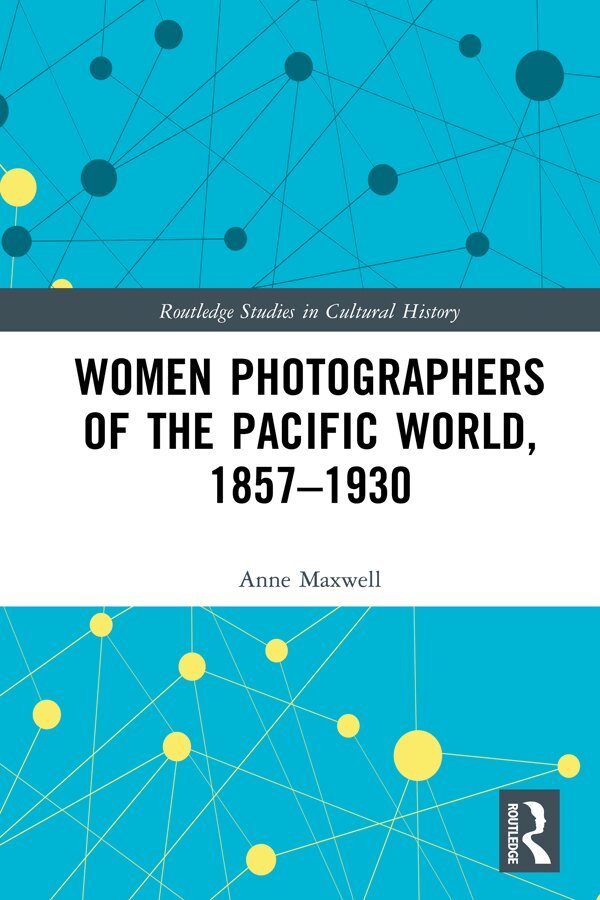
This is the first book to examine the lives and works of women photographers active in the settler colonial nations of the Pacific Rim from 1857–1930. The few histories of women’s photography that have been written so far have been confined to developments in Britain, France, Germany and the USA, and have overwhelmingly focused on artistic photography, ignoring the whole area of commercial photography. Taking 12 case studies as representative of the many women who entered the profession between 1857 and 1930, this book deals with both early 20th-century artistic and ethnographic photography in the region and 19th-century commercial photography. In addition to asking how female photographers coped with the pressure of being women in a male-dominated profession, what was new about the techniques and methods they deployed, and the kinds of artistic visions they brought to bear on their subjects, it breaks new ground by asking how they responded as photographers to the on-going decimation and displacement of indigenous peoples as white settlement and capitalism became ever more entrenched across the new world territories of the Pacific Rim, and photography more influenced by the international art movements of Pictorialism and Modernism.
652 kr
Skickas inom 10-15 vardagar
This is the first book to examine the lives and works of women photographers active in the settler colonial nations of the Pacific Rim from 1857–1930. The few histories of women’s photography that have been written so far have been confined to developments in Britain, France, Germany and the USA, and have overwhelmingly focused on artistic photography, ignoring the whole area of commercial photography. Taking 12 case studies as representative of the many women who entered the profession between 1857 and 1930, this book deals with both early 20th-century artistic and ethnographic photography in the region and 19th-century commercial photography. In addition to asking how female photographers coped with the pressure of being women in a male-dominated profession, what was new about the techniques and methods they deployed, and the kinds of artistic visions they brought to bear on their subjects, it breaks new ground by asking how they responded as photographers to the on-going decimation and displacement of indigenous peoples as white settlement and capitalism became ever more entrenched across the new world territories of the Pacific Rim, and photography more influenced by the international art movements of Pictorialism and Modernism.
Würdest du einem Fisch beibringen, auf Bäume zu klettern? (Would You Teach a Fish - German)
Häftad, Tyska, 2019
229 kr
Skickas inom 5-8 vardagar
238 kr
Skickas inom 5-8 vardagar
229 kr
Skickas inom 5-8 vardagar
229 kr
Skickas inom 5-8 vardagar
240 kr
Skickas inom 5-8 vardagar
240 kr
Skickas inom 5-8 vardagar
218 kr
Skickas inom 5-8 vardagar
209 kr
Skickas
126 kr
Skickas
104 kr
Skickas
Del 1 - Anthem Studies in Australian History
Australian Women’s Historical Photography
Other Times, Other Views
Häftad, Engelska, 2024
321 kr
Skickas
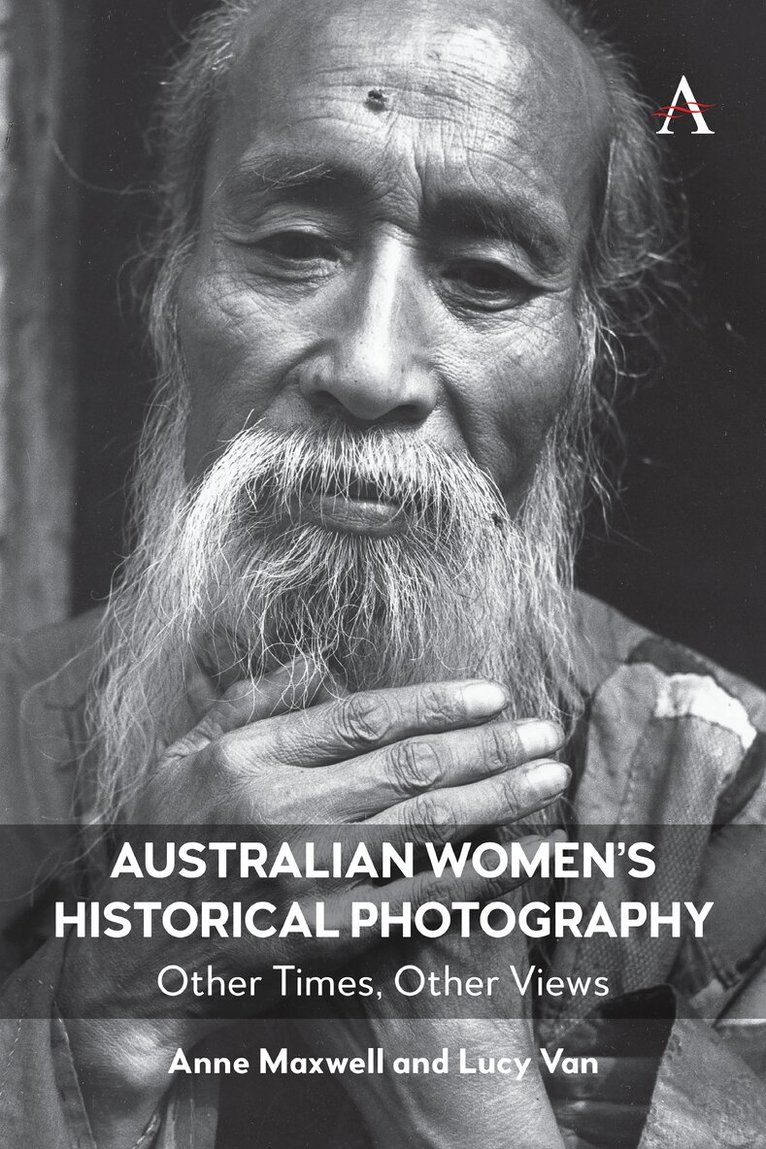
Australian Women’s Historical Photography: Other Times, Other Views examines the photographs produced by six talented women photographers against the historical backdrop of settler violence towards Indigenous Australians, the First Women’s Movement, the Great War of 1914–1918, Australia’s imperial occupation of New Guinea, the final years of Chinese Nationalist Party rule in China and debates about photography’s status as an art form. Women’s works from the nineteenth and early twentieth centuries have been down-played or even ignored in existing accounts of Australia’s cultural history, and this study is aimed at rectifying this situation. At the same time, the book demonstrates why amateur works are just as important as commercial works to our understanding of the past.● Methodologically, the book draws on scholarship from history, art history, anthropology, sociology, gender studies and cultural studies to create an interdisciplinary critical framework that will be of interest to a broad range of academic and archival researchers. It is also a framework that is critically sensible of its own groundings in the postcolonial and feminist present thereby reflecting what is meaningful at any given historical moment.● Finally, this book responds to the pronounced lack of visibility of Australian realist, documentary and commercial women’s works. The few histories of Australian women’s photography that exist pay more attention to modernist and contemporary works, and when they do mention earlier women photographer’s works, they seldom go into much detail. They also ignore the works of the earliest Indigenous women photographers, women who traveled and made photographs abroad. By presenting a carefully contextualized and detailed study of works by six Australian women photographers who worked in the late colonial era and whose works in all sorts of small and surprising ways chronicled the impacts of some of the periods more disturbing as well as enlightened events, we will not only add to knowledge of Australian women’s photography, we will also broaden and enrich the frames of women’s photography and Australian history more generally.
370 kr
Tillfälligt slut
370 kr
Tillfälligt slut
1 749 kr
Skickas inom 7-10 vardagar
Documents and critically analyses the photographs that helped strengthen as well as bring down the Eugenics Movement. Using a large body of racial-type images and a variety of historical and archival sources, and concentrating mainly on developments in Britain, the USA and Nazi Germany, the author argues that photography, as the most powerful visual medium of the late nineteenth and early twentieth centuries, was vital to the Eugenics Movement's success -- not only did it allow eugenicists to identify the people with superior and inferior hereditary traits, but it helped publicise and lend scientific authority to eugenicists' racial theories. The author further argues for a strong connection between the racial-type photographs that eugenicists created and the photographic images produced by nineteenth-century anthropologists and prison authorities, and that the photographic works of contemporary liberal anthropologists played a significant role in the Eugenics Movement's downfall. Besides adding to our knowledge of photography's crucial role in helping to authorise and implement some of the most controversial social policies of modern times, this book makes a major contribution to our understanding of the history of racism. Most accounts of eugenics have been written by history of science scholars, with an emphasis on the history of science and medicine. In contrast, "Picture Imperfect" looks at eugenics from the standpoint of its most significant cultural data -- racial-type photography, investigating the techniques, media forms, and styles of photography used by eugenicists, and relating these to their racial theories and their social policies and goals. Indeed, the visual archive was crucially constitutive of eugenic racial science because it helped make many of its concepts appear both intuitive as well as scientifically legitimate. Discussion of the history of the eugenics movement encompasses a wide narrative, including Nazi history, US politics, criminology and prison studies, and propaganda.
519 kr
Skickas inom 7-10 vardagar
Documents and critically analyses the photographs that helped strengthen as well as bring down the Eugenics Movement. Using a large body of racial-type images and a variety of historical and archival sources, and concentrating mainly on developments in Britain, the USA and Nazi Germany, the author argues that photography, as the most powerful visual medium of the late nineteenth and early twentieth centuries, was vital to the Eugenics Movement's success -- not only did it allow eugenicists to identify the people with superior and inferior hereditary traits, but it helped publicise and lend scientific authority to eugenicists' racial theories. The author further argues for a strong connection between the racial-type photographs that eugenicists created and the photographic images produced by nineteenth-century anthropologists and prison authorities, and that the photographic works of contemporary liberal anthropologists played a significant role in the Eugenics Movement's downfall. Besides adding to our knowledge of photography's crucial role in helping to authorise and implement some of the most controversial social policies of modern times, this book makes a major contribution to our understanding of the history of racism. Most accounts of eugenics have been written by history of science scholars, with an emphasis on the history of science and medicine. In contrast, "Picture Imperfect" looks at eugenics from the standpoint of its most significant cultural data -- racial-type photography, investigating the techniques, media forms, and styles of photography used by eugenicists, and relating these to their racial theories and their social policies and goals. Indeed, the visual archive was crucially constitutive of eugenic racial science because it helped make many of its concepts appear both intuitive as well as scientifically legitimate. Discussion of the history of the eugenics movement encompasses a wide narrative, including Nazi history, US politics, criminology and prison studies, and propaganda.
254 kr
Skickas inom 5-8 vardagar
254 kr
Skickas inom 5-8 vardagar