1 086 kr
Skickas inom 10-15 vardagar
1 086 kr
Skickas inom 10-15 vardagar
2 495 kr
Skickas inom 10-15 vardagar
846 kr
Skickas inom 10-15 vardagar
470 kr
Skickas inom 5-8 vardagar
525 kr
Skickas inom 5-8 vardagar
1 510 kr
Skickas inom 10-15 vardagar
499 kr
Skickas inom 10-15 vardagar
570 kr
Läs direkt efter köp
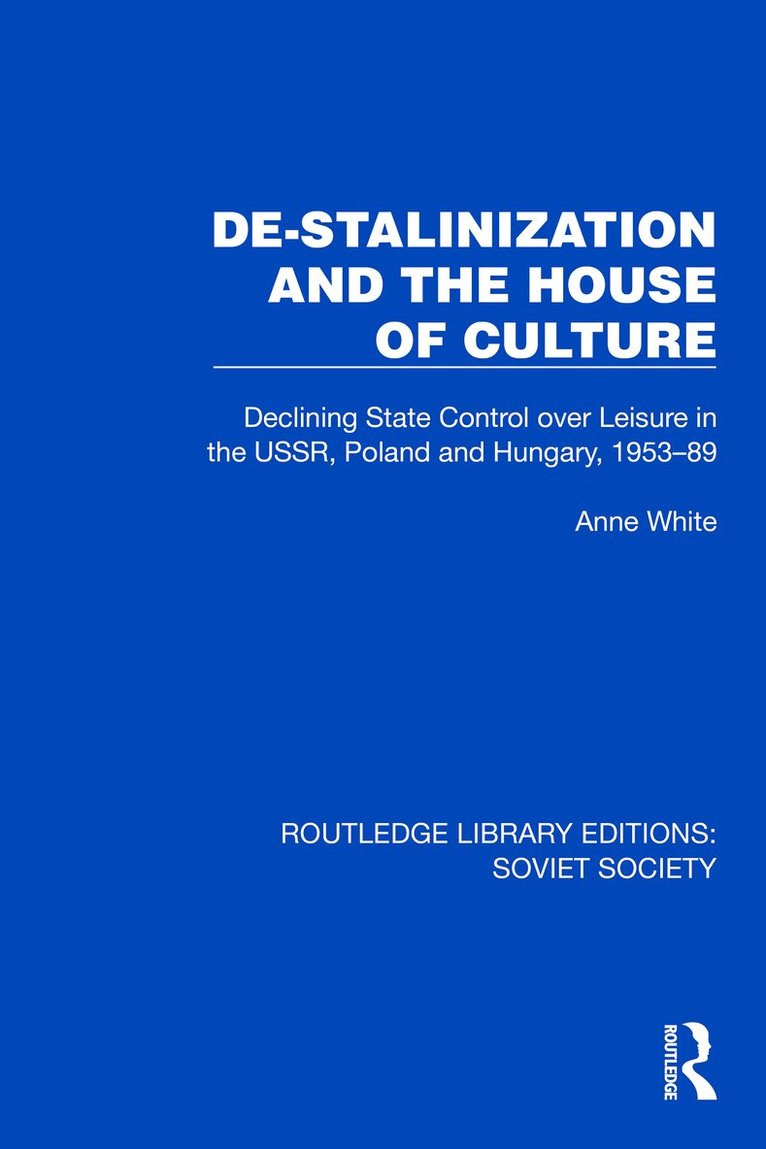
De-Stalinization and the House of Culture (1990) looks at the houses of culture – arts centres which in the Stalinist period functioned as agencies of political socialisation – and the changes in their character and functions since Stalin’s death. This book explores the diminishing control of the Communist Party over public leisure from 1953 to the present day, as one aspect of the de-Stalinization and the dismantling of the totalitarian system. It focuses on the changing nature and functions of the ‘cultural enlightenment’ conducted in houses of culture and similar institutions. Public rejection of the Stalinist attempt to saturate all leisure activities with propaganda and to liquidate many national cultural traditions have gradually forced the party to relinquish much of its leading role in this area. The book compares this process in three different Soviet-type systems, the USSR, Poland and Hungary. It discusses depoliticization of house of culture activities and, especially in the era of perestroika, their eventual repoliticization by unofficial associations concerned with a mix of political, cultural, social and environmental issues. Today the house of culture, a quintessentially Stalinist institution, paradoxically provides a home for an emergent civil society.
570 kr
Läs direkt efter köp
De-Stalinization and the House of Culture (1990) looks at the houses of culture – arts centres which in the Stalinist period functioned as agencies of political socialisation – and the changes in their character and functions since Stalin’s death. This book explores the diminishing control of the Communist Party over public leisure from 1953 to the present day, as one aspect of the de-Stalinization and the dismantling of the totalitarian system. It focuses on the changing nature and functions of the ‘cultural enlightenment’ conducted in houses of culture and similar institutions. Public rejection of the Stalinist attempt to saturate all leisure activities with propaganda and to liquidate many national cultural traditions have gradually forced the party to relinquish much of its leading role in this area. The book compares this process in three different Soviet-type systems, the USSR, Poland and Hungary. It discusses depoliticization of house of culture activities and, especially in the era of perestroika, their eventual repoliticization by unofficial associations concerned with a mix of political, cultural, social and environmental issues. Today the house of culture, a quintessentially Stalinist institution, paradoxically provides a home for an emergent civil society.
973 kr
Läs direkt efter köp
975 kr
Läs direkt efter köp
1 501 kr
Läs direkt efter köp
1 086 kr
Skickas inom 10-15 vardagar
458 kr
Skickas inom 5-8 vardagar
668 kr
Skickas inom 3-6 vardagar
1 239 kr
Skickas inom 5-8 vardagar
676 kr
Skickas inom 5-8 vardagar