Annett Borner – författare
2 435 kr
Läs direkt efter köp
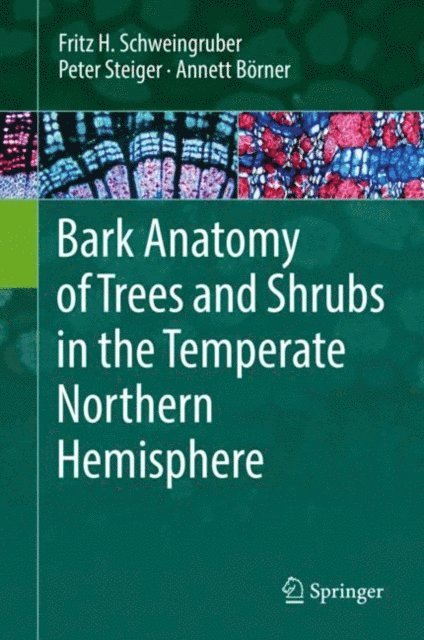
This book presents the microscopic and macroscopic bark structure of more than 180 different tree and shrub species from Europe, Asia and North America. It is the first compendium to demonstrate the anatomical variability in bark since almost 70 years (Holdheide 1951). The introductory chapter explains with high-quality microphotographs the anatomical traits most important for identification and ecological interpretation of barks, and the monographic part demonstrates in text and pictures the species-specific patterns. The species treatments are grouped by their main biomes. Each species description first characterizes the macroscopic aspects with its main form, features and habitat with text and pictures of the whole plant and the barks in a young and old stage. This is followed by the microscopical description of each species. The microscopic photographs are based on double-stained slides, revealing the quality and distribution of unlignified and lignified tissues in low and highmagnification.
The book fills a scientific gap: Archeologists and soil scientists want to identify prehistoric and historical remnants. Ecophysiologists are interested in the distribution of conducting and non-conducting tissues in the phloem and xylem along the stem axis and the internal longevity of cells. Ecologists get information about internal defense mechanisms and technologists are enabled to recognize indicators relevant in biophysics and technology.
2 435 kr
Läs direkt efter köp
3 473 kr
Läs direkt efter köp
This aesthetically unique book combines ecological, morphological and anatomical, as well as phylogenetic studies on plant material in a largely unexplored dry mountain region above the timberline. It offers the first comparative analysis of hundreds of plants - annuals, perennial herbs and dwarf shrubs - in an area of 87,000 km2 at altitudes from 2600 to 6150 m above sea level in the Western Himalaya. Characteristic landscape pictures of all major vegetation types and maps show at which locations and altitudes the individual species of vascular plants are distributed, while macroscopic plant pictures and plant age are related to high-quality micro-sections and micro-photographs.
The anatomical features of 345 dicotyledons were characterized using the published coding systems and those of 155 monocotyledones were characterized on the basis of a newly developed key. The number of annual rings and anatomical features of the xylem and phloem of dicots are compared and related to different ecological conditions within this extremely dry and cold environment. The ecological and anatomical characterization is used to create a phylogenetic tree based on nucleotide sequences, and indicates which features are genetically stable and which ones are modified by environmental factors.
The book appeals to scientists in the fields of plant taxonomy, morphology, anatomy and ecology.
3 351 kr
Läs direkt efter köp
1 977 kr
Läs direkt efter köp
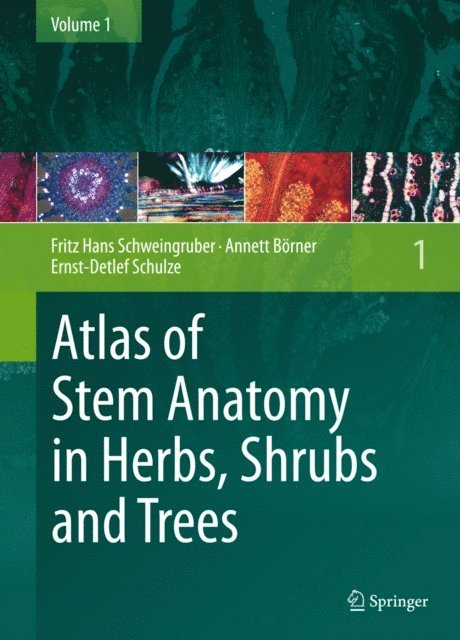
This work, published in two volumes, contains descriptions of the wood and bark anatomies of 3000 dicotyledonous plants of 120 families, highlighting the anatomical and phylogenetic diversity of dicotyledonous plants of the Northern Hemisphere. The first volume principally treats families of the Early Angiosperms, Eudicots, Core Eudicots and Rosids, while the second concentrates on the Asterids.
Presented in Volume 1 are microsections of the xylem and phloem of herbs, shrubs and trees of 1200 species and 85 families of various life forms of the temperate zone along altitudinal gradients from the lowland at the Mediterranean coast to the alpine zone in Western Europe. The global perspective of the findings is underlined by the analysis of 500 species from the Caucasus, the Rocky Mountains and Andes, the subtropical zone on the Canary Islands, the arid zones in the Sahara, in Eurasia, Arabia and Southwest North America, and the boreal and arctic zones in Eurasia and Canada.
The presence of annual rings in all life forms demonstrates that herbs and dwarf shrubs are an excellent tool for the reconstruction of annual biomass production and the interannual dynamic of plant associations. The common principle of the anatomical expression of secondary growth is a key factor in understanding evolution and adaptation processes in all life forms, from the 2 cm tall whitlow grass (Draba arctica) in the arctic to the 40 m tall beech (Fagus sylvatica) in Central European managed forests. The study opens vast fields of research for dendrochronology, wood anatomy, taxonomy and ecology.
2 049 kr
Läs direkt efter köp
This work, published in two volumes, contains descriptions of the wood and bark anatomies of 3000 dicotyledonous plants of 120 families, highlighting the anatomical and phylogenetic diversity of dicotyledonous plants of the Northern Hemisphere. The first volume principally treats families of the Early Angiosperms, Eudicots, Core Eudicots and Rosids, while the second concentrates on the Asterids.
Presented in Volume 2 are microsections of the xylem and phloem of herbs, shrubs and trees of 1000 species and ca. 35 families of various life forms of the temperate zone along altitudinal gradients from the lowland at the Mediterranean coast to the alpine zone in Western Europe. Special attention is given to the very diverse family of Asteraceae. The global perspective of the findings is underlined by the analysis of 400 species from the Caucasus, the Rocky Mountains and Andes, the subtropical zone on the Canary Islands, the arid zones in the Sahara, in Eurasia, Arabia and Southwest North America, New Zealand and the boreal and arctic zones in Eurasia and Canada.
The presence of annual rings in all life forms demonstrates that herbs and dwarf shrubs are an excellent tool for the reconstruction of annual biomass production and the interannual dynamic of plant associations. The common principle of the anatomical expression of secondary growth is a key factor in understanding evolution and adaptation processes in all life forms, from the 3 cm tall crepide pigmea (Crepis pygmaea) in the alpine zone to the 40 m tall ash (Fraxinus excelsior) in Central European riparian forests. The study opens vast fields of research for dendrochronology, wood anatomy, taxonomy and ecology.