Anton Ming-Zhi Gao – författare
1 785 kr
Läs direkt efter köp
1 850 kr
Läs direkt efter köp
2 858 kr
Läs direkt efter köp
2 158 kr
Läs direkt efter köp
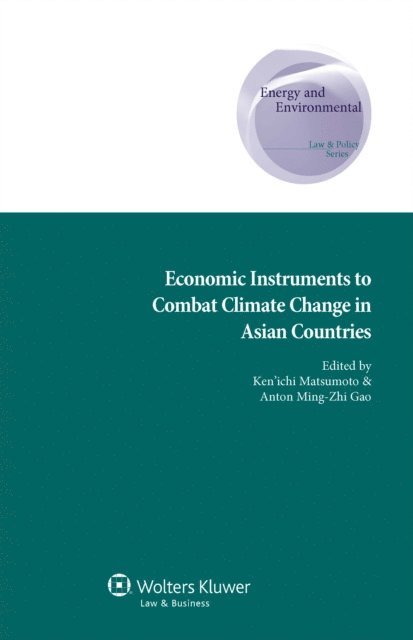
Asia, where most of the countries do not currently have emission reduction obligations, is an important region to address climate change issues because of its large GHG emissions. The total emissions of eight key Asian countries (Japan, Korea, China, Taiwan, Vietnam, Indonesia, Thailand, and India) represent 44% of the world emissions. Thus, regimes in these countries addressing climate change, if successful, would make significant progress towards climate mitigation.
2 166 kr
Skickas inom 3-6 vardagar
2 018 kr
Läs direkt efter köp
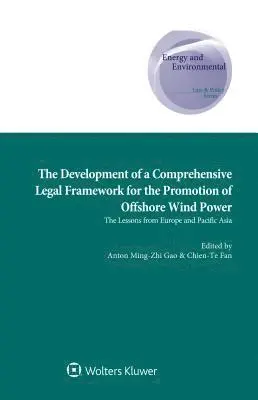
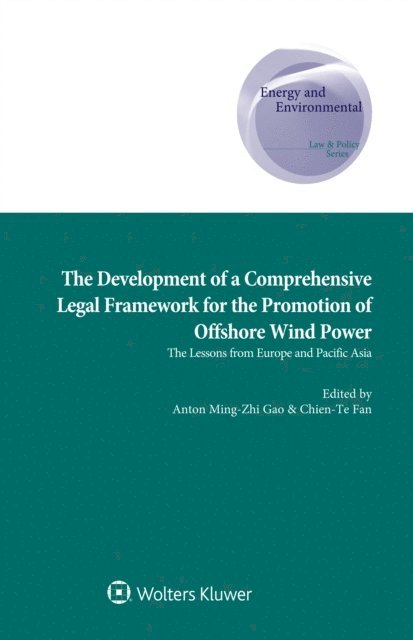
There is clearly an urgent need worldwide to increase the share of renewable energy in the overall energy supply as rapidly as possible. With a well-developed and proven feasible technology, offshore wind power has come to the fore as the most promising means of achieving this goal. However, fragmented authorities and procedures may pose tremendous challenges to the development of an integrated legal framework for offshore wind and the complex installation and grid interconnections it requires. This book surveys and analyses the features essential for the development of such a framework, drawing on the experience of ten countries that have such schemes in place – France, Germany, the United Kingdom, Italy, Norway, the United States, Australia, China, Korea, and Taiwan.
Discussing the impact of technological, economic, spatial, and market issues on the legal framework, eleven key policymakers in their respective countries contribute chapters that together reveal the contours of a strong and sound legal framework that serves to enable and facilitate the efficient application of policy initiatives and subsidies. Topics and issues raised and examined include the ways a sound legal framework addresses the following aspects of offshore wind power development:
- license schemes;- construction of turbines;- infrastructure of grid, construction harbor, and vessels;- environmental health and safety regulations; and- loan and finance risk.The contributors show that a carefully planned mix of incentives and supplementary schemes is indispensable. The essays are drawn on the presentations and papers offered at the International Conference on a Comprehensive Legal Framework for the Development of Offshore Wind Power Around the World held in Taiwan in August 2016.
As a major new contribution to the debate on the importance of a legal framework for offshore wind power and grid interconnections, this book will prove indispensable to lawyers, policymakers, officials, and academics concerned with the management of sea space to include the wind power necessary to achieve and sustain renewable energy goals.
2 018 kr
Läs direkt efter köp
There is clearly an urgent need worldwide to increase the share of renewable energy in the overall energy supply as rapidly as possible. With a well-developed and proven feasible technology, offshore wind power has come to the fore as the most promising means of achieving this goal. However, fragmented authorities and procedures may pose tremendous challenges to the development of an integrated legal framework for offshore wind and the complex installation and grid interconnections it requires. This book surveys and analyses the features essential for the development of such a framework, drawing on the experience of ten countries that have such schemes in place – France, Germany, the United Kingdom, Italy, Norway, the United States, Australia, China, Korea, and Taiwan.
Discussing the impact of technological, economic, spatial, and market issues on the legal framework, eleven key policymakers in their respective countries contribute chapters that together reveal the contours of a strong and sound legal framework that serves to enable and facilitate the efficient application of policy initiatives and subsidies. Topics and issues raised and examined include the ways a sound legal framework addresses the following aspects of offshore wind power development:
- license schemes;- construction of turbines;- infrastructure of grid, construction harbor, and vessels;- environmental health and safety regulations; and- loan and finance risk.The contributors show that a carefully planned mix of incentives and supplementary schemes is indispensable. The essays are drawn on the presentations and papers offered at the International Conference on a Comprehensive Legal Framework for the Development of Offshore Wind Power Around the World held in Taiwan in August 2016.
As a major new contribution to the debate on the importance of a legal framework for offshore wind power and grid interconnections, this book will prove indispensable to lawyers, policymakers, officials, and academics concerned with the management of sea space to include the wind power necessary to achieve and sustain renewable energy goals.
1 167 kr
Skickas inom 5-8 vardagar
1 406 kr
Skickas inom 5-8 vardagar
1 191 kr
Läs direkt efter köp
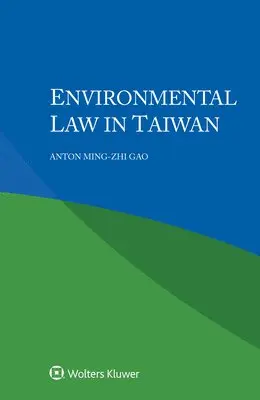
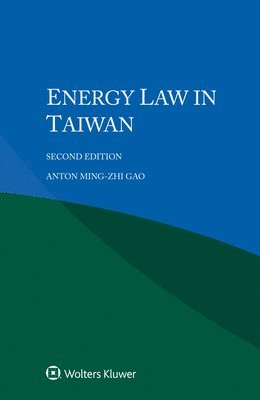
Derived from the renowned multi-volume International Encyclopaedia of Laws, this book provides a systematic approach to legislation and legal practice concerning energy resources and production in Taiwan. The book describes the administrative organization, regulatory framework, and relevant case law pertaining to the development, application, and use of such forms of energy as electricity, gas, petroleum, and coal, with attention as needed to the pervasive legal effects of competition law, environmental law, and tax law.
A general introduction covers the geography of energy resources, sources and basic principles of energy law, and the relevant governmental institutions. Then follows a detailed description of specific legislation and regulation affecting such factors as documentation, undertakings, facilities, storage, pricing, procurement and sales, transportation, transmission, distribution, and supply of each form of energy. Case law, intergovernmental cooperation agreements, and interactions with environmental, tax, and competition law are explained.
Its succinct yet scholarly nature, as well as the practical quality of the information it provides, make this book a valuable resource for energy sector policymakers and energy firm counsel handling cases affecting Taiwan. It will also be welcomed by researchers and academics for its contribution to the study of a complex field that today stands at the foreground of comparative law.
1 149 kr
Läs direkt efter köp
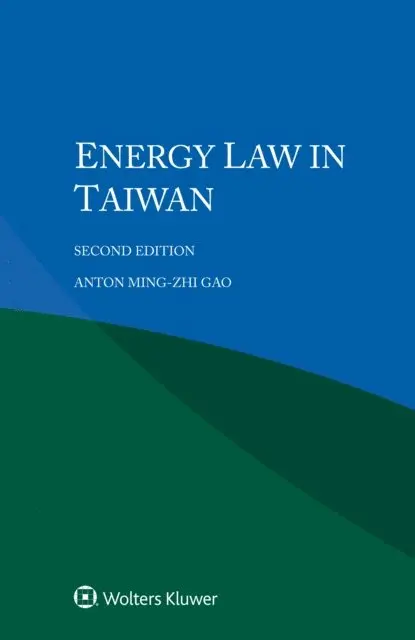
Derived from the renowned multi-volume International Encyclopaedia of Laws, this book provides a systematic approach to legislation and legal practice concerning energy resources and production in Taiwan. The book describes the administrative organization, regulatory framework, and relevant case law pertaining to the development, application, and use of such forms of energy as electricity, gas, petroleum, and coal, with attention as needed to the pervasive legal effects of competition law, environmental law, and tax law.
A general introduction covers the geography of energy resources, sources and basic principles of energy law, and the relevant governmental institutions. Then follows a detailed description of specific legislation and regulation affecting such factors as documentation, undertakings, facilities, storage, pricing, procurement and sales, transportation, transmission, distribution, and supply of each form of energy. Case law, intergovernmental cooperation agreements, and interactions with environmental, tax, and competition law are explained.
Its succinct yet scholarly nature, as well as the practical quality of the information it provides, make this book a valuable resource for energy sector policymakers and energy firm counsel handling cases affecting Taiwan. It will also be welcomed by researchers and academics for its contribution to the study of a complex field that today stands at the foreground of comparative law.
1 996 kr
Tillfälligt slut