Anu Pande – författare
Visar alla böcker från författaren Anu Pande. Handla med fri frakt och snabb leverans.
6 produkter
6 produkter
Häftad, Tyska, 2019
124 kr
Skickas inom 3-6 vardagar
Häftad, Tyska, 2026
220 kr
Skickas inom 3-6 vardagar
E-bok
PDF, Tyska, 2026198 kr
Läs direkt efter köp
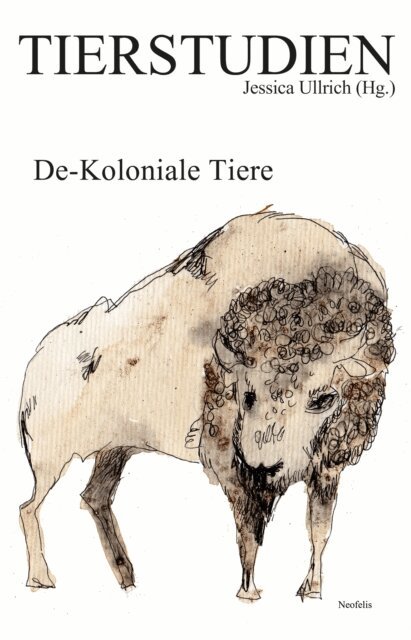
Tiere spielen eine zentrale Rolle in der Geschichte des Kolonialismus, sowohl in der historischen Aneignung fremder Gebiete, in Methoden kolonialer Erschlieung und Ausbeutung als auch im Export kolonialer 'Guter' in die europaischen Staaten und in der dortigen Darstellung der Kolonialgebiete. Sie tauchen in Reise- und Jagdberichten, Fotografien, Spielfilmen und nicht zuletzt in Zoos auf. Zugleich sind im Zuge des Kolonialismus auch Tiere auf eine vorher nicht gekannte Weise global mobil geworden und in Gegenden gebracht worden oder selbst eingewandert, die ihren ursprunglichen Verbreitungsgebieten fern lagen. Das hat nicht nur zu einer Veranderung der lokalen Fauna gefuhrt, sondern auch zu veranderten sozialen und kulturellen Strukturen in Kolonialgebieten, zu veranderten Mensch-Tier-Verhaltnissen. Dieser Tierstudien -Band versammelt mit Kaninchen, Giraffen, Stra enhunden, Papageien, Walen, Jaguaren, Bisons, Schlangen, Pferden, Tigern und fantastischen Mischwesen eine vielgestaltige Kartografie tierlicher Prasenz im Kontext kolonialer, neokolonialer und dekolonialer Machtverhaltnisse. Die Beitrage zeigen Tiere als Jagdtrophaen, modische Luxusartikel, Rohstoffe, Archiv- und Wissensobjekte sowie Projektionsflachen, aber auch als widerstandige Akteur*innen, die koloniale Ordnungen irritieren und durchkreuzen. Die Texte fragen, wie Tiere in kolonialen Kontexten genutzt, verschleppt, klassifiziert und ausgebeutet wurden und wie diese Logiken bis heute fortwirken. Zugleich untersuchen sie Spannungen dekolonialer Praxis: zwischen Fursorge und Gewalt, zwischen indigenem Wissen und seiner Aneignung. So entsteht ein facettenreiches Panorama, das Tiere nicht nur als Opfer, sondern als zentrale Figuren (de-)kolonialer Geschichte sichtbar macht, und es werden insbesondere durch die kunstlerischen Positionen neue Perspektiven auf ein mehr-als-menschliches Zusammenleben eroffnet. Mit Beitragen von Nils Berliner / Sophie-Madlin Langner, Mona Marie Eilers, Kai Horsthemke, Helene Hundt, Dina Kagan, Susanne Karr, Anu Pande, Martin Pesch und Dafni Tokas. Mit kunstlerischen Positionen von Denilson Baniwa, Juliana Huxtable und Adrian Stimson.
Inbunden, Engelska, 2026
1 283 kr
Skickas inom 5-8 vardagar
E-bok
Engelska, 20261 409 kr
Läs direkt efter köp
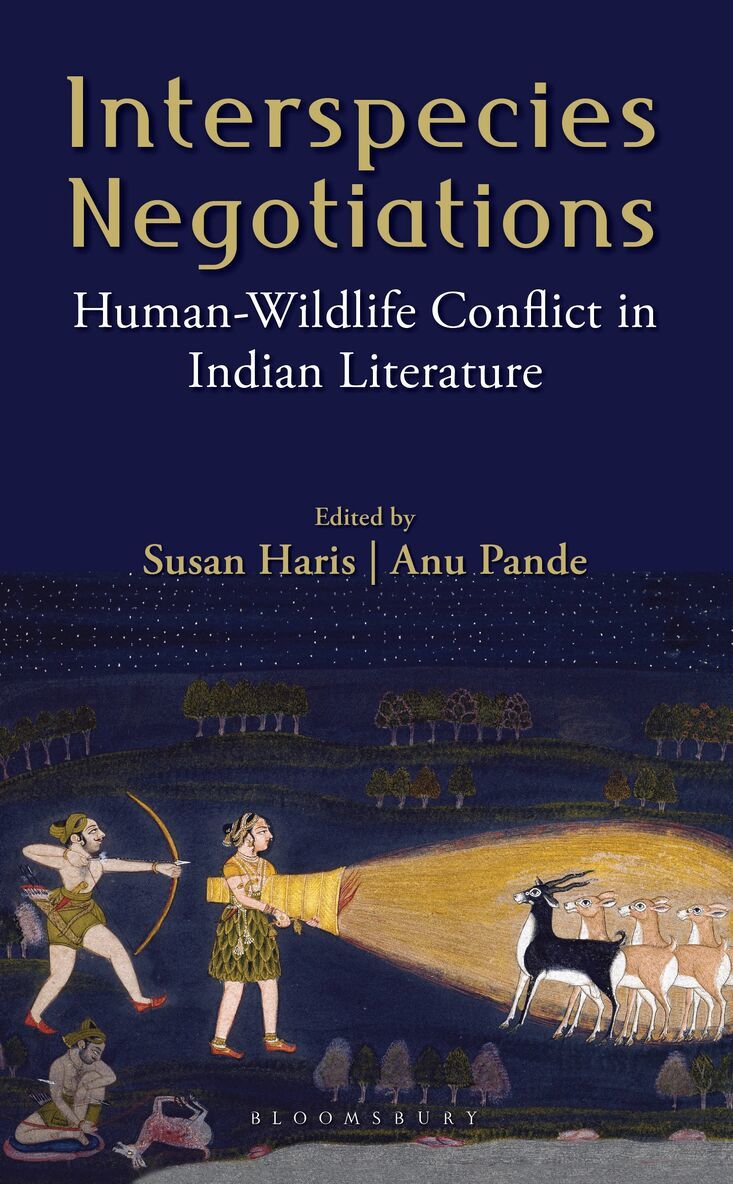
Interspecies Negotiations: Literature and Human-Wildlife Conflict in Indian Literature brings together literary analyses that explore how contemporary Indian literature reflects and reimagines human-wildlife entanglements.The escalation of human-wildlife conflict in India cannot be explained solely by species behaviour or environmental disruption. It is also deeply social and political, rooted in contestations over land use, governance, and resource distribution. Yet social science accounts often overlook wildlife's agency and responsiveness to anthropogenic change, where animals are portrayed as passive victims of development agendas. What might an alternative approach look like if we are to move beyond framing these encounters as conflict, recognize the agency of both human and nonhuman animals, and account for the ecological, political and ethical complexities of coexistence?The essays in this volume cover a nuanced reading at the intersection of literature, ecology, and postcolonial critique by engaging with two key questions: What does it mean to live with wildlife in postcolonial India? And how do literary narratives illuminate the affective and ethical dimensions of interspecies encounters? The collection thus positions literary analysis as a critical site for reimagining coexistence in postcolonial India.
E-bok
PDF, Engelska, 20261 409 kr
Läs direkt efter köp
Interspecies Negotiations: Literature and Human-Wildlife Conflict in Indian Literature brings together literary analyses that explore how contemporary Indian literature reflects and reimagines human-wildlife entanglements.The escalation of human-wildlife conflict in India cannot be explained solely by species behaviour or environmental disruption. It is also deeply social and political, rooted in contestations over land use, governance, and resource distribution. Yet social science accounts often overlook wildlife's agency and responsiveness to anthropogenic change, where animals are portrayed as passive victims of development agendas. What might an alternative approach look like if we are to move beyond framing these encounters as conflict, recognize the agency of both human and nonhuman animals, and account for the ecological, political and ethical complexities of coexistence?The essays in this volume cover a nuanced reading at the intersection of literature, ecology, and postcolonial critique by engaging with two key questions: What does it mean to live with wildlife in postcolonial India? And how do literary narratives illuminate the affective and ethical dimensions of interspecies encounters? The collection thus positions literary analysis as a critical site for reimagining coexistence in postcolonial India.