Aradhana Sharma – författare
Visar alla böcker från författaren Aradhana Sharma. Handla med fri frakt och snabb leverans.
6 produkter
6 produkter
Häftad, Engelska, 2008
293 kr
Skickas inom 10-15 vardagar
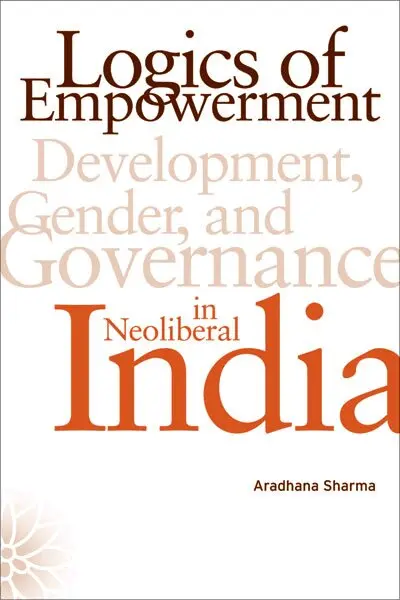
A critical look at the globally dominant development strategy of “empowerment”Celebratory news features about India’s thriving middle class tell only part of the story of the country’s recent economic rise, frequently glossing over the 300 million Indians who live on the margins and struggle to survive under economic liberalization. How do those cast out of their country’s successes perceive and respond to their position and mobilize against disempowerment? In Logics of Empowerment, Aradhana Sharma takes up these questions, focusing on the work of an innovative women’s program called Mahila Samakhya that is part governmental and part nongovernmental and strives to empower those rural Indian women who have been pushed aside. She details the awkward ideological articulations and paradoxical outcomes of this unique activist-cum-government organizational structure and usage of empowerment. Bringing much-needed specificity to the study of neoliberalism, Logics of Empowerment fosters a deeper understanding of development and politics in contemporary India.
Del 9 - Wiley Blackwell Readers in Anthropology
Anthropology of the State
A Reader
Inbunden, Engelska, 2005
1 563 kr
Skickas inom 5-8 vardagar
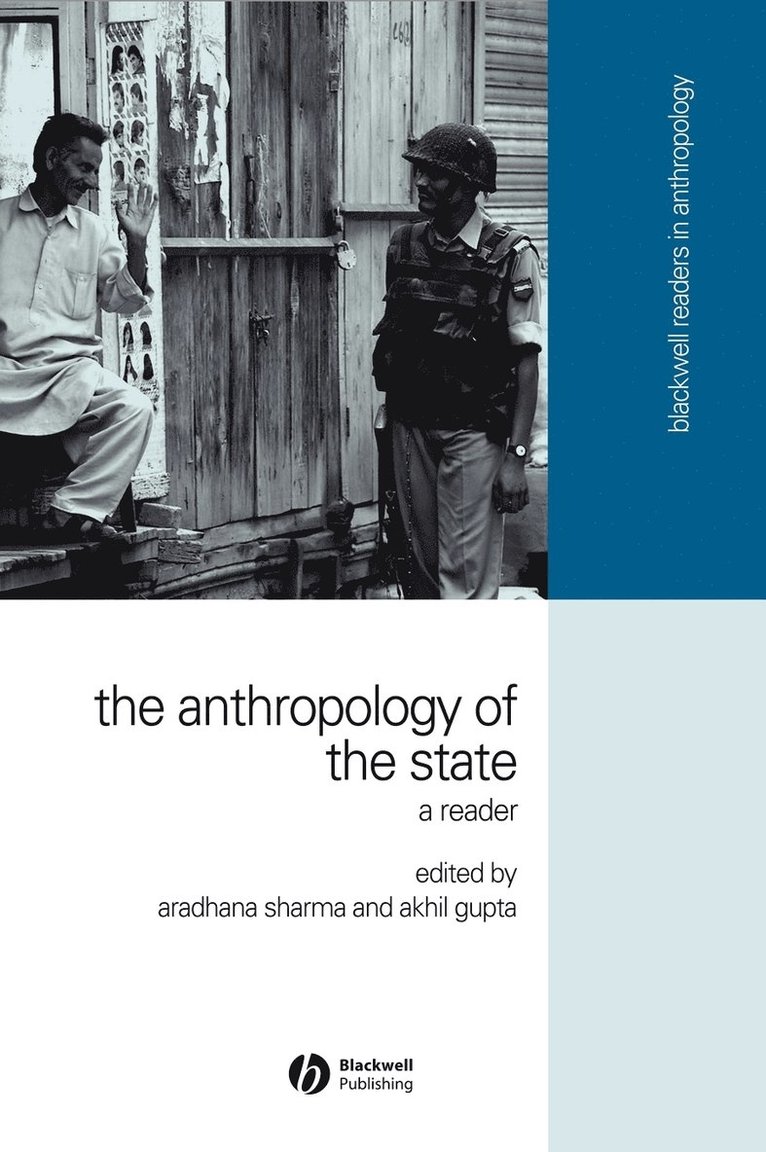
This innovative reader brings together classic theoretical texts and cutting-edge ethnographic analyses of specific state institutions, practices, and processes and outlines an anthropological framework for rethinking future study of “the state”. Focuses on the institutions, spaces, ideas, practices, and representations that constitute the “state”. Promotes cultural and transnational approaches to the subject. Helps readers to make anthropological sense of the state as a cultural artifact, in the context of a neoliberalizing, transnational world.
Del 8 - Wiley Blackwell Readers in Anthropology
Anthropology of the State
A Reader
Häftad, Engelska, 2005
530 kr
Skickas inom 5-8 vardagar
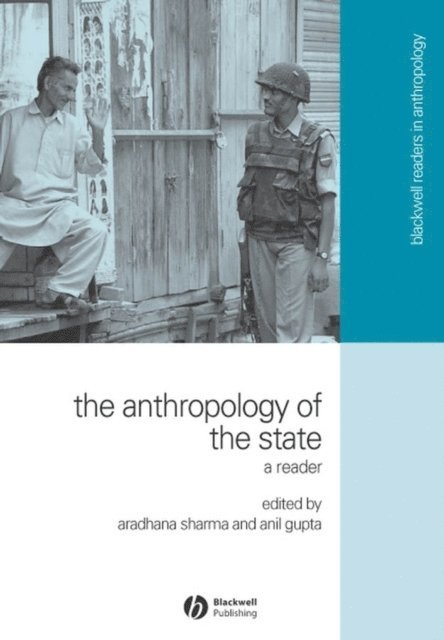
This innovative reader brings together classic theoretical texts and cutting-edge ethnographic analyses of specific state institutions, practices, and processes and outlines an anthropological framework for rethinking future study of “the state”. Focuses on the institutions, spaces, ideas, practices, and representations that constitute the “state”. Promotes cultural and transnational approaches to the subject. Helps readers to make anthropological sense of the state as a cultural artifact, in the context of a neoliberalizing, transnational world.
E-bok
PDF, Engelska, 20091 823 kr
Läs direkt efter köp
This innovative reader brings together classic theoretical texts and cutting-edge ethnographic analyses of specific state institutions, practices, and processes and outlines an anthropological framework for rethinking future study of “the state”. Focuses on the institutions, spaces, ideas, practices, and representations that constitute the “state”. Promotes cultural and transnational approaches to the subject. Helps readers to make anthropological sense of the state as a cultural artifact, in the context of a neoliberalizing, transnational world.
Inbunden, Engelska, 2024
1 215 kr
Skickas inom 5-8 vardagar
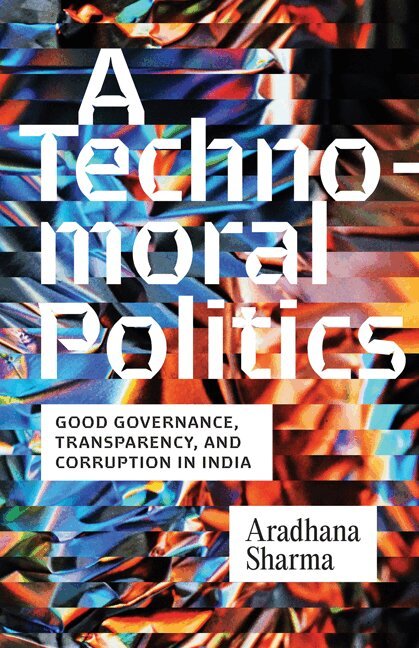
Examining anticorruption battles and transparency laws to ask: what makes for good governance, and can it limit liberal democratic politics as much as encourage it? Good governance is meant to empower citizens, increase democratic participation, and make states transparent and accountable, yet this liberal democratic imperative can also promote populist authoritarian rule. Bringing together discourses on ethical goodness with the technicalities of governance as expressed in laws and policies, Aradhana Sharma develops the concept of “technomoral politics” to navigate this fraught topic. With a focus on the work of activists, citizens, and state officials, she offers an ethnographic account of the contradictions and dangers of good-governance politics in twenty-first-century India. A Technomoral Politics follows the evolution of a group of activists in New Delhi led by Arvind Kejriwal from 2008 to 2014 as they morphed from a protransparency NGO to a mass movement against state corruption to a populist party that promised to change the political system through laws and policies. Sharma explores the technomoral framing of state opacity and corruption as well as the limits of the law in resolving these issues, probing such themes as the contradictory relationship between transparency and bureaucracy and the classed and gendered nature of democratic state institutions. By examining scalar dimensions of good-governance politics, from the hyperlocal work of activists to global trends, A Technomoral Politics illuminates the paradoxes, limits, and risks of a system that is meant to spread liberal democratic principles but that also ends up promoting antidemocratic, populist-authoritarian forms of rule. Retail e-book files for this title are screen-reader friendly.
Häftad, Engelska, 2024
289 kr
Skickas inom 5-8 vardagar
Examining anticorruption battles and transparency laws to ask: what makes for good governance, and can it limit liberal democratic politics as much as encourage it? Good governance is meant to empower citizens, increase democratic participation, and make states transparent and accountable, yet this liberal democratic imperative can also promote populist authoritarian rule. Bringing together discourses on ethical goodness with the technicalities of governance as expressed in laws and policies, Aradhana Sharma develops the concept of “technomoral politics” to navigate this fraught topic. With a focus on the work of activists, citizens, and state officials, she offers an ethnographic account of the contradictions and dangers of good-governance politics in twenty-first-century India. A Technomoral Politics follows the evolution of a group of activists in New Delhi led by Arvind Kejriwal from 2008 to 2014 as they morphed from a protransparency NGO to a mass movement against state corruption to a populist party that promised to change the political system through laws and policies. Sharma explores the technomoral framing of state opacity and corruption as well as the limits of the law in resolving these issues, probing such themes as the contradictory relationship between transparency and bureaucracy and the classed and gendered nature of democratic state institutions. By examining scalar dimensions of good-governance politics, from the hyperlocal work of activists to global trends, A Technomoral Politics illuminates the paradoxes, limits, and risks of a system that is meant to spread liberal democratic principles but that also ends up promoting antidemocratic, populist-authoritarian forms of rule. Retail e-book files for this title are screen-reader friendly.