Archana Pandya – författare
Visar alla böcker från författaren Archana Pandya. Handla med fri frakt och snabb leverans.
7 produkter
7 produkter
E-bok
Engelska, 2017344 kr
Läs direkt efter köp
Human rights organizations have grown exponentially across the globe, particularly in the global South, and the term human rights is now common parlance among politicians and civil society activists. While debates about human rights are waged in elite circles, what do publics in the global South think about human rights ideas and the organizations that promote them?Drawing on large-scale public opinion surveys and interviews with human rights practitioners in India, Mexico, Morocco, and Nigeria, Taking Root finds that most people are in fact broadly supportive of human rights discourse, trust local human rights groups, and do not view human rights as a tool of foreign powers. However, this general public support isn''t grounded in strong commitments of public engagement, money, or local ties to the human rights sector. Publics in the global South do donate to charitable causes and organizations but rarely give to local rights groups, and these organizations must instead seek aid from foreign sources.As the most informative and comprehensive account of public perceptions of human rights available across several regions of the world, Taking Root challenges a number of accepted truths held by human rights supporters and skeptics alike.
Inbunden, Engelska, 2018
1 509 kr
Skickas inom 5-8 vardagar
Human rights organizations have grown exponentially across the globe, particularly in the global South, and the term human rights is now common parlance among politicians and civil society activists. As international donors pour money into global human rights promotion, some governments, scholars, activists, and other critics fear a subtle, Western-led campaign for political, economic, and cultural domination. While debates about human rights are waged in elite circles, what do publics in the global South think about human rights ideas and the organizations that promote them? Drawing on large-scale public opinion surveys and interview with human rights practioners in India, Mexico, Morocco, and Nigeria, Taking Root finds that most people are in fact broadly supportive of human rights discourse, trust local human rights groups, and do not view human rights as a tool of foreign powers. Pro-human rights constituencies also tend to be highly skeptical of the U.S. government, multinational corporations, and their own governments. However, this general public support for human rights isn't grounded in strong commitments of public engagement, money, or local ties to the human rights sector. Publics in the global South do donate to charitable causes and organizations, but rarely give to local rights groups. Rights organizations instead seek aid from foreign sources, an increasingly untenable strategy as foreign aid to civil society declines. The book also describes the complex relations between religiosity and support for human rights as faith communities, worldviews, and traditions strongly influence the public's views of human rights, but often in contradictory ways. As the most informative and comprehensive account available of public perceptions of human rights across several regions of the world, Taking Root will challenge a number of accepted truths held by human rights supporters and skeptics alike.
Häftad, Engelska, 2018
453 kr
Skickas inom 5-8 vardagar
Human rights organizations have grown exponentially across the globe, particularly in the global South, and the term human rights is now common parlance among politicians and civil society activists. As international donors pour money into global human rights promotion, some governments, scholars, activists, and other critics fear a subtle, Western-led campaign for political, economic, and cultural domination. While debates about human rights are waged in elite circles, what do publics in the global South think about human rights ideas and the organizations that promote them? Drawing on large-scale public opinion surveys and interview with human rights practioners in India, Mexico, Morocco, and Nigeria, Taking Root finds that most people are in fact broadly supportive of human rights discourse, trust local human rights groups, and do not view human rights as a tool of foreign powers. Pro-human rights constituencies also tend to be highly skeptical of the U.S. government, multinational corporations, and their own governments. However, this general public support for human rights isn't grounded in strong commitments of public engagement, money, or local ties to the human rights sector. Publics in the global South do donate to charitable causes and organizations, but rarely give to local rights groups. Rights organizations instead seek aid from foreign sources, an increasingly untenable strategy as foreign aid to civil society declines. The book also describes the complex relations between religiosity and support for human rights as faith communities, worldviews, and traditions strongly influence the public's views of human rights, but often in contradictory ways. As the most informative and comprehensive account available of public perceptions of human rights across several regions of the world, Taking Root will challenge a number of accepted truths held by human rights supporters and skeptics alike.
E-bok
PDF, Engelska, 2017344 kr
Läs direkt efter köp
Human rights organizations have grown exponentially across the globe, particularly in the global South, and the term human rights is now common parlance among politicians and civil society activists. While debates about human rights are waged in elite circles, what do publics in the global South think about human rights ideas and the organizations that promote them?Drawing on large-scale public opinion surveys and interviews with human rights practitioners in India, Mexico, Morocco, and Nigeria, Taking Root finds that most people are in fact broadly supportive of human rights discourse, trust local human rights groups, and do not view human rights as a tool of foreign powers. However, this general public support isn''t grounded in strong commitments of public engagement, money, or local ties to the human rights sector. Publics in the global South do donate to charitable causes and organizations but rarely give to local rights groups, and these organizations must instead seek aid from foreign sources.As the most informative and comprehensive account of public perceptions of human rights available across several regions of the world, Taking Root challenges a number of accepted truths held by human rights supporters and skeptics alike.
E-bok
PDF, Engelska, 201844 kr
Läs direkt efter köp
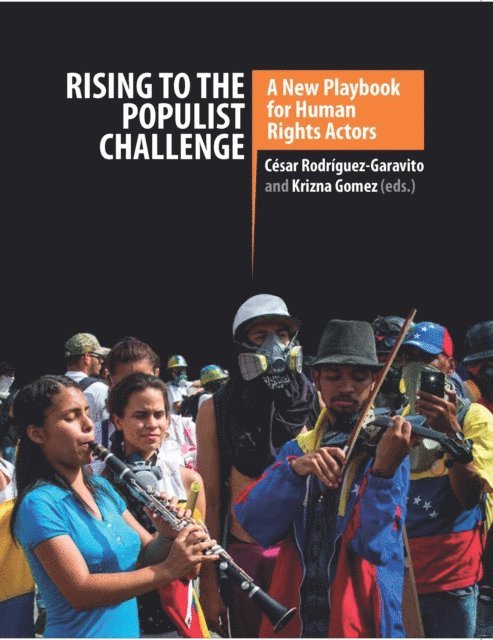
This book collects and analyzes a repertoire of responses by human rights organizations to the crackdown against civil society in the populist context. Written by scholars and advocates in challenging political settings from around the world, this book offers ideas and inspiration to their peers in the human rights community who are grappling with and resisting the erosion of democracy and rights.This collection takes two steps towards clearing the path for this civil society transformation. First, it clarifies the specific challenges to human rights raised by contemporary populist regimes and movements. What is the populist playbook against human rights? Second, it contributes to documenting and learning from a wealth of initiatives by human rights actors. What innovations are human rights actors introducing into their strategies and narratives to counter those of populist regimes? In short, what is the human rights playbook against populism?From meticulous documentation of abuses in Turkey to more grassroots forms of social networking in Hungary, from peace caravans in India to finding new ways of being useful under 21st century dictatorships in Venezuela, like war correspondents reporting from the trenches, our authors step forward to share their own continuing struggles to help their communities.Based on evidence from populist governments in India, Venezuela, Hungary, Turkey, Russia, the United States, and Ecuador—as well as crackdowns against civil society in South Africa, Egypt and other countries—this volume provides hope, solidarity, and reinvigoration for the human rights movement.
E-bok
PDF, Engelska, 201844 kr
Läs direkt efter köp
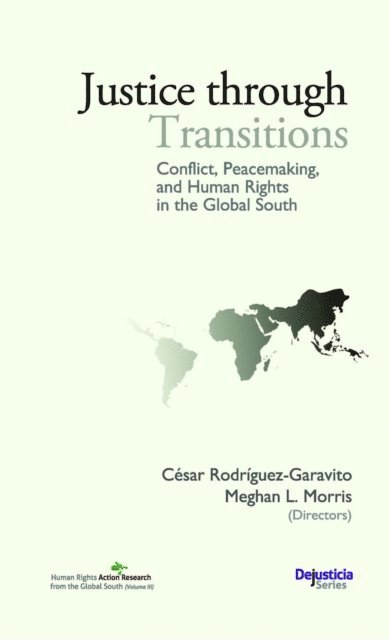
What does justice mean in times of transition? What kinds of possibilities and dissapointments emerge from processes of seeking justice through transition? How might we understand these processes through narrative?In August 2015, a group of Global South human rights activists and researchers gathered in Colombia for a workshop organized around the theme of transitional justice. This book, the third in a series, is the result of the discussions performed in that encounter.The chapters in this volume illustrate many complexities of transitional justice processes from the perspective of young human rights advocates involved in these struggles, many with their own complicated personal connections to the search for justice. These advocates hail from countries that have divergent relationships with the notion of transitional justice, from places deeply embedded in its norms and processes, such as Argentina and Colombia, to countries undergoing various kinds of transitions on very different terms, such as Turkey and Mexico. All of the chapters, however, write the messiness of seeking justice through transitions, spanning from the personal and intimate to the national and global.Together, these chapters beautifully illustrate both the pain and the political possibilities that come from the inability to leave history in the past, as well as the creativity of individual and collective efforts to seek justice through transitions. They also demonstrate the beauty of speaking, working, and writing justice from the hear.
E-bok
PDF, Spanska, 201844 kr
Läs direkt efter köp
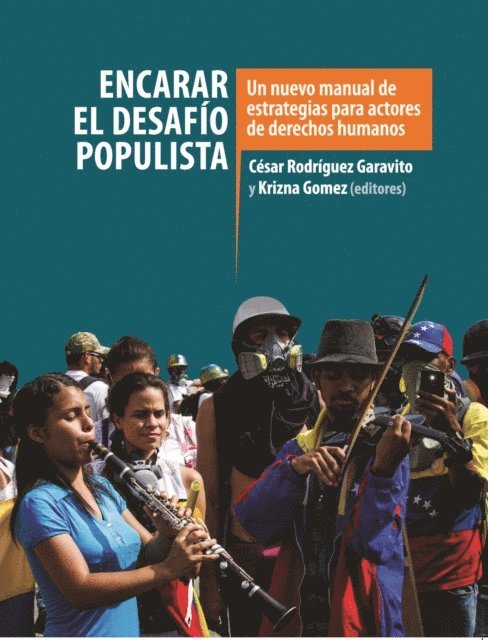
Una nueva guía para actores de derechos humanos. Este libro recopila y analiza un repertorio de respuestas de organizaciones de derechos humanos a la represión contra la sociedad civil en el contexto populista. Escrito por académicos y defensores que trabajan en entornos políticos desafiantes en todo el mundo, este libro ofrece ideas e inspiración para los activistas de derechos humanos que luchan y resisten la erosión de la democracia y los derechos.Esta colección busca facilitar la transformación de la sociedad civil de dos formas: En primer lugar, identifica los desafíos específicos que los regímenes y movimientos populistas contemporáneos crean para los derechos humanos. ¿Cuáles son las estrategias de los populistas contra los derechos humanos? En segundo lugar, contribuye a documentar y aprender de una variedad de iniciativas lideradas por diferentes defensores de derechos humanos. ¿Qué innovaciones están integrando los actores de derechos humanos en sus estrategias y narrativas para contrarrestar las de los regímenes populistas? En resumen, ¿cuál es el manual o las estrategias de derechos humanos contra el populismo?Desde una documentación detallada sobre abusos en Turquía a formas más populares de redes sociales en Hungría, desde caravanas de paz en la India hasta nuevas formas para tener impacto bajo las dictaduras del siglo XXI en Venezuela, como corresponsales de guerra informando desde las trincheras, nuestros autores comparten sus propias luchas continuas para ayudar a sus comunidades.Con base en la evidencia de gobiernos populistas en India, Venezuela, Hungría, Turquía, Rusia, Estados Unidos y Ecuador, así como enérgicas medidas contra la sociedad civil en Sudáfrica, Egipto y otros países, este volumen brinda esperanza, solidaridad y revitalización para el movimiento de derechos humanos.