Ariel Zellman – författare
Visar alla böcker från författaren Ariel Zellman. Handla med fri frakt och snabb leverans.
6 produkter
6 produkter
Inbunden, Engelska, 2023
809 kr
Skickas inom 5-8 vardagar
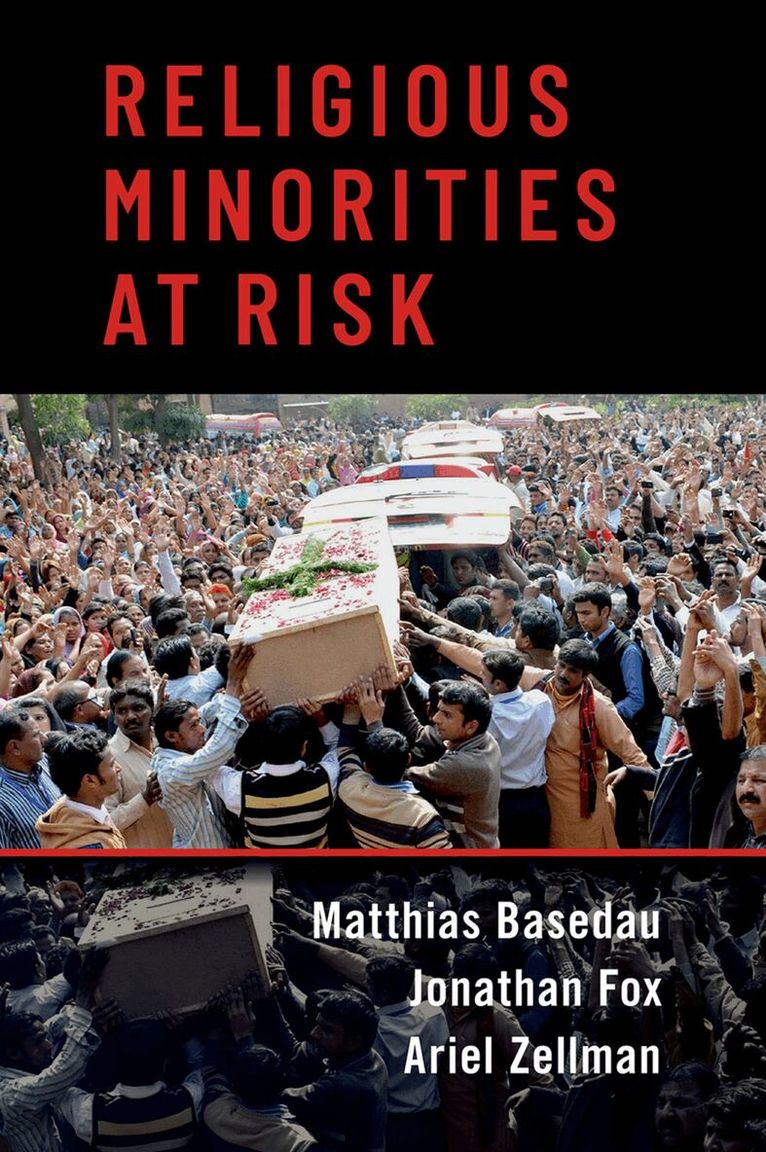
To what extent do minority grievances contribute to intrastate conflict? Against the backdrop of rising discrimination against religious minorities worldwide, Religious Minorities at Risk offers new insights into classic debates on the influences of discrimination, deprivation, and inequality (DDI) on minority grievances and conflict behavior. It does so by utilizing original data on 771 religious minorities in 183 countries between 2000 and 2014. The book demonstrates that DDI is a significant cause of minority grievances which, in turn, deeply influence their conflict behaviors.It also shows the different effects of governmental and societal religious discrimination versus political and economic and marginalization. Religious, political, and economic grievances each escalate conflict intensity by aggrieved minorities in different ways. Ultimately, the book shows that collective grievances remain a powerful explanation for minorities' conflict behaviors; although influenced by DDI, they are not reducible to them. Second, while religious factors, including religious discrimination and grievances, uniquely contribute to minority conflict behavior, the overall patterns observed for religious minorities closely mirror those typically theorized for other minority groups. Finally, minority conflict intensity reflects the difficulties states encounter in accommodating them. Whereas religious grievances are relatively easily accommodated and therefore rarely escalate beyond rioting, political grievances influence a wider range, from non-violent protest to violence against civilians. Economic grievances, which demand costly systemic reforms, more often escalate to rebellion. An essential work on the causes of intercommunal and intrastate conflict, this will assist policymakers dealing with these issues.
E-bok
Engelska, 2023722 kr
Läs direkt efter köp
To what extent do minority grievances contribute to intrastate conflict? Against the backdrop of rising discrimination against religious minorities worldwide, Religious Minorities at Risk offers new insights into classic debates on the influences of discrimination, deprivation, and inequality (DDI) on minority grievances and conflict behavior. It does so by utilizing original data on 771 religious minorities in 183 countries between 2000 and 2014. The book demonstrates that DDI is a significant cause of minority grievances which, in turn, deeply influence their conflict behaviors.It also shows the different effects of governmental and societal religious discrimination versus political and economic and marginalization. Religious, political, and economic grievances each escalate conflict intensity by aggrieved minorities in different ways. Ultimately, the book shows that collective grievances remain a powerful explanation for minorities'' conflict behaviors; although influenced by DDI, they are not reducible to them. Second, while religious factors, including religious discrimination and grievances, uniquely contribute to minority conflict behavior, the overall patterns observed for religious minorities closely mirror those typically theorized for other minority groups. Finally, minority conflict intensity reflects the difficulties states encounter in accommodating them. Whereas religious grievances are relatively easily accommodated and therefore rarely escalate beyond rioting, political grievances influence a wider range, from non-violent protest to violence against civilians. Economic grievances, which demand costly systemic reforms, more often escalate to rebellion. An essential work on the causes of intercommunal and intrastate conflict, this will assist policymakers dealing with these issues.
E-bok
PDF, Engelska, 2023722 kr
Läs direkt efter köp
To what extent do minority grievances contribute to intrastate conflict? Against the backdrop of rising discrimination against religious minorities worldwide, Religious Minorities at Risk offers new insights into classic debates on the influences of discrimination, deprivation, and inequality (DDI) on minority grievances and conflict behavior. It does so by utilizing original data on 771 religious minorities in 183 countries between 2000 and 2014. The book demonstrates that DDI is a significant cause of minority grievances which, in turn, deeply influence their conflict behaviors.It also shows the different effects of governmental and societal religious discrimination versus political and economic and marginalization. Religious, political, and economic grievances each escalate conflict intensity by aggrieved minorities in different ways. Ultimately, the book shows that collective grievances remain a powerful explanation for minorities'' conflict behaviors; although influenced by DDI, they are not reducible to them. Second, while religious factors, including religious discrimination and grievances, uniquely contribute to minority conflict behavior, the overall patterns observed for religious minorities closely mirror those typically theorized for other minority groups. Finally, minority conflict intensity reflects the difficulties states encounter in accommodating them. Whereas religious grievances are relatively easily accommodated and therefore rarely escalate beyond rioting, political grievances influence a wider range, from non-violent protest to violence against civilians. Economic grievances, which demand costly systemic reforms, more often escalate to rebellion. An essential work on the causes of intercommunal and intrastate conflict, this will assist policymakers dealing with these issues.
E-bok
PDF, Engelska, 2026746 kr
Läs direkt efter köp
The Unexpected Consequences of State Support for Religion: An Empirical Analysis of Christian-Majority addresses the consequences of one of the most basic decisions a government must make when dealing with religion: the decision to support a state religion or to provide separation of religion and state and religious freedom.Drawing on the rational choice literature on religion and politics as well as the broader literature on religion in the social sciences, this book takes the perspective that politicians and governments decide on government-religion policy based on their own interests. It tests five potential consequences of supporting a state reli>gion in Christian-majority countries: religiosity (how religious are people in the country?), governmental legitimacy, levels of both public and private morality in a country, social trust, and patterns of violence and social unrest. Many empirical analyses reveal unexpected costs and benefits of supporting a state religion. For example, while most assume that when governments support a religion, it is at least in part because they believe it will increase their legitimacy, this book finds, with some exceptions, that this is not the case. Similarly, it finds an incentive structure that perversely incentivizes increased discrimination against religious minorities.The Unexpected Consequences of State Support for Religion will appeal to scholars and students of politics, religion, and sociology, particularly those interested in Christian nationalism and government and state politics.
E-bok
Engelska, 2026746 kr
Läs direkt efter köp
The Unexpected Consequences of State Support for Religion: An Empirical Analysis of Christian-Majority addresses the consequences of one of the most basic decisions a government must make when dealing with religion: the decision to support a state religion or to provide separation of religion and state and religious freedom.Drawing on the rational choice literature on religion and politics as well as the broader literature on religion in the social sciences, this book takes the perspective that politicians and governments decide on government-religion policy based on their own interests. It tests five potential consequences of supporting a state reli>gion in Christian-majority countries: religiosity (how religious are people in the country?), governmental legitimacy, levels of both public and private morality in a country, social trust, and patterns of violence and social unrest. Many empirical analyses reveal unexpected costs and benefits of supporting a state religion. For example, while most assume that when governments support a religion, it is at least in part because they believe it will increase their legitimacy, this book finds, with some exceptions, that this is not the case. Similarly, it finds an incentive structure that perversely incentivizes increased discrimination against religious minorities.The Unexpected Consequences of State Support for Religion will appeal to scholars and students of politics, religion, and sociology, particularly those interested in Christian nationalism and government and state politics.
Inbunden, Engelska, 2026
2 225 kr
Kommande
The Unexpected Consequences of State Support for Religion: An Empirical Analysis of Christian-Majority addresses the consequences of one of the most basic decisions a government must make when dealing with religion: the decision to support a state religion or to provide separation of religion and state and religious freedom.Drawing on the rational choice literature on religion and politics as well as the broader literature on religion in the social sciences, this book takes the perspective that politicians and governments decide on government-religion policy based on their own interests. It tests five potential consequences of supporting a state reli>gion in Christian-majority countries: religiosity (how religious are people in the country?), governmental legitimacy, levels of both public and private morality in a country, social trust, and patterns of violence and social unrest. Many empirical analyses reveal unexpected costs and benefits of supporting a state religion. For example, while most assume that when governments support a religion, it is at least in part because they believe it will increase their legitimacy, this book finds, with some exceptions, that this is not the case. Similarly, it finds an incentive structure that perversely incentivizes increased discrimination against religious minorities.The Unexpected Consequences of State Support for Religion will appeal to scholars and students of politics, religion, and sociology, particularly those interested in Christian nationalism and government and state politics.