Arild Vatn – författare
Visar alla böcker från författaren Arild Vatn. Handla med fri frakt och snabb leverans.
6 produkter
6 produkter
Controlling Mineral Emissions in European Agriculture
Economics, Policies and the Environment
Inbunden, Engelska, 1997
1 722 kr
Skickas inom 7-10 vardagar
Mineral emissions from agriculture include nitrogen, phosphorus and heavy metals, derived particularly from fertilizer use and farm animal wastes in intensive agricultural systems. These have the potential to cause pollution and affect the quality of water, soils and agricultural produce. Interest in this subject has increased substantially in recent years, resulting in reforms of part of the Common Agricultural Policy as well as the development of special directives in the European Union. This book presents analyses of the economics and policy options related to nonpoint-source pollution in European agriculture. It brings together several disciplines and has been developed from a workshop held in Norway in January 1996. This workshop was one of four, each focusing on a key theme as part of the EU Concerted Action, “Policy measures to control environmental impacts from agriculture”. The book includes both theoretical analyses and empirical studies from several countries. It represents an important volume for research academics and professionals in soil science, environmental and pollution studies, and agricultural and environmental economics and policy.
2 392 kr
Skickas inom 7-10 vardagar
Environmental governance encompasses our relations to nature, spanning institutions and policies in fields such as biodiversity loss, climate change, land use and pollution. This book offers tools for the study of environmental conflicts, analyzes the current status of environmental policies and discusses why we are so far from resolving many of the issues we face. It also offers alternative directions for future environmental governance.Key features include:an interdisciplinary and integrated approachan overview of the field of environmental governancea focus both on local and global challenges and policiesthe positioning of environmental governance within the wider field of economic policy and development.This book will be ideal for interdisciplinary masters programs in environmental studies and environmental policy and management. It will also be of great value to practitioners in the field exploring alternative solutions for governance of environmental resources.
659 kr
Skickas inom 7-10 vardagar
Environmental governance encompasses our relations to nature, spanning institutions and policies in fields such as biodiversity loss, climate change, land use and pollution. This book offers tools for the study of environmental conflicts, analyzes the current status of environmental policies and discusses why we are so far from resolving many of the issues we face. It also offers alternative directions for future environmental governance.Key features include:an interdisciplinary and integrated approachan overview of the field of environmental governancea focus both on local and global challenges and policiesthe positioning of environmental governance within the wider field of economic policy and development.This book will be ideal for interdisciplinary masters programs in environmental studies and environmental policy and management. It will also be of great value to practitioners in the field exploring alternative solutions for governance of environmental resources.
1 930 kr
Skickas inom 7-10 vardagar
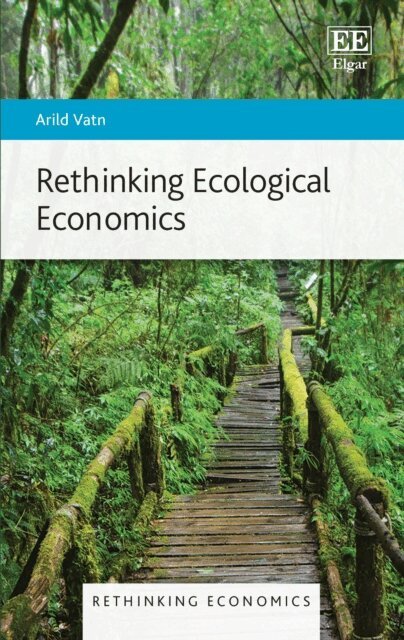
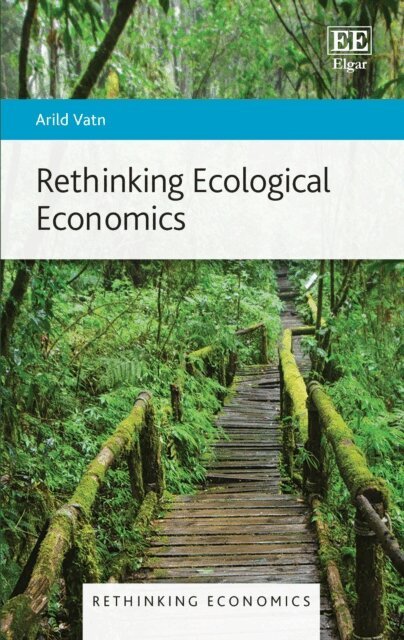
This timely book advances a distinct understanding of the economy as embedded in natural and socio-political processes. It shows how ecological economics, if turned into a discipline grounded in critical realism, institutional theory and sustainability-oriented values, holds significant potential for supporting the development of a sustainable future.Rethinking Ecological Economics aims at developing ecological economics into a coherent professional position. Arild Vatn explores the potential of institutional theory - with its specific understanding of human action and value formation - as the basis for such an endeavor. Economic systems are human constructions and what values are advanced in production and consumption depend on how they are structured. Present institutional structures favor powerful short-term individual interests that endanger the Earth. The book lays the ground for analyzing how long-term common interests can become privileged, and discusses how respecting Earth system boundaries can be ensured through thoroughgoing changes in political and economic institutions.This book is a vital read for scholars and students of environmental and ecological economics, as well as mainstream and heterodox economists interested in environmental challenges. It is also a beneficial resource for practitioners in environmental management and those active in civil society organizations working on conservational issues.
2 668 kr
Skickas inom 7-10 vardagar
This important text develops an institutional response to the core issues raised in public policy making and develops a distinct understanding of the role of institutions, not least in the study of environmental problems. It questions: how are conflicting interests shaped and taken into account in policy making? How should they be accounted for? What motivates the behaviour of firms and individuals, and how is it possible to change these motivations to produce the favoured common outcomes?The author addresses these questions by integrating elements from classical institutional economics, neoclassical economics, sociology and ecological economics. He argues that public policy in general, and environmental policy in particular, are best examined from an institutional perspective. In this way the author presents a distinct and consistent alternative to standard neoclassical economics for students and scholars who are interested in an institutional understanding of environmental policy making. The book is written in a clear and accessible style with boxes and figures to help explain the issues and, as such, would be an ideal alternative or supplement to the standard environmental economics texts.
844 kr
Skickas inom 7-10 vardagar
This important text develops an institutional response to the core issues raised in public policy making and develops a distinct understanding of the role of institutions, not least in the study of environmental problems. It questions: how are conflicting interests shaped and taken into account in policy making? How should they be accounted for? What motivates the behaviour of firms and individuals, and how is it possible to change these motivations to produce the favoured common outcomes?The author addresses these questions by integrating elements from classical institutional economics, neoclassical economics, sociology and ecological economics. He argues that public policy in general, and environmental policy in particular, are best examined from an institutional perspective. In this way the author presents a distinct and consistent alternative to standard neoclassical economics for students and scholars who are interested in an institutional understanding of environmental policy making. The book is written in a clear and accessible style with boxes and figures to help explain the issues and, as such, would be an ideal alternative or supplement to the standard environmental economics texts.