Armando Petrucci – författare
Visar alla böcker från författaren Armando Petrucci. Handla med fri frakt och snabb leverans.
4 produkter
4 produkter
Inbunden, Engelska, 1998
828 kr
Skickas inom 5-8 vardagar
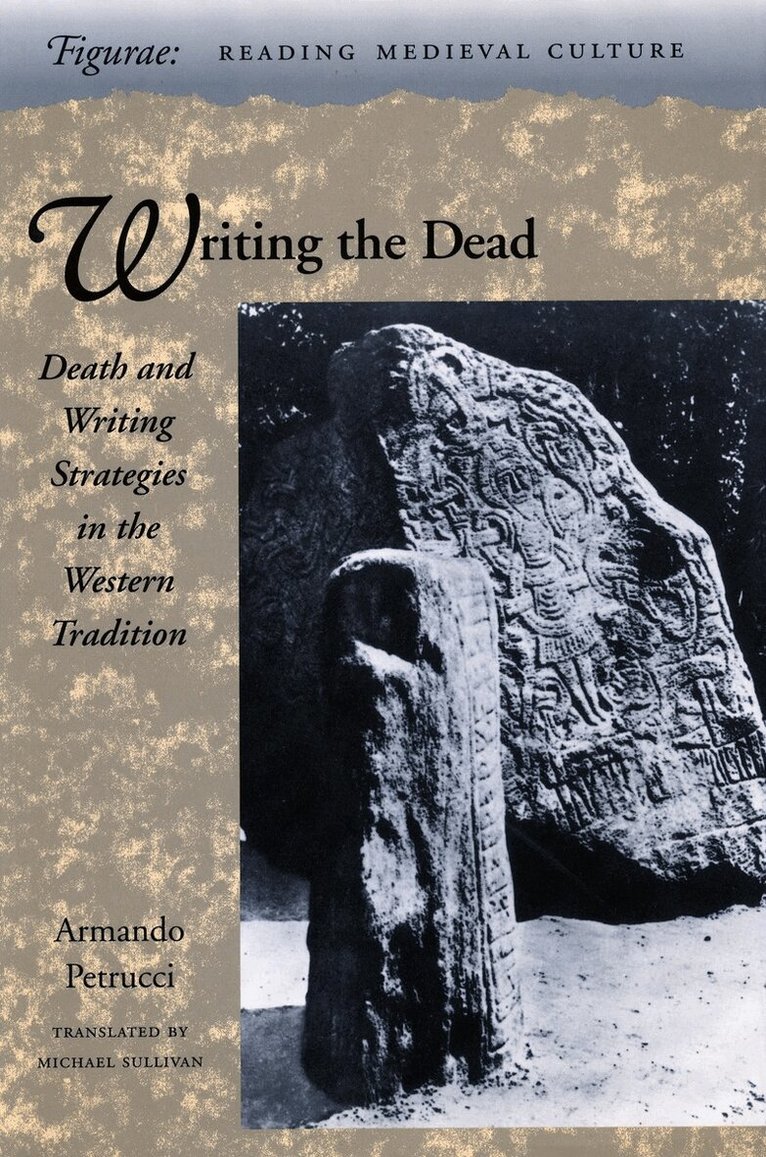
Written by one of the world's leading paleographers, this book poses two fundamental questions: When did human beings begin—and why have they continued—to decide that a certain number of their dead had a right to a "written death"? What differences have existed in the practice of writing death from age to age and culture to culture? Drawing principally on testimonials intended for public display, such as monuments, tombstones, and grave markings, as well as on scrolls, books, manuscripts, newspapers, and posters, the author reconstructs the ways Western cultures have used writing to commemorate the dead, from the tombs of ancient Egypt to the Vietnam Memorial in Washington, D.C.The author argues that the relation between funereal remains and inscription is a profoundly political one. The recurring question—Who merits a written death?—demands a multifaceted reply, one that intersects such "modes" of human cultural history as the relation between the living and the dead, the control of territory, the formation and maintenance of power, the preservation of wealth, the right to individuality, and the symbolic and signifying value of written culture.Apart from examining funerary writing in the light of this analytical model, the author also studies the quality of commemorative writing, the length and physical arrangement of the text, and its link to any representational elements, such as a likeness of the deceased, the techniques involved in executing the testimonial, the number of people who participate in creating it, and its outward appearance. Under the author's careful and informed scrutiny, such developments as unidirectional script, the separation of writing into horizontal lines, and the even spacing of individual letters are revealed as indices of social and technological change.
E-bok
PDF, Spanska, 2020204 kr
Läs direkt efter köp
Armando Petrucci ha transformado esa disciplina erudita que es la paleografía en una ambiciosa historia de los usos de la escritura. Este libro analiza con ingenio e inteligencia la construcción de la vasta biblioteca de Occidente para descubrir los fascinantes entresijos de la cultura del libro y, en suma, los fundamentos materiales de nuestras formas de pensar.De la práctica del "escribir sin leer" característica de la alta Edad Media, hasta el libro de mano o libro de alforja, que llegará años después de la invención de la imprenta, Petrucci nos acompaña en un fascinante viaje para conocer los modos en que la tinta, la pasta, la cola y demás materias se entremezclaron para generar un universo de sentido. La larga génesis de ese objeto perfecto que es el libro, entrelazada con la historia de los modos de lectura y las políticas de la escritura, nos permitirán entender el mundo del texto como ese espacio político de objetos, gestos y performances que todos nosotros habitamos.
E-bok
PDF, Katalanska, 201170 kr
Läs direkt efter köp
La lección de paleografía que imparte en este libro el profesor Armando Petrucci supera los estrechos límites académicos de las disciplinas eruditas. Desde una posición alejada de las retóricas académicas, el autor nos propone conjugar todas las teselas del mosaico comunicativo para conocer tanto los diversos sistemas de comunicación escrita en la cultura occidental, desde que aparecieran los primeros sistemas de escritura, como las ideologías a las que responde su uso. Un heterogéneo conjunto de situaciones de escritura, pues, que se analizan de manera rigurosa y erudita, sin menospreciar, sin embargo, el contexto social que las generó.
Häftad, Italienska
562 kr
Tillfälligt slut