Arthur E. Farnsley II – författare
Visar alla böcker från författaren Arthur E. Farnsley II. Handla med fri frakt och snabb leverans.
4 produkter
4 produkter
E-bok
PDF, Engelska, 2017533 kr
Läs direkt efter köp
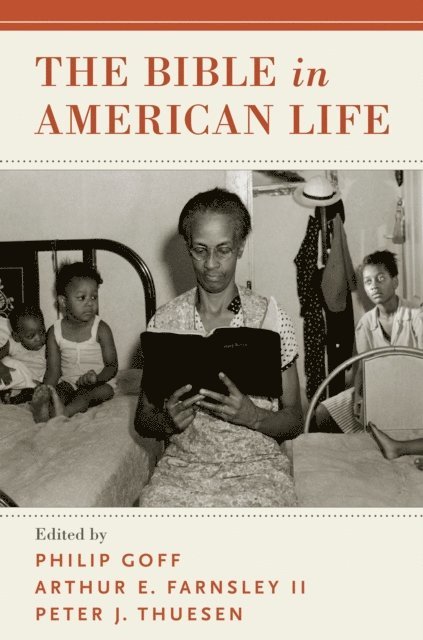
There is a paradox in American Christianity. According to Gallup, nearly eight in ten Americans regard the Bible as either the literal word of God or inspired by God. At the same time, surveys have revealed gaps in these same Americans'' biblical literacy. These discrepancies reveal the complex relationship between American Christians and Holy Writ, a subject that is widely acknowledged but rarely investigated.The Bible in American Life is a sustained, collaborative reflection on the ways Americans use the Bible in their personal lives. It also considers how other influences, including religious communities and the Internet, shape individuals'' comprehension of scripture. Employing both quantitative methods (the General Social Survey and the National Congregations Study) and qualitative research (historical studies for context), The Bible in American Life provides an unprecedented perspective on the Bible''s role outside of worship, in the lived religion of a broad cross-section of Americans both now and in the past.The Bible has been central to Christian practice, and has functioned as a cultural touchstoneFrom the broadest scale imaginable, national survey data about all Americans, down to the smallest details, such as the portrayal of Noah and his ark in children''s Bibles, this book offers insight and illumination from scholars across the intellectual spectrum. It will be useful and informative for scholars seeking to understand changes in American Christianity as well as clergy seeking more effective ways to preach and teach about scripture in a changing environment.
E-bok
Engelska, 2017533 kr
Läs direkt efter köp
There is a paradox in American Christianity. According to Gallup, nearly eight in ten Americans regard the Bible as either the literal word of God or inspired by God. At the same time, surveys have revealed gaps in these same Americans'' biblical literacy. These discrepancies reveal the complex relationship between American Christians and Holy Writ, a subject that is widely acknowledged but rarely investigated.The Bible in American Life is a sustained, collaborative reflection on the ways Americans use the Bible in their personal lives. It also considers how other influences, including religious communities and the Internet, shape individuals'' comprehension of scripture. Employing both quantitative methods (the General Social Survey and the National Congregations Study) and qualitative research (historical studies for context), The Bible in American Life provides an unprecedented perspective on the Bible''s role outside of worship, in the lived religion of a broad cross-section of Americans both now and in the past.The Bible has been central to Christian practice, and has functioned as a cultural touchstoneFrom the broadest scale imaginable, national survey data about all Americans, down to the smallest details, such as the portrayal of Noah and his ark in children''s Bibles, this book offers insight and illumination from scholars across the intellectual spectrum. It will be useful and informative for scholars seeking to understand changes in American Christianity as well as clergy seeking more effective ways to preach and teach about scripture in a changing environment.
Häftad, Engelska, 1994
495 kr
Skickas inom 5-8 vardagar
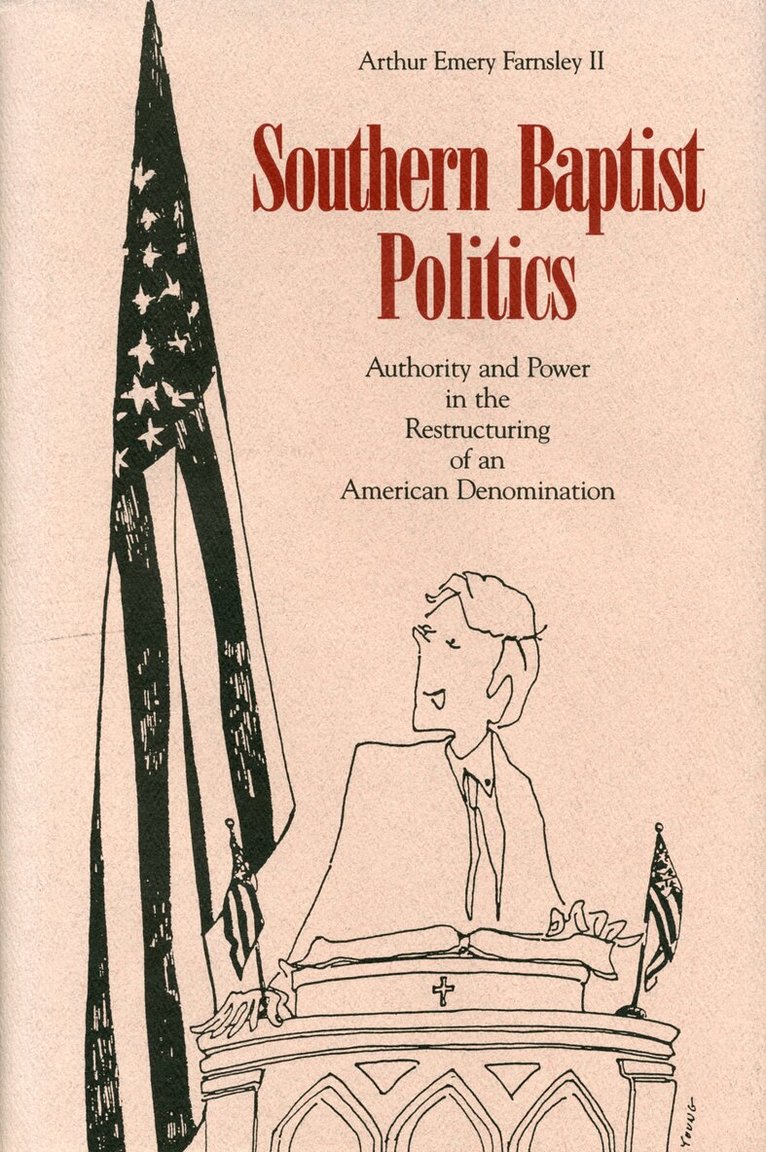
Unlike other recent studies of the Southern Baptists, Southern Baptist Politics was written after the culmination of the "Baptist battles" of the 1980s, when Fundamentalists had effectively taken control of the denomination. It also considers the SBC not simply as a denomination but as an organization with characteristics similar to other voluntary associations in American society—an approach that promises to be useful for the study of other religious groups in America. Arthur Farnsley concludes that the SBC, as an American denomination, had within itself the seeds of pragmatism and individualism that characterize most American voluntary organizations. Of primary interest to Farnsley are the crucial issues of authority and power. Taking his cue from Paul Harrison's classic study, Authority and Power in the Free Church Tradition, Farnsley considers how authority has traditionally been exercised within the SBC, and how Fundamentalists maneuvered within this existing authority structure to seize power. According to Farnsley, disgruntled Fundamentalists soon discovered that they could exploit the democratic elements within the SBC polity to their advantage. So successful were they in their efforts that by 1990 all significant leadership positions within the denomination were filled by Fundamentalists, thus enabling them to take, and hold, institutional power. The lessons of Southern Baptist Politics extend beyond this one denomination. By using the Southern Baptists as a case study, Farnsley asks what the SBC controversy can tell us about religious organizations in America, about dealing with cultural pluralism, and about institutional means for creating change.
E-bok
Engelska, 2012260 kr
Läs direkt efter köp
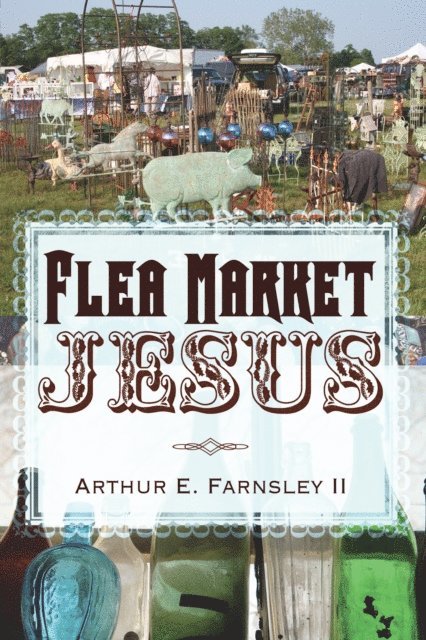
Americans live their lives through institutions: government, businesses, schools, clubs, and houses of worship. But many Americans are wary of the control these groups--especially government and business--exercise over their lives.Flea Market Jesus provides an up-close look at the rugged individualism of those trying hardest to separate themselves from institutions: flea market dealers. Having spent most of his life studying American religious organizations, Art Farnsley turns his attention to America''s most solitary, and alienated, entrepreneurs.Farnsley describes an entire subculture of white Midwesterners--working class, middle class, and poor--gathered together in a uniquely American celebration of guns and frontier life. In this mix, the character Cochise voices the frustrations of flea market dealers toward business, politics, and, especially, religion.Part ethnography, part autobiography, Flea Market Jesus is a story about alienation, biblical literalism, libertarianism, and deep-seated religious belief. It is not about the Tea Party, the Occupy movement, or the Christian Right, but it shines a light on all of these by highlighting the potent combination of mistrust, resentment, and personal liberty too often kept in the shadows of public discourse among educated elites.