Arthur Selwyn Miller – författare
Visar alla böcker från författaren Arthur Selwyn Miller. Handla med fri frakt och snabb leverans.
5 produkter
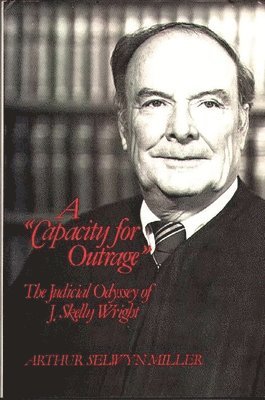
Capacity for Outrage
The Judicial Odyssey of J. Skelly Wright
Inbunden, 1984
978 kr
Lägg i varukorg
Arthur Selwyn Miller's book, the first biography written about Judge J. Skelly Wright, deals with the important aspects of his career as a jurist and the impact of his decisions on the development of constitutional law. Each chapter deals with a specific area of public law: an explanation of the …
Toward Increased Judicial Activism
The Political Role of the Supreme Court
Inbunden, 1982
978 kr
Lägg i varukorg
Nuclear Weapons and Law
Av Arthur Selwyn Miller, M. Feinrider m. fl.
Inbunden, 1984
978 kr
Lägg i varukorg
This book presents a rounded critique of the conventional wisdom about the legality of nuclear weapons by experts in international and constitutional law. Part I addresses the status of nuclear weapons under international law. Scholars on one side of the question draw upon treaties and …
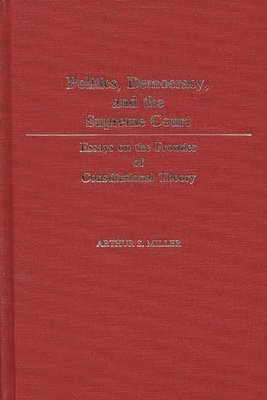
Politics, Democracy, and the Supreme Court
Essays on the Frontier of Constitutional Theory
Inbunden, 1985
978 kr
Lägg i varukorg
Miller proposes that we focus our energies on the question of how the Constitution is to function in an era of rapid and fundamental social change. He introduces this provocative collection of essays with the observation that American constitutional theory has arrived at a dead-end, largely because …