Arvind Krishnamurthy – författare
Visar alla böcker från författaren Arvind Krishnamurthy. Handla med fri frakt och snabb leverans.
8 produkter
8 produkter
Inbunden, Engelska, 2018
1 509 kr
Skickas inom 5-8 vardagar
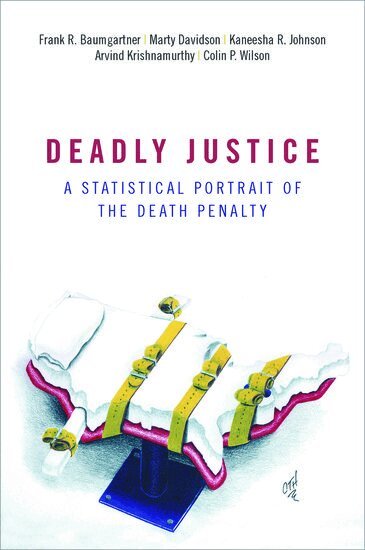
In 1976, the US Supreme Court ruled in Gregg v. Georgia that the death penalty was constitutional if it complied with certain specific provisions designed to ensure that it was reserved for the 'worst of the worst.' The same court had rejected the death penalty just four years before in the Furman decision because it found that the penalty had been applied in a capricious and arbitrary manner. The 1976 decision ushered in the 'modern' period of the US death penalty, setting the country on a course to execute over 1,400 inmates in the ensuing years, with over 8,000 individuals currently sentenced to die. Now, forty years after the decision, the eminent political scientist Frank Baumgartner along with a team of younger scholars (Marty Davidson, Kaneesha Johnson, Arvind Krishnamurthy, and Colin Wilson) have collaborated to assess the empirical record and provide a definitive account of how the death penalty has been implemented. Each chapter addresses a precise empirical question and provides evidence, not opinion, about whether how the modern death penalty has functioned. They decided to write the book after Justice Breyer issued a dissent in a 2015 death penalty case in which he asked for a full briefing on the constitutionality of the death penalty. In particular, they assess the extent to which the modern death penalty has met the aspirations of Gregg or continues to suffer from the flaws that caused its rejection in Furman. To answer this question, they provide the most comprehensive statistical account yet of the workings of the capital punishment system. Authoritative and pithy, the book is intended for both students in a wide variety of fields, researchers studying the topic, and--not least--the Supreme Court itself.
Häftad, Engelska, 2018
373 kr
Skickas inom 5-8 vardagar
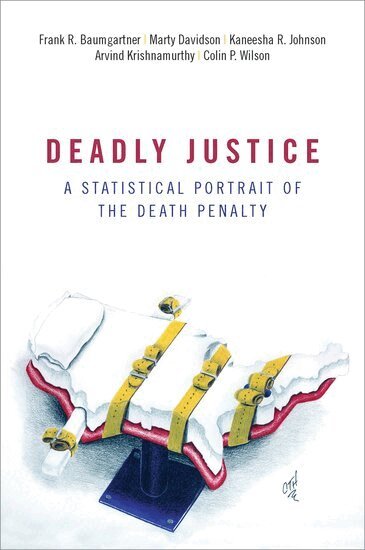
In 1976, the US Supreme Court ruled in Gregg v. Georgia that the death penalty was constitutional if it complied with certain specific provisions designed to ensure that it was reserved for the 'worst of the worst.' The same court had rejected the death penalty just four years before in the Furman decision because it found that the penalty had been applied in a capricious and arbitrary manner. The 1976 decision ushered in the 'modern' period of the US death penalty, setting the country on a course to execute over 1,400 inmates in the ensuing years, with over 8,000 individuals currently sentenced to die. Now, forty years after the decision, the eminent political scientist Frank Baumgartner along with a team of younger scholars (Marty Davidson, Kaneesha Johnson, Arvind Krishnamurthy, and Colin Wilson) have collaborated to assess the empirical record and provide a definitive account of how the death penalty has been implemented. Each chapter addresses a precise empirical question and provides evidence, not opinion, about whether how the modern death penalty has functioned. They decided to write the book after Justice Breyer issued a dissent in a 2015 death penalty case in which he asked for a full briefing on the constitutionality of the death penalty. In particular, they assess the extent to which the modern death penalty has met the aspirations of Gregg or continues to suffer from the flaws that caused its rejection in Furman. To answer this question, they provide the most comprehensive statistical account yet of the workings of the capital punishment system. Authoritative and pithy, the book is intended for both students in a wide variety of fields, researchers studying the topic, and--not least--the Supreme Court itself.
E-bok
PDF, Engelska, 2017432 kr
Läs direkt efter köp
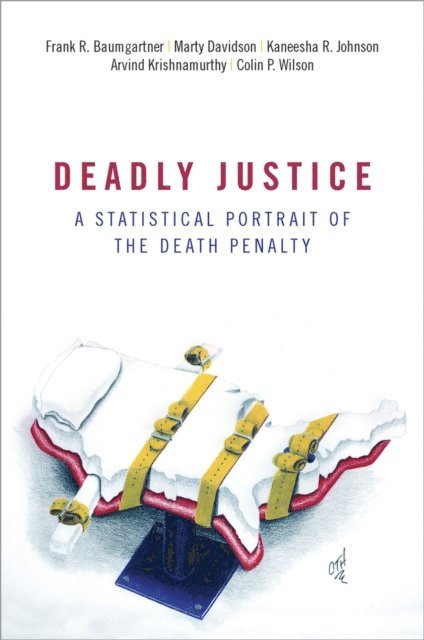
In 1976, the US Supreme Court ruled in Gregg v. Georgia that the death penalty was constitutional if it complied with certain specific provisions designed to ensure that it was reserved for the ''worst of the worst.'' The same court had rejected the death penalty just four years before in the Furman decision because it found that the penalty had been applied in a capricious and arbitrary manner. The 1976 decision ushered in the ''modern'' period of the US death penalty, setting the country on a course to execute over 1,400 inmates in the ensuing years, with over 8,000 individuals currently sentenced to die. Now, forty years after the decision, the eminent political scientist Frank Baumgartner along with a team of younger scholars (Marty Davidson, Kaneesha Johnson, Arvind Krishnamurthy, and Colin Wilson) have collaborated to assess the empirical record and provide a definitive account of how the death penalty has been implemented. Each chapter addresses a precise empirical question and provides evidence, not opinion, about whether how the modern death penalty has functioned. They decided to write the book after Justice Breyer issued a dissent in a 2015 death penalty case in which he asked for a full briefing on the constitutionality of the death penalty. In particular, they assess the extent to which the modern death penalty has met the aspirations of Gregg or continues to suffer from the flaws that caused its rejection in Furman. To answer this question, they provide the most comprehensive statistical account yet of the workings of the capital punishment system. Authoritative and pithy, the book is intended for both students in a wide variety of fields, researchers studying the topic, and--not least--the Supreme Court itself.
E-bok
Engelska, 2017428 kr
Läs direkt efter köp
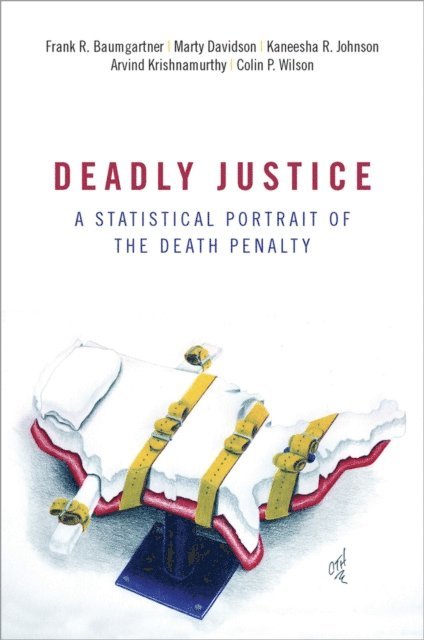
In 1976, the US Supreme Court ruled in Gregg v. Georgia that the death penalty was constitutional if it complied with certain specific provisions designed to ensure that it was reserved for the ''worst of the worst.'' The same court had rejected the death penalty just four years before in the Furman decision because it found that the penalty had been applied in a capricious and arbitrary manner. The 1976 decision ushered in the ''modern'' period of the US death penalty, setting the country on a course to execute over 1,400 inmates in the ensuing years, with over 8,000 individuals currently sentenced to die. Now, forty years after the decision, the eminent political scientist Frank Baumgartner along with a team of younger scholars (Marty Davidson, Kaneesha Johnson, Arvind Krishnamurthy, and Colin Wilson) have collaborated to assess the empirical record and provide a definitive account of how the death penalty has been implemented. Each chapter addresses a precise empirical question and provides evidence, not opinion, about whether how the modern death penalty has functioned. They decided to write the book after Justice Breyer issued a dissent in a 2015 death penalty case in which he asked for a full briefing on the constitutionality of the death penalty. In particular, they assess the extent to which the modern death penalty has met the aspirations of Gregg or continues to suffer from the flaws that caused its rejection in Furman. To answer this question, they provide the most comprehensive statistical account yet of the workings of the capital punishment system. Authoritative and pithy, the book is intended for both students in a wide variety of fields, researchers studying the topic, and--not least--the Supreme Court itself.
Inbunden, Engelska, 2014
1 024 kr
Skickas inom 5-8 vardagar
The recent financial crisis and the difficulty of using mainstream macroeconomic models to accurately monitor systemic risk have stimulated new analyses of how we measure economic activity and the development of more sophisticated models in which the financial sector plays a greater role. Markus Brunnermeier and Arvind Krishnamurthy have assembled contributions from researchers, central bankers, and other financial-market experts to explore the possibilities for advancing macroeconomic modeling in order to achieve more accurate measurement. Essays focus on the development of models capable of highlighting the vulnerabilities that have never been systematically measured before.
E-bok
Engelska, 20142 157 kr
Läs direkt efter köp
The recent financial crisis and the difficulty of using mainstream macroeconomic models to accurately monitor and assess systemic risk have stimulated new analyses of how we measure economic activity and the development of more sophisticated models in which the financial sector plays a greater role. Markus Brunnermeier and Arvind Krishnamurthy have assembled contributions from leading academic researchers, central bankers, and other financial-market experts to explore the possibilities for advancing macroeconomic modeling in order to achieve more accurate economic measurement. Essays in this volume focus on the development of models capable of highlighting the vulnerabilities that leave the economy susceptible to adverse feedback loops and liquidity spirals. While these types of vulnerabilities have often been identified, they have not been consistently measured. In a financial world of increasing complexity and uncertainty, this volume is an invaluable resource for policymakers working to improve current measurement systems and for academics concerned with conceptualizing effective measurement.
Häftad, Engelska, 2010
566 kr
Skickas inom 10-15 vardagar
The 2010 edition of the Passive and Active Measurement Conference was the 11th of a series of successful events. Since 2000, the Passive and Active M- surement (PAM) conference has provided a forum for presenting and discussing innovative and early work in the area of Internet measurements. PAM has a tradition of being a workshop-like conference with lively discussion and active participation from all attendees. This event focuses on research and practical applications of network measurement and analysis techniques. This year’s c- ference was held at ETH Zurich, Switzerland. PAM 2010 attracted 79 submissions. Each paper was carefully reviewed by at leastthreemembersoftheTechnicalProgramCommittee.Thereviewingprocess ledtotheacceptanceof23papers.Thepaperswerearrangedinninesessionsc- ering the following areas: routing, transport protocols, mobile devices, topology, measurement infrastructure, characterizing network usage, analysis techniques, tra?c analysis, and the Web. We are very grateful to Endace Ltd. (New Zealand), Cisco Systems Inc. (USA), armasuisse (Switzerland) and the COST Action TMA whose sponsoring allowedustokeepregistrationcostslowandto o?erseveraltravelgrantsto PhD students. We are also grateful to ETH Zurich for sponsoring PAM as a host.
E-bok
PDF, Engelska, 2010708 kr
Läs direkt efter köp
The 2010 edition of the Passive and Active Measurement Conference was the 11th of a series of successful events. Since 2000, the Passive and Active M- surement (PAM) conference has provided a forum for presenting and discussing innovative and early work in the area of Internet measurements. PAM has a tradition of being a workshop-like conference with lively discussion and active participation from all attendees. This event focuses on research and practical applications of network measurement and analysis techniques. This year’s c- ference was held at ETH Zurich, Switzerland. PAM 2010 attracted 79 submissions. Each paper was carefully reviewed by at leastthreemembersoftheTechnicalProgramCommittee.Thereviewingprocess ledtotheacceptanceof23papers.Thepaperswerearrangedinninesessionsc- ering the following areas: routing, transport protocols, mobile devices, topology, measurement infrastructure, characterizing network usage, analysis techniques, tra?c analysis, and the Web. We are very grateful to Endace Ltd. (New Zealand), Cisco Systems Inc. (USA), armasuisse (Switzerland) and the COST Action TMA whose sponsoring allowedustokeepregistrationcostslowandto o?erseveraltravelgrantsto PhD students. We are also grateful to ETH Zurich for sponsoring PAM as a host.