Ashley Thomson – författare
1 866 kr
Skickas inom 5-8 vardagar
1 727 kr
Läs direkt efter köp
64 kr
Läs direkt efter köp
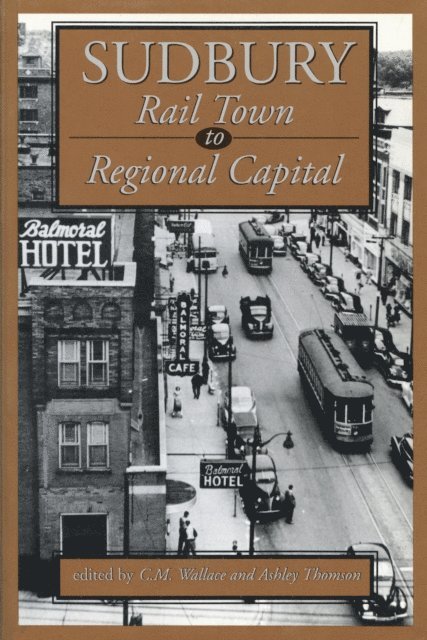
At the turn of the century Sudbury was a town set on the railway line, with a population of about 2,000. The community was smaller than Sault Ste. Marie and Copper Cliff to the west, and to the east, North Bay and Pembroke. Now, nearly 100 years later, Sudbury is the largest city in northeastern Ontario. it is also the centre of many governmental, business, social, educational, media, medical, and other professional services in the region.
Sudbury: Rail Town to Regional Capital, which honours the centenary of the community’s incorporation as a town in 1893, analyses Sudbury decade by decade, describing the ongoing changes in the community and their impact on citizens. The book also examines the forces that shaped the city’s destiny and argues that Sudbury is far more than a single-industry town based on mining. Grounded in new research and written in an accessible style by a team of local scholars, the book, with numerous maps and photographs will appeal to urban historians as well as the general reader both within and beyond the city.
64 kr
Läs direkt efter köp
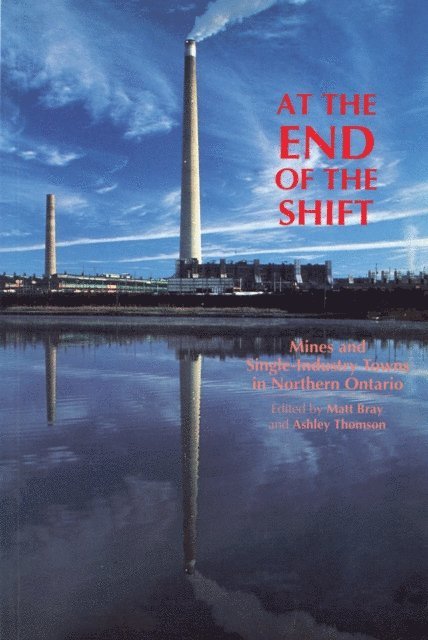
Mining has played a formative role in the history of Northern Ontario. It has been one of the key generators of wealth in the area since the mid-19th century, and is also responsible for much of the urban development of Ontario’s northland. The twelve papers published here came out of the second annual confernce of Northern Ontario research and development held in 1990. The papers are grouped into four sections, the early years; the era of government intervention; the present and finally the future and what can be done to maintain the commnities.
62 kr
Läs direkt efter köp
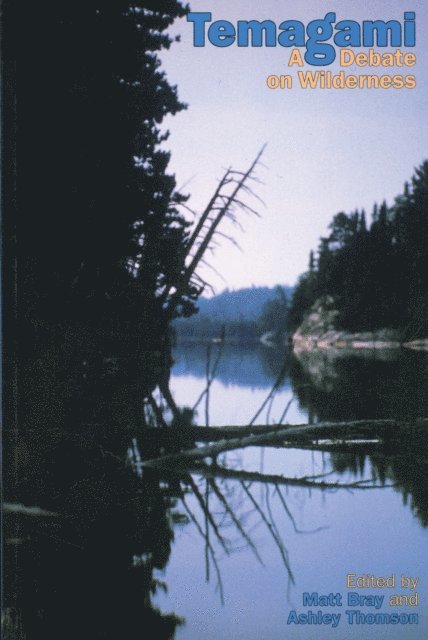
Over the past two decades, the question of who owns the land of Temagami and how the land should be used has caused a debate of unparalleled intensity.
For the native people, it is their lands under attack. For environmentalists from all parts of Ontario, it is a case of ecological preservation of a unique but fast-disappearing wilderness. For others, dependent upon the resource sector, it is a matter of economic survival, both individually and for their communities.
In an attempt to clarify the issues surrounding Temagami, Laurentian University’s Institute of Northern Ontario Development and Research invited participants in the Temagami debate to a conference in October, 1989. What follows in this volume are eleven of the revised papers originally presented there.
A balanced perspective on the issues at hand is coupled with the views of the various interest groups. Topics covered include aboriginal rights in Temagami, the development of a wilderness park system in Ontario, the management of multiple resources, the importance of tourism in Temagami and an environmentalist’s perspective.
242 kr
Skickas inom 3-6 vardagar
154 kr
Läs direkt efter köp
Mining has played a formative role in the history of Northern Ontario. It has been one of the key generators of wealth in the area since the mid-19th century, and is also responsible for much of the urban development of Ontario’s northland. The twelve papers published here came out of the second annual confernce of Northern Ontario research and development held in 1990. The papers are grouped into four sections, the early years; the era of government intervention; the present and finally the future and what can be done to maintain the commnities.
86 kr
Läs direkt efter köp
179 kr
Läs direkt efter köp
At the turn of the century Sudbury was a town set on the railway line, with a population of about 2,000. The community was smaller than Sault Ste. Marie and Copper Cliff to the west, and to the east, North Bay and Pembroke. Now, nearly 100 years later, Sudbury is the largest city in northeastern Ontario. it is also the centre of many governmental, business, social, educational, media, medical, and other professional services in the region.
Sudbury: Rail Town to Regional Capital, which honours the centenary of the community’s incorporation as a town in 1893, analyses Sudbury decade by decade, describing the ongoing changes in the community and their impact on citizens. The book also examines the forces that shaped the city’s destiny and argues that Sudbury is far more than a single-industry town based on mining. Grounded in new research and written in an accessible style by a team of local scholars, the book, with numerous maps and photographs will appeal to urban historians as well as the general reader both within and beyond the city.
149 kr
Läs direkt efter köp
Over the past two decades, the question of who owns the land of Temagami and how the land should be used has caused a debate of unparalleled intensity.
For the native people, it is their lands under attack. For environmentalists from all parts of Ontario, it is a case of ecological preservation of a unique but fast-disappearing wilderness. For others, dependent upon the resource sector, it is a matter of economic survival, both individually and for their communities.
In an attempt to clarify the issues surrounding Temagami, Laurentian University’s Institute of Northern Ontario Development and Research invited participants in the Temagami debate to a conference in October, 1989. What follows in this volume are eleven of the revised papers originally presented there.
A balanced perspective on the issues at hand is coupled with the views of the various interest groups. Topics covered include aboriginal rights in Temagami, the development of a wilderness park system in Ontario, the management of multiple resources, the importance of tourism in Temagami and an environmentalist’s perspective.
245 kr
Läs direkt efter köp
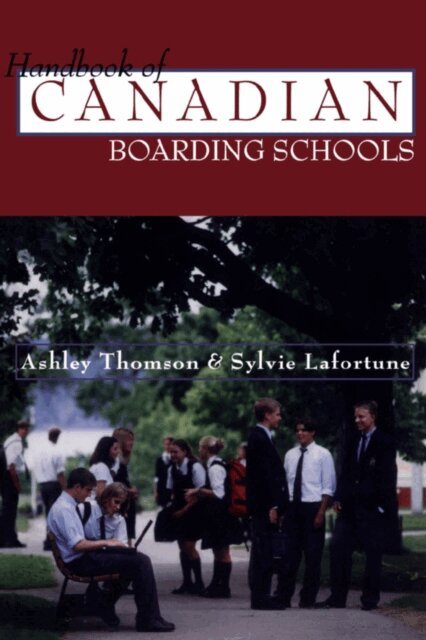
Private schools have frequently provided innovative, experimental, and creative programunavailable to students in the public system. The most successful have survived and expanded by offering an educational experience widely perceived to be not just as good as that available in the public system, but better.
In Canada, private schools are enjoying an unprecedented popularity and while most are day-only, over sixty sustain boarding programs, as do two off-shore Canadian schools.
The Handbook of Canadian Boarding Schools presents information on the educational environment of each province,then offers comparative information on each boarding school.
The information on each school includes: basic data, location, history, philosophy, the campus, boarding facilities, health and safety, administration and faculty, student body and student conduct, academic calendar and program, information technology, student activities and student conduct, admission and costs.
The Handbook also supplies several appendices outlining important programs often available through boarding schools, such as Advanced Placement courses and the International Baccalaureate.
For parents in Canada and abroad about to commit substantial sums to their children’s education, the Handbook of Canadian Boarding Schools is an essential tool to help them make the right decision.
It is also an indispensable resource for supporters of the public system looking for ideas that have worked elsewhere.
145 kr
Tillfälligt slut
145 kr
Tillfälligt slut
218 kr
Tillfälligt slut