Ashok P. Maitra – författare
Visar alla böcker från författaren Ashok P. Maitra. Handla med fri frakt och snabb leverans.
3 produkter
3 produkter
Del 32 - Stochastic Modelling and Applied Probability
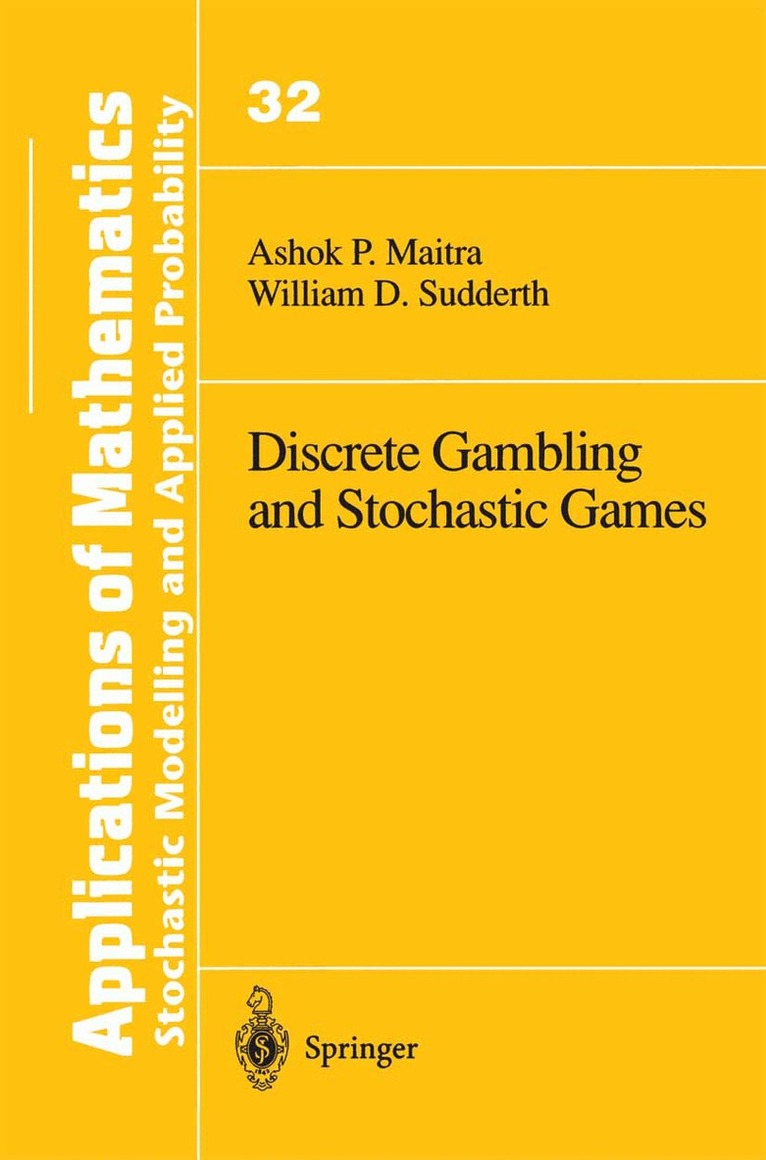
Discrete Gambling and Stochastic Games
Inbunden, Engelska, 1996
1 084 kr
Skickas inom 10-15 vardagar
The theory of probability began in the seventeenth century with attempts to calculate the odds of winning in certain games of chance. However, it was not until the middle of the twentieth century that mathematicians de veloped general techniques for maximizing the chances of beating a casino or winning against an intelligent opponent. These methods of finding op timal strategies for a player are at the heart of the modern theories of stochastic control and stochastic games. There are numerous applications to engineering and the social sciences, but the liveliest intuition still comes from gambling. The now classic work How to Gamble If You Must: Inequalities for Stochastic Processes by Dubins and Savage (1965) uses gambling termi nology and examples to develop an elegant, deep, and quite general theory of discrete-time stochastic control. A gambler "controls" the stochastic pro cess of his or her successive fortunes by choosing which games to play and what bets to make.
E-bok
PDF, Engelska, 20121 416 kr
Läs direkt efter köp
The theory of probability began in the seventeenth century with attempts to calculate the odds of winning in certain games of chance. However, it was not until the middle of the twentieth century that mathematicians de veloped general techniques for maximizing the chances of beating a casino or winning against an intelligent opponent. These methods of finding op timal strategies for a player are at the heart of the modern theories of stochastic control and stochastic games. There are numerous applications to engineering and the social sciences, but the liveliest intuition still comes from gambling. The now classic work How to Gamble If You Must: Inequalities for Stochastic Processes by Dubins and Savage (1965) uses gambling termi nology and examples to develop an elegant, deep, and quite general theory of discrete-time stochastic control. A gambler "controls" the stochastic pro cess of his or her successive fortunes by choosing which games to play and what bets to make.
Del 32 - Stochastic Modelling and Applied Probability
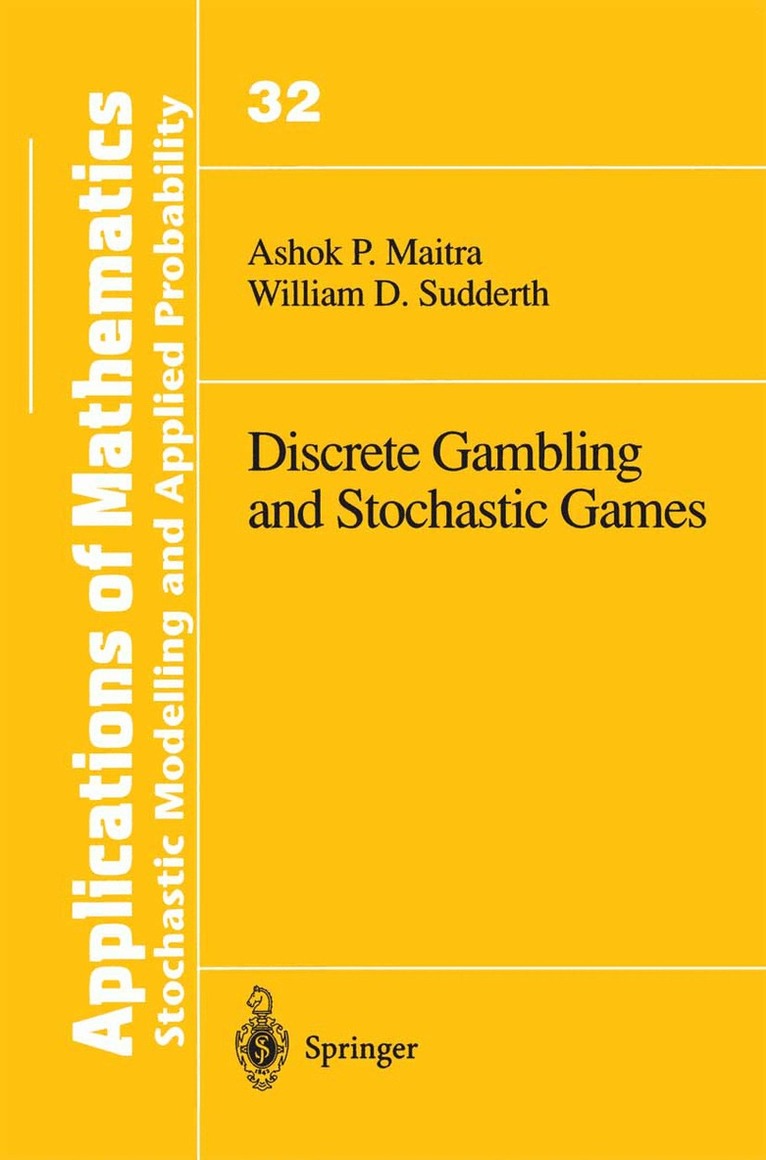
Discrete Gambling and Stochastic Games
Häftad, Engelska, 2011
1 082 kr
Skickas inom 10-15 vardagar
The theory of probability began in the seventeenth century with attempts to calculate the odds of winning in certain games of chance. However, it was not until the middle of the twentieth century that mathematicians de veloped general techniques for maximizing the chances of beating a casino or winning against an intelligent opponent. These methods of finding op timal strategies for a player are at the heart of the modern theories of stochastic control and stochastic games. There are numerous applications to engineering and the social sciences, but the liveliest intuition still comes from gambling. The now classic work How to Gamble If You Must: Inequalities for Stochastic Processes by Dubins and Savage (1965) uses gambling termi nology and examples to develop an elegant, deep, and quite general theory of discrete-time stochastic control. A gambler "controls" the stochastic pro cess of his or her successive fortunes by choosing which games to play and what bets to make.