Ashoka Mody – författare
282 kr
Skickas inom 5-8 vardagar
519 kr
Skickas inom 5-8 vardagar
248 kr
Läs direkt efter köp
248 kr
Läs direkt efter köp
768 kr
Skickas inom 10-15 vardagar
214 kr
Skickas inom 10-15 vardagar
2 635 kr
Skickas inom 10-15 vardagar
629 kr
Skickas inom 10-15 vardagar
246 kr
Läs direkt efter köp
Asking the question of whether Foreign Direct Investment (FDI) is ''integrating'' the world economy, this comprehensive volume consists of an overview of current FDI research.
While the term ''integrating'' is often used, the real test should be whether FDI is instrumental in bringing per capita incomes across countries closer together. By this yardstick, the answer is no. The forces driving FDI are strong; they lead it to flow to countries with attractive investment conditions and, moreover, investors have a tendency to follow each other. It is in such settings that FDI appears to have the most beneficial effect in raising growth.
Written by an authority in this area, Ashoka Mody, this book will greatly appeal to all international and development economists.
244 kr
Läs direkt efter köp
Asking the question of whether Foreign Direct Investment (FDI) is ''integrating'' the world economy, this comprehensive volume consists of an overview of current FDI research.
While the term ''integrating'' is often used, the real test should be whether FDI is instrumental in bringing per capita incomes across countries closer together. By this yardstick, the answer is no. The forces driving FDI are strong; they lead it to flow to countries with attractive investment conditions and, moreover, investors have a tendency to follow each other. It is in such settings that FDI appears to have the most beneficial effect in raising growth.
Written by an authority in this area, Ashoka Mody, this book will greatly appeal to all international and development economists.
661 kr
Läs direkt efter köp
1 667 kr
Skickas inom 10-15 vardagar
1 189 kr
Skickas inom 10-15 vardagar
1 533 kr
Läs direkt efter köp
Security concerns, the AIDS epidemic, environmental degradation, and financial contagion are salient features of today''s landscape of threats to global stability. A characteristic of these challenges is that they cannot be solved by individual nations acting alone. Enlightened cooperation is needed.
This book focuses on actions in the international arena to complement domestic efforts in addressing a set of policy challenges that has become more prominent in the age of globalization. It focuses on the strategic and practical challenges of fostering solutions that have the character of international public goods, paying particular attention to the financing of these goods.
380 kr
Skickas inom 3-6 vardagar
321 kr
Läs direkt efter köp
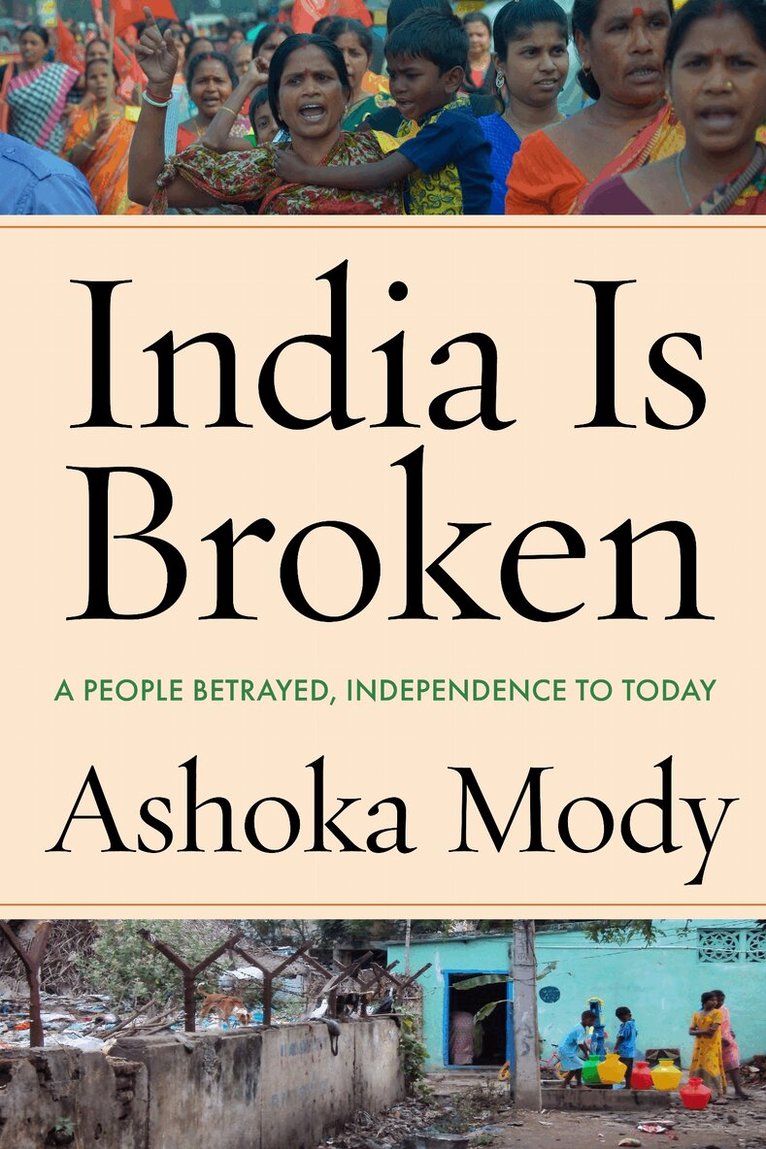
A provocative new account of how India moved relentlessly from its hope-filled founding in 1947 to the dramatic economic and democratic breakdowns of today.
When Indian leaders first took control of their government in 1947, they proclaimed the ideals of national unity and secular democracy. Through the first half century of nation-building, leaders could point to uneven but measurable progress on key goals, and after the mid-1980s, dire poverty declined for a few decades, inspiring declarations of victory. But today, a vast majority of Indians live in a state of underemployment and are one crisis away from despair. Public goods—health, education, cities, air and water, and the judiciary—are in woeful condition. And good jobs will remain scarce as long as that is the case. The lack of jobs will further undermine democracy, which will further undermine job creation. India is Broken provides the most persuasive account available of this economic catch-22.
Challenging prevailing narratives, Mody contends that successive post-independence leaders, starting with its first Prime Minister, Jawaharlal Nehru, failed to confront India''s true economic problems, seeking easy solutions instead. As a popular frustration grew, and corruption in politics became pervasive, India''s economic growth relied increasingly on unregulated finance and environmentally destructive construction. The rise of a violent Hindutva has buried all prior norms in civic life and public accountability.
Combining statistical data with creative media, such as literature and cinema, to create strong, accessible, people-driven narratives, this book is a meditation on the interplay between democracy and economic progress, with lessons extending far beyond India. Mody proposes a path forward that is fraught with its own peril, but which nevertheless offers something resembling hope.
273 kr
Skickas inom 10-15 vardagar
426 kr
Skickas inom 3-6 vardagar