Asis Kumar Banerjee - Böcker
Visar alla böcker från författaren Asis Kumar Banerjee. Handla med fri frakt och snabb leverans.
7 produkter
7 produkter
1 958 kr
Skickas inom 10-15 vardagar
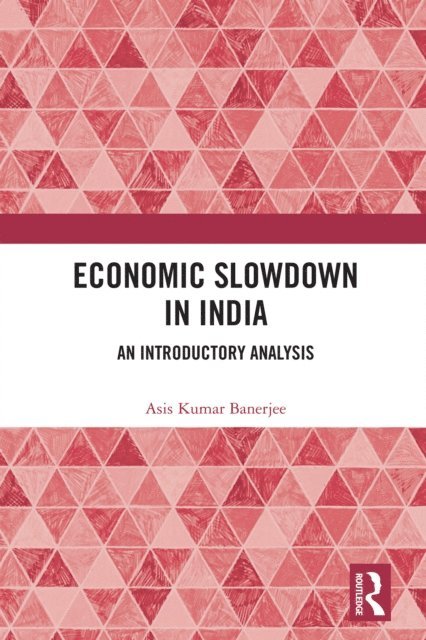
The devastating effect of Covid19 on the Indian economy is by now well-known. The growth rate of the economy slumped to a negative figure in the year 2020-21. What is less talked about, however, is the fact that growth slowdown in India had started several years before the pandemic struck. The two questions that naturally arise are: what explains the long economic slowdown and what can be done about it. This book is an in-depth analysis of the economic slowdown in India in recent years and the reasons behind the persistent slowdown in the growth rate of the Indian economy in the 2010s, especially in the latter half of the decade. While discussing both macro- and microeconomic policies, the volume examines how the perspective on economic policy has evolved over time in consonance with experience by investigating major instances of such slowdowns in the past. Three global slowdowns (viz. the Great Depression of 1929, the stagflation induced by the oil crisis of the 1970s and the Global Financial Crisis of 2007) and the industrial deceleration in India in the late 1960s and early 1970s are discussed.The author also probes into the problems of inequality, poverty, inflation in the Indian economy pre- and post- pandemic and policies targeted towards development, manufacturing, and distribution of vaccines. The book further discusses possible economic impacts of the Ukraine War and the long-term problem of global warming.Concise and thoroughly researched, this book will be of interest to beginners, scholars, research students and teachers interested in economics, policy making and development studies.
578 kr
Skickas inom 10-15 vardagar
The devastating effect of Covid19 on the Indian economy is by now well-known. The growth rate of the economy slumped to a negative figure in the year 2020-21. What is less talked about, however, is the fact that growth slowdown in India had started several years before the pandemic struck. The two questions that naturally arise are: what explains the long economic slowdown and what can be done about it. This book is an in-depth analysis of the economic slowdown in India in recent years and the reasons behind the persistent slowdown in the growth rate of the Indian economy in the 2010s, especially in the latter half of the decade. While discussing both macro- and microeconomic policies, the volume examines how the perspective on economic policy has evolved over time in consonance with experience by investigating major instances of such slowdowns in the past. Three global slowdowns (viz. the Great Depression of 1929, the stagflation induced by the oil crisis of the 1970s and the Global Financial Crisis of 2007) and the industrial deceleration in India in the late 1960s and early 1970s are discussed.The author also probes into the problems of inequality, poverty, inflation in the Indian economy pre- and post- pandemic and policies targeted towards development, manufacturing, and distribution of vaccines. The book further discusses possible economic impacts of the Ukraine War and the long-term problem of global warming.Concise and thoroughly researched, this book will be of interest to beginners, scholars, research students and teachers interested in economics, policy making and development studies.
711 kr
Skickas inom 10-15 vardagar
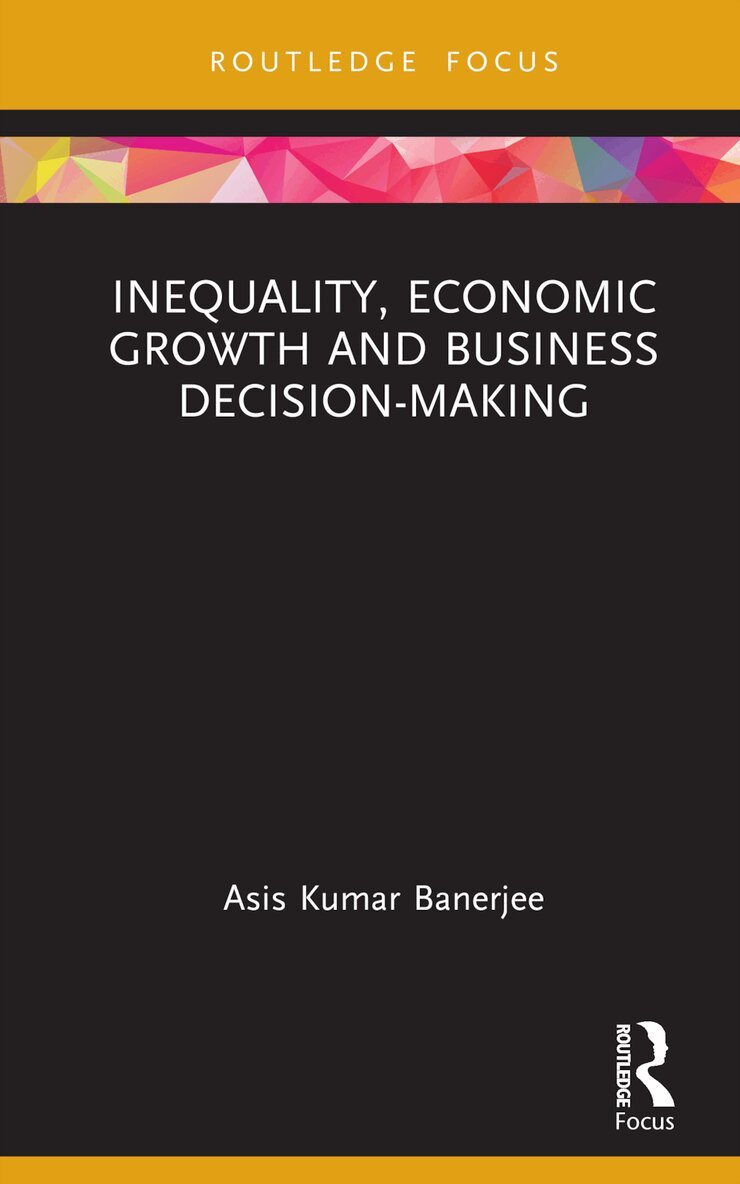
It is now widely recognised that rising inequality of income and wealth on the one hand and a slowdown in the rate of economic growth on the other are two of the most important challenges faced today by the global economy as well as by most of the developing economies. This book starts by explaining how these two issues are interrelated. There is no dearth of books on the role that the economic policies of the government can play in meeting these twin challenges. The role of business managers in the private sector of the economy, however, is a relatively neglected area. This book seeks to close this gap in the literature. The central message of the book is that, contrary to popular belief, it is in the interests of private business itself that business managers take into account the effects that their decisions have on the economy as a whole. It is shown that a failure to do so would hurt their own economic prospects in both the short run and the long. Emphasis is given on the importance of an appropriate orientation of managerial decisions and on the role of investors (i.e. the suppliers of capital) in inducing managers to take socially optimal decisions. The book is addressed as much to business managers and students in management courses as to the general reader. Therefore, no prior knowledge of advanced economic theory is presumed. All arguments are built from first principles.
356 kr
Kommande
It is now widely recognised that rising inequality of income and wealth on the one hand and a slowdown in the rate of economic growth on the other are two of the most important challenges faced today by the global economy as well as by most of the developing economies. This book starts by explaining how these two issues are interrelated. There is no dearth of books on the role that the economic policies of the government can play in meeting these twin challenges. The role of business managers in the private sector of the economy, however, is a relatively neglected area. This book seeks to close this gap in the literature. The central message of the book is that, contrary to popular belief, it is in the interests of private business itself that business managers take into account the effects that their decisions have on the economy as a whole. It is shown that a failure to do so would hurt their own economic prospects in both the short run and the long. Emphasis is given on the importance of an appropriate orientation of managerial decisions and on the role of investors (i.e. the suppliers of capital) in inducing managers to take socially optimal decisions. The book is addressed as much to business managers and students in management courses as to the general reader. Therefore, no prior knowledge of advanced economic theory is presumed. All arguments are built from first principles.
125 kr
Skickas inom 5-8 vardagar
1 167 kr
Skickas inom 10-15 vardagar
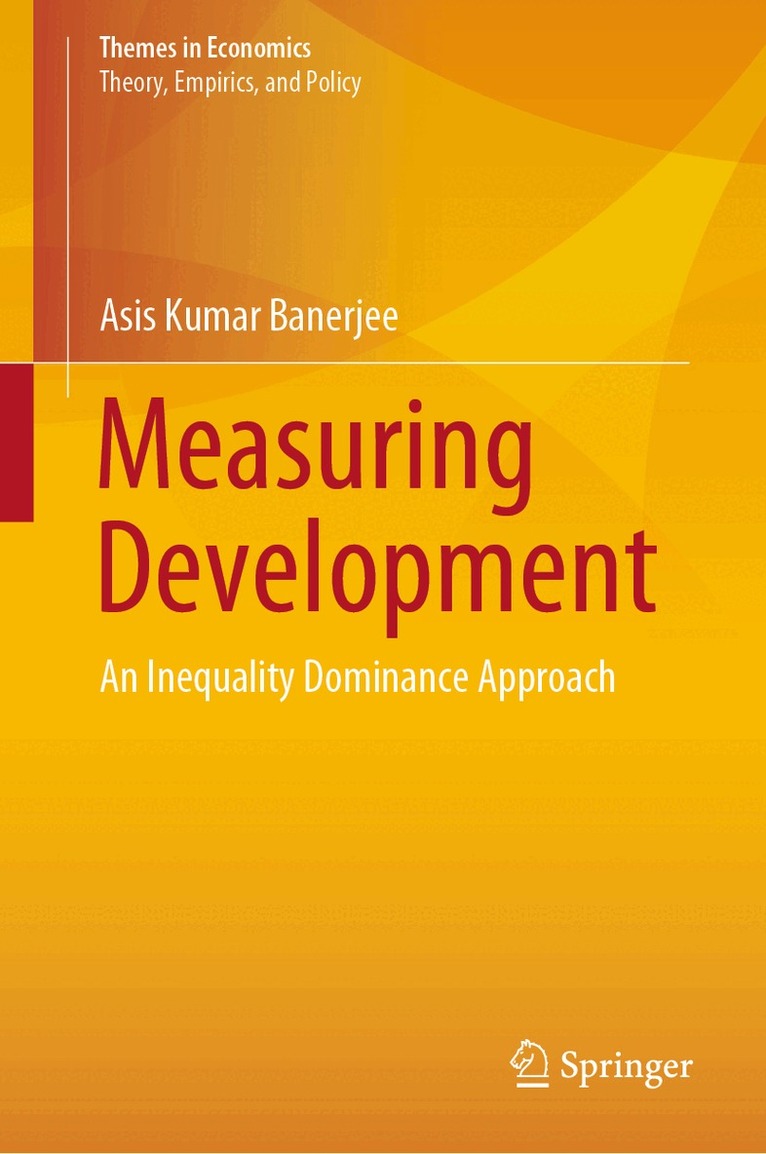
This book discusses how to measure the level of development of an economy, particularly, the task of ranking economies in terms of their development.
1 167 kr
Skickas inom 10-15 vardagar
This book discusses how to measure the level of development of an economy, particularly, the task of ranking economies in terms of their development.