Asit Kumar Basu - Böcker
Visar alla böcker från författaren Asit Kumar Basu. Handla med fri frakt och snabb leverans.
4 produkter
4 produkter
1 146 kr
Skickas inom 7-10 vardagar
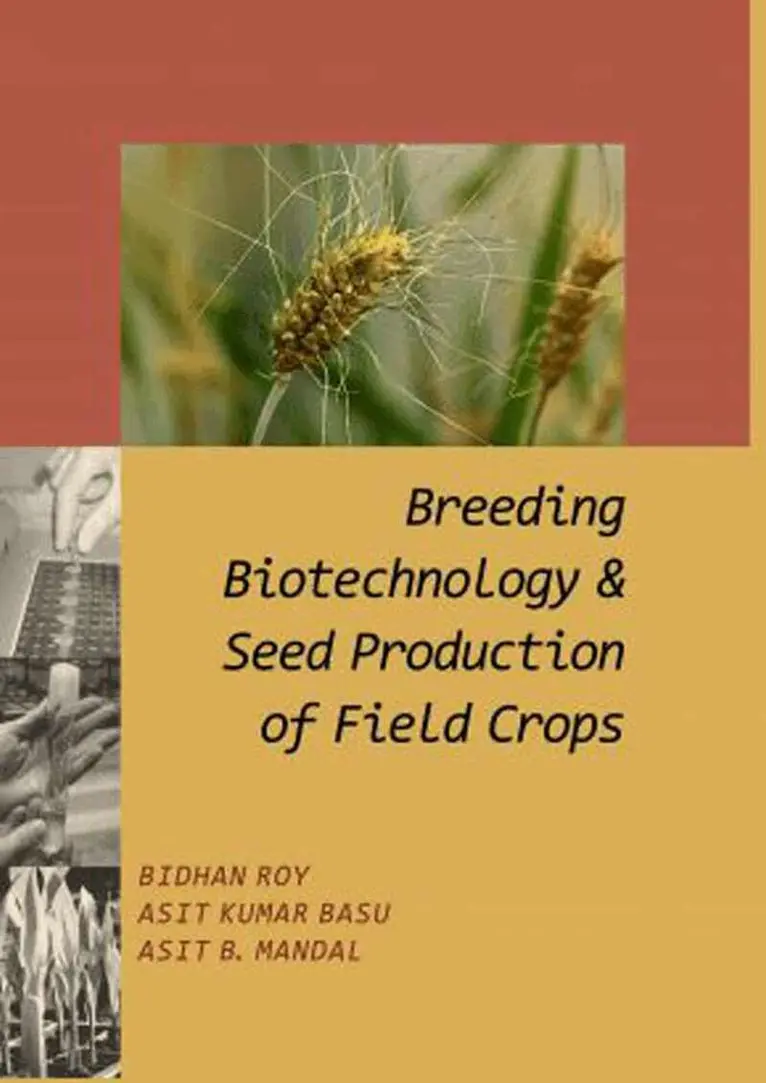
In contemporary times, crop improvement has emerged as a multidisciplinary domain of agriculture. This book, entitled Breeding, Biotechnology, and Seed Production of Field Crops, places emphasis on the principles, methods, and practices of plant breeding, biotechnology in crop improvement, and seed production of field crops.This book has been written for a diverse audience, including learners, educators, and staff members of the seed industry. It holds particular significance for postgraduate students specializing in plant breeding and seed science. The content has been designed according to the syllabus recommended by the Indian Council of Agricultural Research for postgraduate students at various agricultural universities across the country.The book is divided into two main sections: i) Principles of crop breeding, and ii) Methods and practices of crop improvement and seed production for individual field crops. It contains a total of 18 chapters, with the first three chapters focusing on basic principles, and the remaining chapters detailing the methods and practices for individual crops.We hope that this book will be a valuable resource for advanced undergraduate students pursuing plant breeding as an elective, postgraduate students who have chosen plant breeding as their area of specialization, teachers, researchers, and staff members of private seed companies in this field.
2 158 kr
Skickas inom 7-10 vardagar
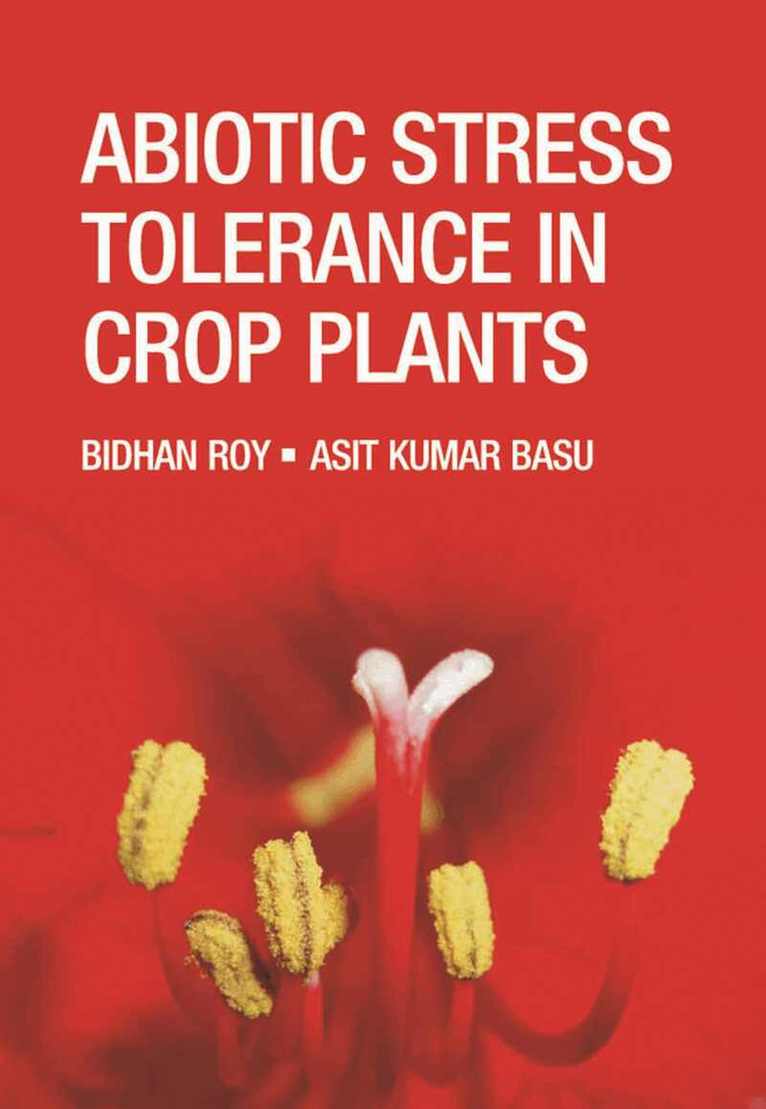
Abiotic stressors have come to play a vital role in crop production, with some persisting in soil, water, or the atmosphere. The information on mechanisms of injury and tolerance, variability of tolerance, and breeding and biotechnology for improving crop plants resistance to abiotic stress is currently scattered throughout various journal articles and edited books.This book aims to present this information in an organized manner, complete with up-to-date citations, providing a comprehensive overview of recent advances in the field. Emphasis has been placed on explaining injury and tolerance mechanisms and developing improved genotypes for stress environments. The book also addresses the symptoms of specific abiotic stress, soil reclamation, and crop/cropping patterns to mitigate the effects of adverse conditions. Systematic approaches for developing abiotic stress-tolerant genotypes using biotechnological tools are detailed, as are the use of molecular markers in stress tolerance and the development of transgenic plants.The final three chapters of the book focus on the effects of air pollution and climate change on crop plants. Under abiotic stress, plants produce a large number of free radicals (oxidants), which are explained in a dedicated section on Oxidative Stress.The book is divided into seven major sections: physical stress (salt), water stress (drought and waterlogging), temperature stress (heat and cold), metal toxicities (aluminum, iron, cadmium, lead, nickel, chromium, copper, zinc, etc.), and non-metal toxicities (boron and arsenic), oxidative stress, and finally atmospheric stress (air pollution, radiation, and climate change).This book will be of great benefit to students, researchers, particularly plant breeders and biotechnologists, as well as botanists, who seek to understand the mechanisms of injury and tolerance and improve crop genotypes for abiotic stress.
881 kr
Skickas inom 7-10 vardagar
Abiotic stresses have become a significant aspect of crop production, with their presence either in the soil, water, or atmosphere. The book aims to present the information regarding injury and tolerant mechanisms, variability for tolerance, breeding, and biotechnology for the improvement of crop plants against abiotic stresses in an organized manner, with up-to-date citations and a comprehensive literature of recent advances. The book emphasizes the elaboration of injury and tolerance mechanisms, as well as the development of improved genotypes against stress environments.The book also covers the plants symptoms of specific abiotic stress, reclamation of soil and crop/cropping patterns to overcome the effects of adverse conditions. Each topic is addressed with systematic approaches to develop abiotic stress-tolerant genotypes using biotechnological tools. The use of molecular markers in stress tolerance and the development of transgenic plants have also been detailed.Moreover, the book discusses the effects of air pollution and climate change on crop plants. It details the oxidative stress caused by abiotic stress, where plants produce a large quantity of free radicals (oxidants). The book is divided into seven major parts: physical stress (salt), water stresses (drought and waterlogging), temperature stresses (heat and cold), metal toxicities (aluminum, iron, cadmium, lead, nickel, chromium, copper, zinc, etc.), and non-metal toxicities (boron and arsenic), oxidative stress, and finally atmospheric stresses (air pollution, radiation, and climate change).This book will be beneficial for students and researchers, particularly Plant Breeders and Biotechnologists, as well as Botanists, to understand the injury and tolerance mechanisms and subsequently improve crop genotypes for abiotic stresses.
2 250 kr
Skickas inom 7-10 vardagar
In contemporary times, crop improvement has emerged as a multidisciplinary domain of agriculture. This book, entitled Breeding, Biotechnology, and Seed Production of Field Crops, places emphasis on the principles, methods, and practices of plant breeding, biotechnology in crop improvement, and seed production of field crops.This book has been written for a diverse audience, including learners, educators, and staff members of the seed industry. It holds particular significance for postgraduate students specializing in plant breeding and seed science. The content has been designed according to the syllabus recommended by the Indian Council of Agricultural Research for postgraduate students at various agricultural universities across the country.The book is divided into two main sections: i) Principles of crop breeding, and ii) Methods and practices of crop improvement and seed production for individual field crops. It contains a total of 18 chapters, with the first three chapters focusing on basic principles, and the remaining chapters detailing the methods and practices for individual crops.We hope that this book will be a valuable resource for advanced undergraduate students pursuing plant breeding as an elective, postgraduate students who have chosen plant breeding as their area of specialization, teachers, researchers, and staff members of private seed companies in this field.