Awol Allo – författare
Visar alla böcker från författaren Awol Allo. Handla med fri frakt och snabb leverans.
3 produkter
3 produkter
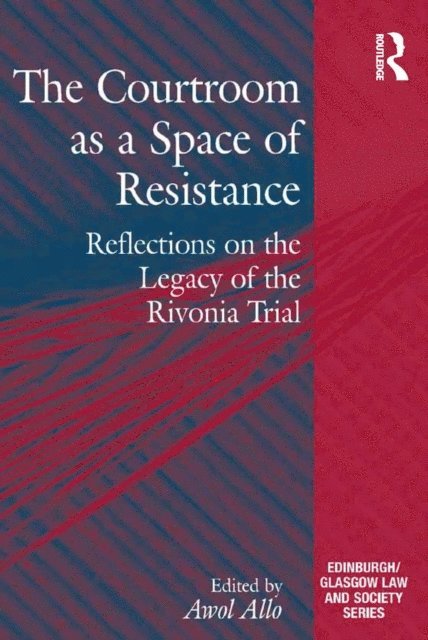
Courtroom as a Space of Resistance
Reflections on the Legacy of the Rivonia Trial
Häftad, Engelska, 2017
676 kr
Skickas inom 10-15 vardagar
Fifty years before his death in 2013, Nelson Mandela stood before Justice de Wet in Pretoria's Palace of Justice and delivered one of the most spectacular and liberating statements ever made from a dock. In what came to be regarded as "the trial that changed South Africa", Mandela summed up the spirit of the liberation struggle and the moral basis for the post-Apartheid society. In this blistering critique of Apartheid and its perversion of justice, Mandela transforms the law into a sword and shield. He invokes it while undermining it, uses it while subverting it, and claims it while defeating it. Wise and strategic, Mandela skilfully reimagines the courtroom as a site of visibility and hearing, opening up a political space within the legal. This volume returns to the Rivonia courtroom to engage with Mandela's masterful performance of resistance and the dramatic core of that transformative event. Cutting across a wide-range of critical theories and discourses, contributors reflect on the personal, spatial, temporal, performative, and literary dimensions of that constitutive event. By redefining the spaces, institutions and discourses of law, contributors present a fresh perspective that re-sets the margins of what can be thought and said in the courtroom.
1 260 kr
Skickas
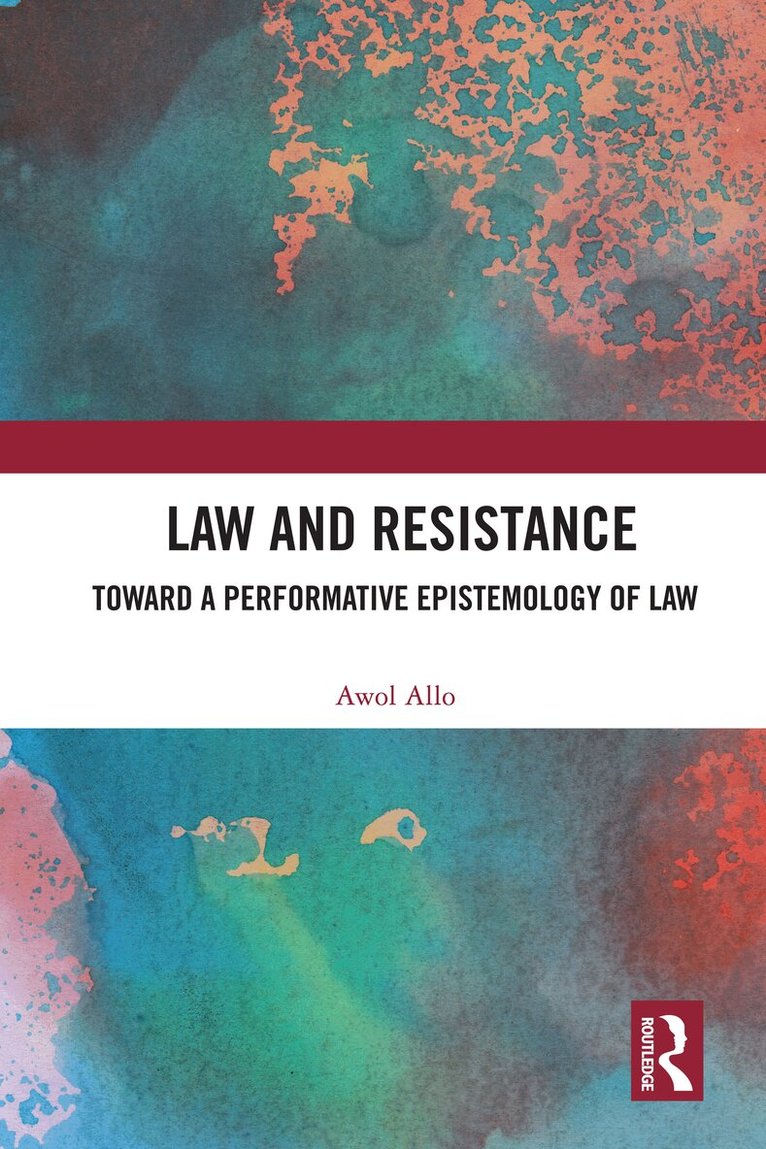
Legal orders do not emerge from a prior social contract or abstract norms. They crystallize out of acts of resistance – revolutions, protests and transgressions – that break with an existing juridical order and force the articulation of a new one. Resistance is therefore not external to law but constitutive of it. Yet once instituted, law must disavow this beginning to sustain its fiction of autonomy, neutrality, and universality. This disavowal, however, is never complete, as law relies on resistance to delineate its boundaries and secure its porous frontiers. At the same time, resistance depends on law as its field of intelligibility: it requires law’s stage, grammar, and normative framework to articulate its claim. Law and resistance are thus mutually constitutive and structurally interdependent, bound together in a dynamic that is inherently unstable and antagonistic. This book explores this constitutive paradox that defines the relationship between law and resistance.Against theories that treat law as a closed normative system or as a mere instrument of domination, the book develops a performative account of law in which this paradox emerges as constitutive of the conditions under which resistance becomes possible. Focusing on the political trial – a contested space in which law cannot obscure the rupture and contingency from which it emerges but must instead engage the forces it seeks to domesticate – the book shows how law, neither fully autonomous nor wholly determined by power, can become a site of struggle in which authority is performed and contested.Law and Resistance considers the different ways in which a politics of resistance is enabled in the courtroom, as it uncovers a performative logic that contingently conditions, and thus breaks open, law’s otherwise closed normativity.
Courtroom as a Space of Resistance
Reflections on the Legacy of the Rivonia Trial
Inbunden, Engelska, 2015
1 967 kr
Skickas inom 10-15 vardagar
Fifty years before his death in 2013, Nelson Mandela stood before Justice de Wet in Pretoria's Palace of Justice and delivered one of the most spectacular and liberating statements ever made from a dock. In what came to be regarded as "the trial that changed South Africa", Mandela summed up the spirit of the liberation struggle and the moral basis for the post-Apartheid society. In this blistering critique of Apartheid and its perversion of justice, Mandela transforms the law into a sword and shield. He invokes it while undermining it, uses it while subverting it, and claims it while defeating it. Wise and strategic, Mandela skilfully reimagines the courtroom as a site of visibility and hearing, opening up a political space within the legal. This volume returns to the Rivonia courtroom to engage with Mandela's masterful performance of resistance and the dramatic core of that transformative event. Cutting across a wide-range of critical theories and discourses, contributors reflect on the personal, spatial, temporal, performative, and literary dimensions of that constitutive event. By redefining the spaces, institutions and discourses of law, contributors present a fresh perspective that re-sets the margins of what can be thought and said in the courtroom.