Azmi Bishara – författare
Visar alla böcker från författaren Azmi Bishara. Handla med fri frakt och snabb leverans.
14 produkter
14 produkter
Inbunden, Engelska, 2025
1 019 kr
Skickas inom 10-15 vardagar
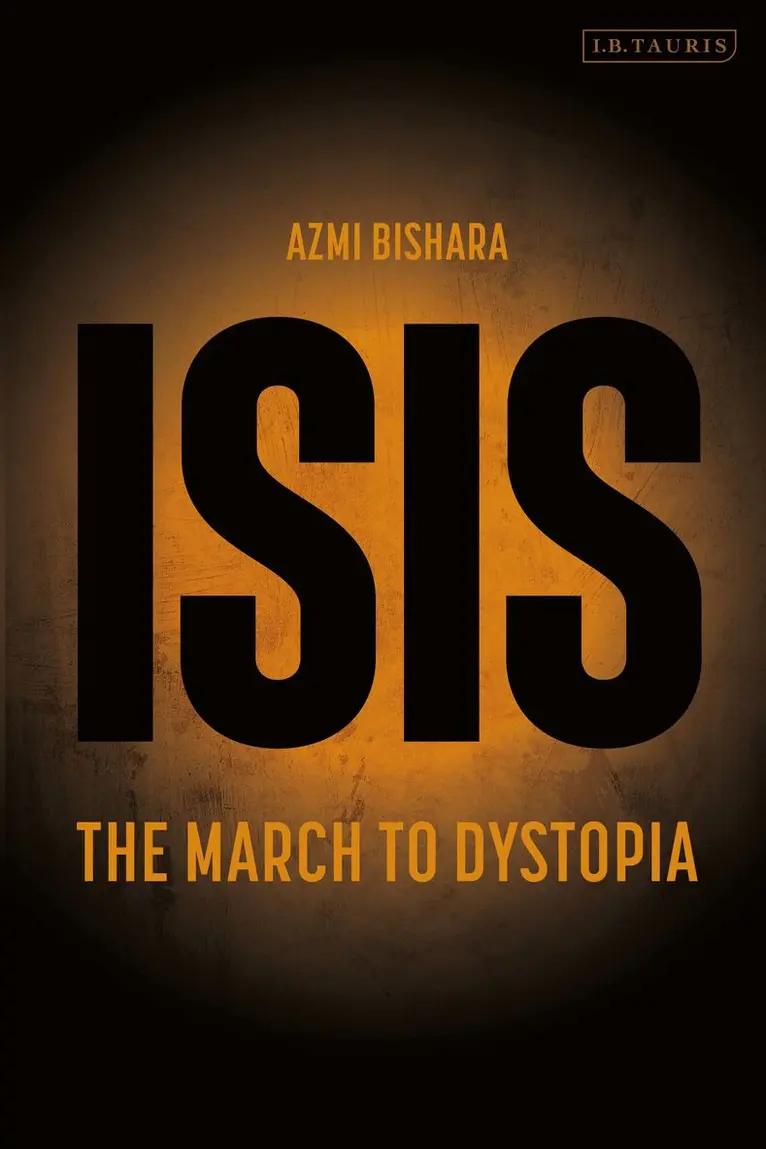
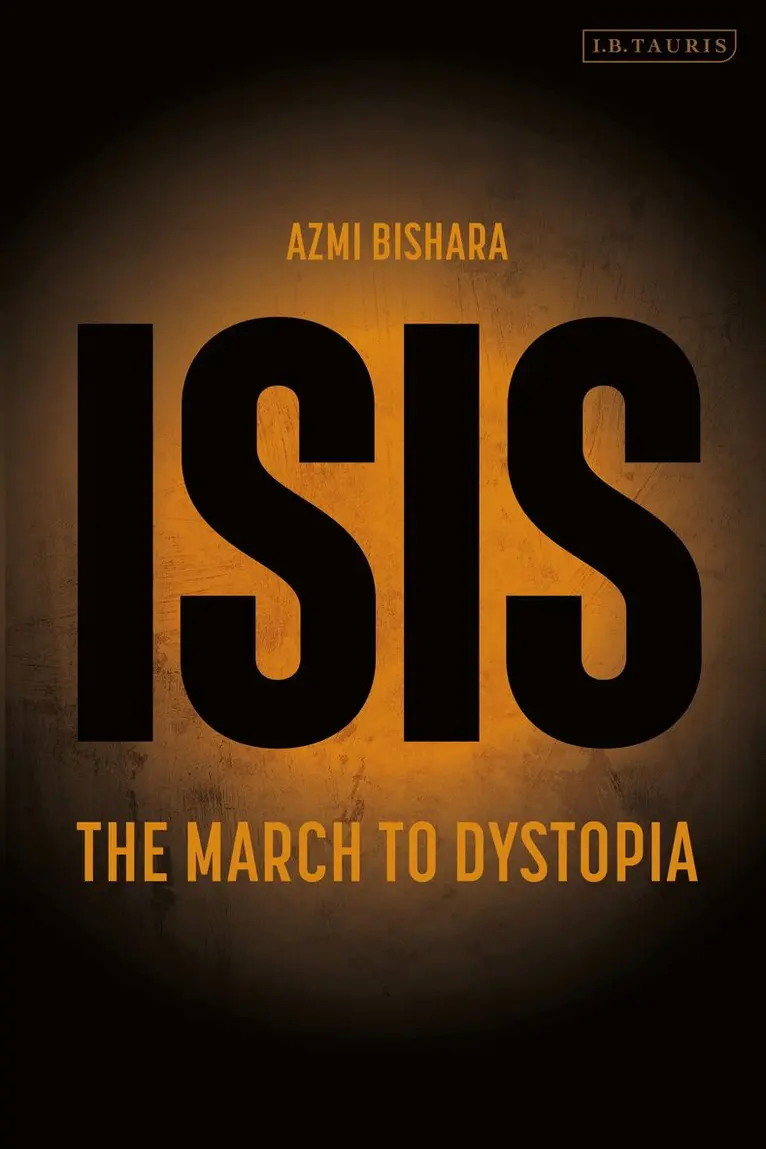
How should we understand ISIS today? The most comprehensive study of ISIS to date, this book benefits from Arabic sources previously unavailable to an English-speaking audience. Renowned scholar and political philosopher, Azmi Bishara, stresses the need to place ISIS in its historical, social, and political context – shifting the focus from Salafi ideology – to understand its rise and expansion. This includes a discussion of how regional wars, the occupation of Iraq, sectarian politics, the outbreak of civil war in Iraq and Syria, and the decline of the central state contributed to both ISIS’s formation and the unprecedented merger of Jihadism and Salafism.The book counters a wide misconception in the West that ISIS’s control of Syria and Iraq can be attributed to a Sunni environment, separating the rise of the organization from its exploitation of religious texts. It presents a rebuttal of arguments that hold Islamic civilization responsible for ISIS ideology by reviewing and deconstructing significant jihadi Salafi texts and demonstrating how they depart from Islamic thought and culture. Beyond ISIS, the book offers an original comparative analysis of the ideology of jihadism, as well as matters of governance, recruitment, and radicalisation.
Häftad, Engelska, 2023
425 kr
Skickas inom 10-15 vardagar
Based on empirical and theoretical investigation, and original insight into how a local protest movement developed into a revolution that changed a regime, this book shows us how we can understand political revolutions. Azmi Bishara critically explores the gradual democratic reform and peaceful transfer of power in the context of Tunisia. He grapples with the specific make-up of Tunisia as a modern state and its republican political heritage and investigates how this determined the development and survival of the revolution and the democratic transition in its aftermath. For Bishara, the political culture and attitudes of the elites and their readiness to compromise, in addition to an army without political ambitions, were aspects that proved crucial for the relative success of the Tunisian experience. But he distinguishes between protest movements and mass movements that aim at regime change and discerns the social and political conditions required for the transition from the former to the latter. Bishara shows that the specific factors that correspond to mass movements and regime change are relative deprivation, awareness of injustice, dignity and indignation. He concludes, based on meticulous documentation of the events in Tunisia and theoretical investigation, that while revolutions are unpredictable with no single theory able to explain them, all revolutions across different historical and conceptual contexts be seen as popular uprisings that aim at regime change.The book is the first of a trilogy, the Understanding Revolutions series by Bishara, seeking to provide a rich, comprehensive and lucid assessment of the revolutions in three states: Tunisia, Syria, and Egypt.
Inbunden, Engelska, 2022
1 258 kr
Skickas inom 10-15 vardagar
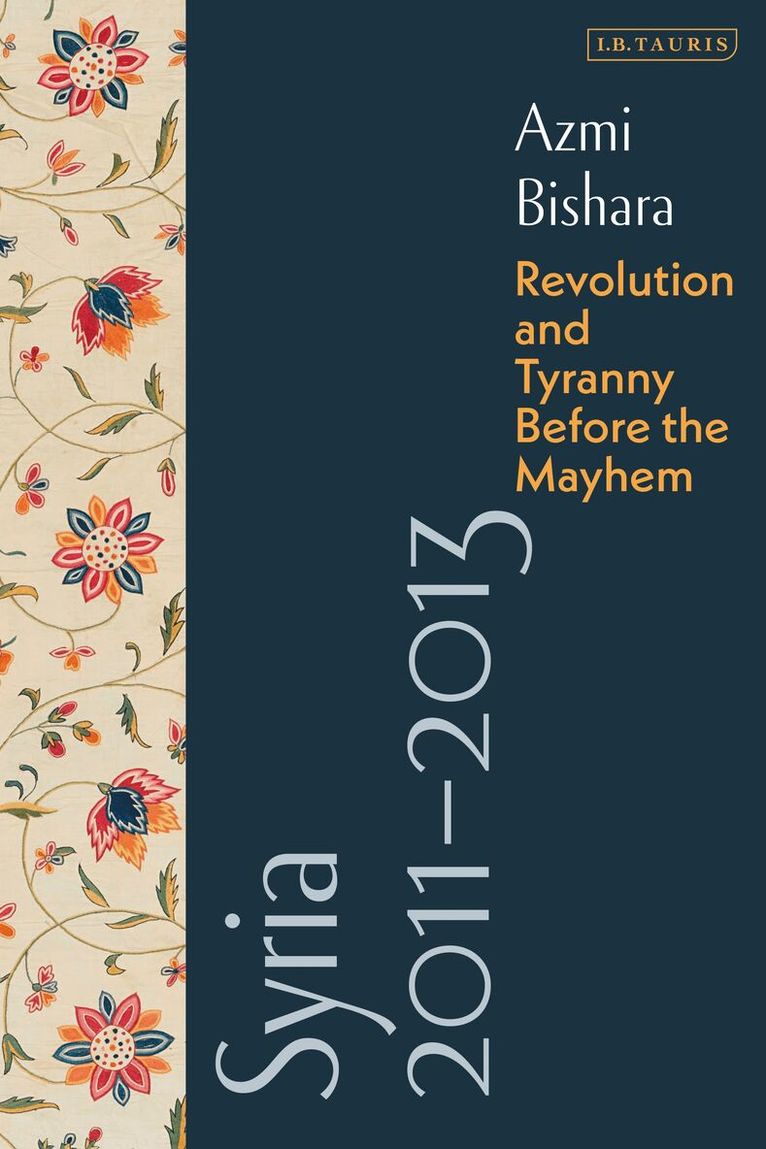
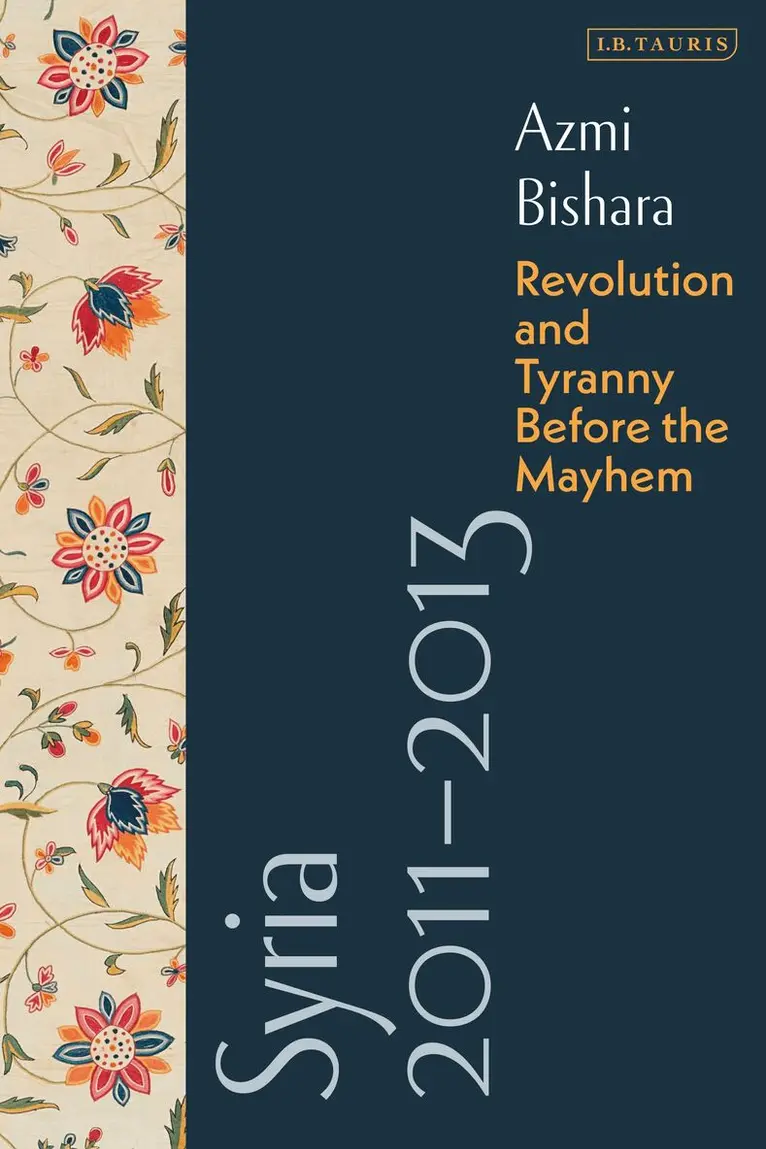
Azmi Bishara’s book on the Syrian Revolution is one of the most comprehensive and profound works on the subject published to date. Translated here into English for the first time, the study examines the complex roots of Syria's political and sectarian conflicts from the day revolution erupted on 15th March 2011 to its descent into civil war in the two years that followed. The book unearths and discusses the very first signs of protests from across Daraa, Hama, Aleppo, Damascus, Raqqa, Deir El Zour, Edlib and Homs, and it deals with Syria's ruralization process and the subsequent economic 'liberalization', which eventually led to the revolt against the Baath party. The work is based on high-level interviews, analysis of the country's socio-economic background, and examination of the Syrian regime's strategy and its political and media discourse. Syria's revolution is chronicled in two stages: the peaceful civil stage and the armed stage. Bishara's analysis first centres on the regime's strategy, unveiling despotism, massacres, kidnapping, sectarian tendencies, jihadist violence, the emergence of warlords, and the chaotic spread of arms. He then turns to the role of the opposition to narrate in detail the events that broke out and exactly how a peaceful protest turned into an armed struggle. The book provides a roadmap to how revolution broke out and is a comprehensive analysis of what drove those early events. Its publication brings renowned Arabic-language scholarship to the English-speaking world.
Häftad, Engelska, 2024
425 kr
Skickas inom 10-15 vardagar
Azmi Bishara’s book on the Syrian Revolution is one of the most comprehensive and profound works on the subject published to date. Translated here into English for the first time, the study examines the complex roots of Syria's political and sectarian conflicts from the day revolution erupted on 15th March 2011 to its descent into civil war in the two years that followed. The book unearths and discusses the very first signs of protests from across Daraa, Hama, Aleppo, Damascus, Raqqa, Deir El Zour, Edlib and Homs, and it deals with Syria's ruralization process and the subsequent economic 'liberalization', which eventually led to the revolt against the Baath party. The work is based on high-level interviews, analysis of the country's socio-economic background, and examination of the Syrian regime's strategy and its political and media discourse. Syria's revolution is chronicled in two stages: the peaceful civil stage and the armed stage. Bishara's analysis first centres on the regime's strategy, unveiling despotism, massacres, kidnapping, sectarian tendencies, jihadist violence, the emergence of warlords, and the chaotic spread of arms. He then turns to the role of the opposition to narrate in detail the events that broke out and exactly how a peaceful protest turned into an armed struggle. The book provides a roadmap to how revolution broke out and is a comprehensive analysis of what drove those early events. Its publication brings renowned Arabic-language scholarship to the English-speaking world.
Inbunden, Engelska, 2022
1 397 kr
Skickas inom 10-15 vardagar
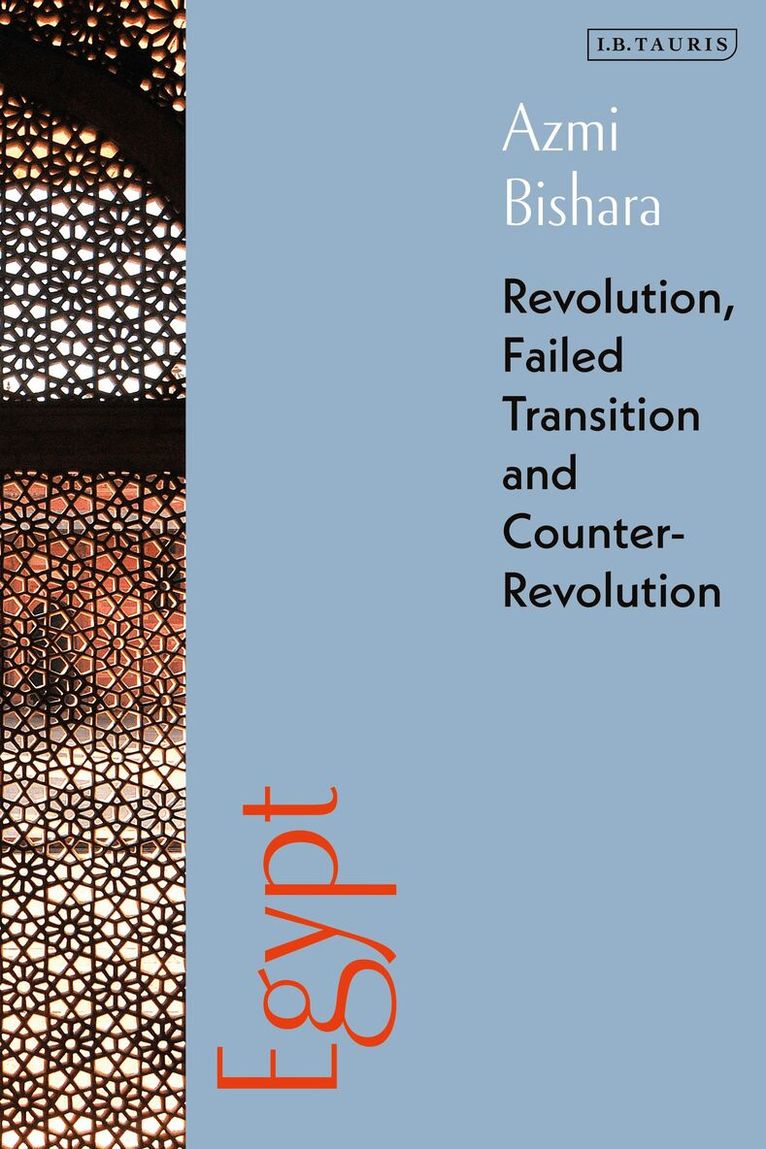
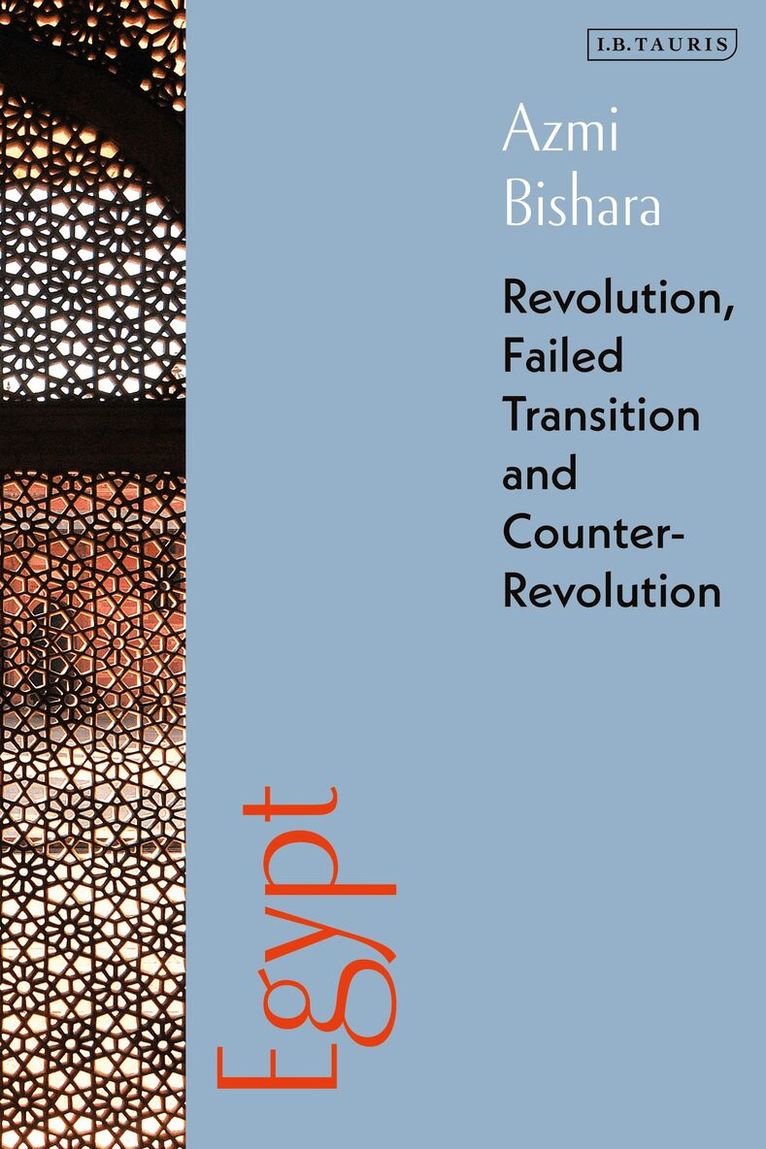
Azmi Bishara’s seminal study of the 2011 Egyptian Revolution chronicles in granular detail the lead up to the momentous uprisings and the subsequent transition and coup. The book critically investigates the social and economic conditions that formed the backdrop to the revolution and the complex challenges posed by the transition from authoritarianism to democracy.Part One, ‘From July Coup to January Revolution’, goes back to what is called the ‘1952 revolution’ or the ‘1952 Coup d'état’ and traces events until 2011 when Hosni Mubarak stepped down as the president of Egypt after weeks of protest. It highlights the relationship between the presidency and the army to show that, contrary to popular belief, the presidency grew gradually stronger at the expense of other institutions, especially the army, and reached its apogee under Mubarak. Part Two ‘From Revolution to Coup d'Etat’, covers the critical stages from when the military junta took over the governing of Egypt as the Supreme Council of the Armed Forces (SCAF), and the election of Morsi, up until the coup to overthrow his presidency. Using a democratic transition theory perspective, Azmi Bishara explains the failure of the democratic transition and how it has impacted on Arab revolutions ever since.Written while the revolutions were taking place, this book conveys a sense of immediacy and urgency as Bishara makes wide-ranging assessments with many of his forecasts corroborated in later years. The book is renowned for its use of primary source material - including interviews, statistics and public opinion polls – thus preserving the memory of the revolution and remaining one of the most comprehensive reference books on the subject to date.
Häftad, Engelska, 2024
425 kr
Skickas inom 10-15 vardagar
Azmi Bishara’s seminal study of the 2011 Egyptian Revolution chronicles in granular detail the lead up to the momentous uprisings and the subsequent transition and coup. The book critically investigates the social and economic conditions that formed the backdrop to the revolution and the complex challenges posed by the transition from authoritarianism to democracy.Part One, ‘From July Coup to January Revolution’, goes back to what is called the ‘1952 revolution’ or the ‘1952 Coup d'état’ and traces events until 2011 when Hosni Mubarak stepped down as the president of Egypt after weeks of protest. It highlights the relationship between the presidency and the army to show that, contrary to popular belief, the presidency grew gradually stronger at the expense of other institutions, especially the army, and reached its apogee under Mubarak. Part Two ‘From Revolution to Coup d'Etat’, covers the critical stages from when the military junta took over the governing of Egypt as the Supreme Council of the Armed Forces (SCAF), and the election of Morsi, up until the coup to overthrow his presidency. Using a democratic transition theory perspective, Azmi Bishara explains the failure of the democratic transition and how it has impacted on Arab revolutions ever since.Written while the revolutions were taking place, this book conveys a sense of immediacy and urgency as Bishara makes wide-ranging assessments with many of his forecasts corroborated in later years. The book is renowned for its use of primary source material - including interviews, statistics and public opinion polls – thus preserving the memory of the revolution and remaining one of the most comprehensive reference books on the subject to date.
Häftad, Engelska, 2025
340 kr
Skickas inom 5-8 vardagar
How should we understand ISIS today? Despite its territorial defeat in Iraq and Syria in 2019, ISIS has evolved and expanded globally. This book is the most comprehensive study of ISIS to date, benefitting from Arabic sources previously unavailable to an English-speaking audience. Renowned scholar and political philosopher, Azmi Bishara, stresses the need to place ISIS in its historical, social and political context - rather than primarily its Salafi ideology - in order to understand its rise and expansion. The book explains ISIS in terms of both historical and recent political events, including the Six-Day War of 1967, the decline of Arab nationalism, sectarian politics, the outbreak of civil war in Iraq and Syria and the decline of the central state. The book counters the view of some Western researchers that a Sunni environment was conducive to ISIS’s control in Syria and Iraq and also separates the rise of the organization from its exploitation of religious texts. The final chapter defends Islamic civilization against those who hold Islam responsible for ISIS ideology by reviewing and deconstructing significant jihadi Salafi texts and showing the extent to which Salafi thought departs from Islamic thought and culture.
Inbunden, Engelska, 2022
647 kr
Skickas inom 5-8 vardagar
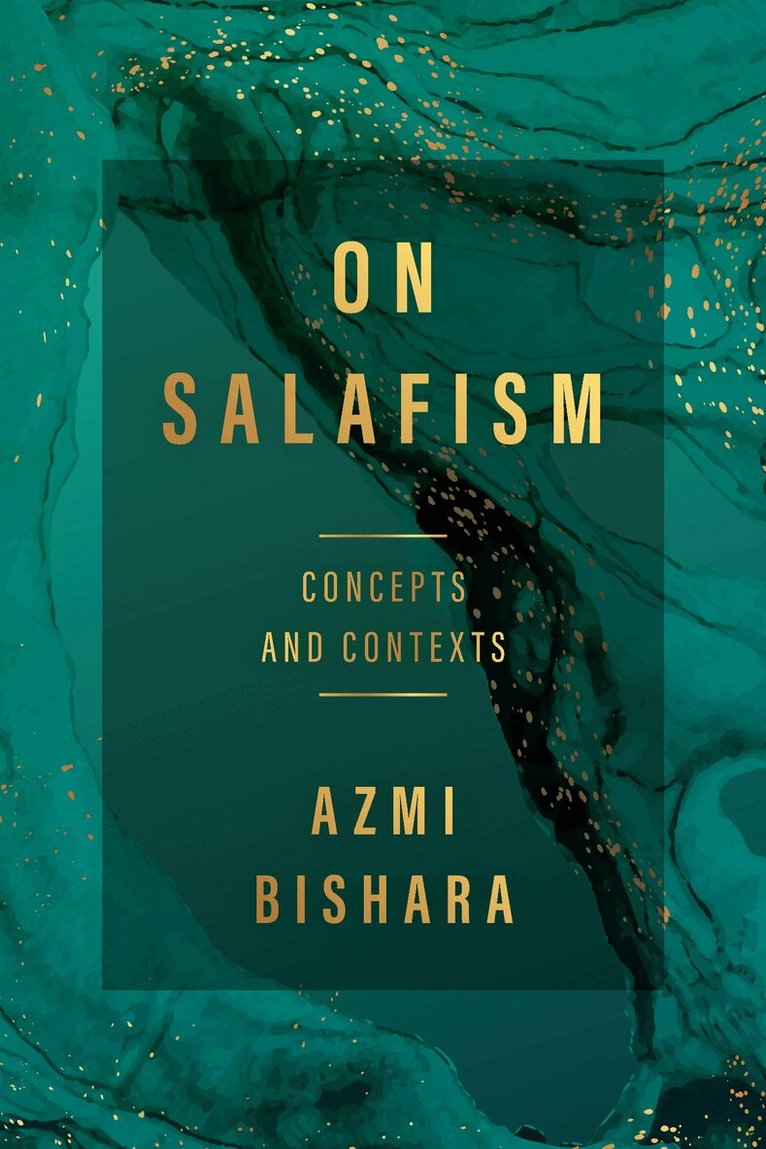
On Salafism offers a compelling new understanding of this phenomenon, both its development and contemporary manifestations. Salafism became associated with fundamentalism when the 9/11 Commission used it to explain the terror attacks and has since been connected with the violence of the so-called Islamic State. With this book, Azmi Bishara critically deconstructs claims of continuity between early Islam and modern militancy and makes a counterargument: Salafism is a wholly modern construct informed by specific sociopolitical contexts. Bishara offers a sophisticated account of various movements—such as Wahabbism and Hanbalism—frequently collapsed into simplistic understandings of Salafism. He distinguishes reformist from regressive Salafism, and examines patterns of modernization in the development of contemporary Islamic political movements and associations. In deconstructing the assumptions of linear continuity between traditional and contemporary movements, Bishara details various divergences in both doctrine and context of modern Salafisms, plural. On Salafism is a crucial read for those interested in Islamism, jihadism, and Middle East politics and history.
Inbunden, Engelska, 2021
1 328 kr
Skickas inom 10-15 vardagar
Based on empirical and theoretical investigation, and original insight into how a local protest movement developed into a revolution that changed a regime, this book shows us how we can understand political revolutions. Azmi Bishara critically explores the gradual democratic reform and peaceful transfer of power in the context of Tunisia. He grapples with the specific make-up of Tunisia as a modern state and its republican political heritage and investigates how this determined the development and survival of the revolution and the democratic transition in its aftermath. For Bishara, the political culture and attitudes of the elites and their readiness to compromise, in addition to an army without political ambitions, were aspects that proved crucial for the relative success of the Tunisian experience. But he distinguishes between protest movements and mass movements that aim at regime change and discerns the social and political conditions required for the transition from the former to the latter. Bishara shows that the specific factors that correspond to mass movements and regime change are relative deprivation, awareness of injustice, dignity and indignation. He concludes, based on meticulous documentation of the events in Tunisia and theoretical investigation, that while revolutions are unpredictable with no single theory able to explain them, all revolutions across different historical and conceptual contexts be seen as popular uprisings that aim at regime change.The book is the first of a trilogy, the Understanding Revolutions series by Bishara, seeking to provide a rich, comprehensive and lucid assessment of the revolutions in three states: Tunisia, Syria, and Egypt.
Häftad, Engelska, 2022
255 kr
Skickas inom 7-10 vardagar
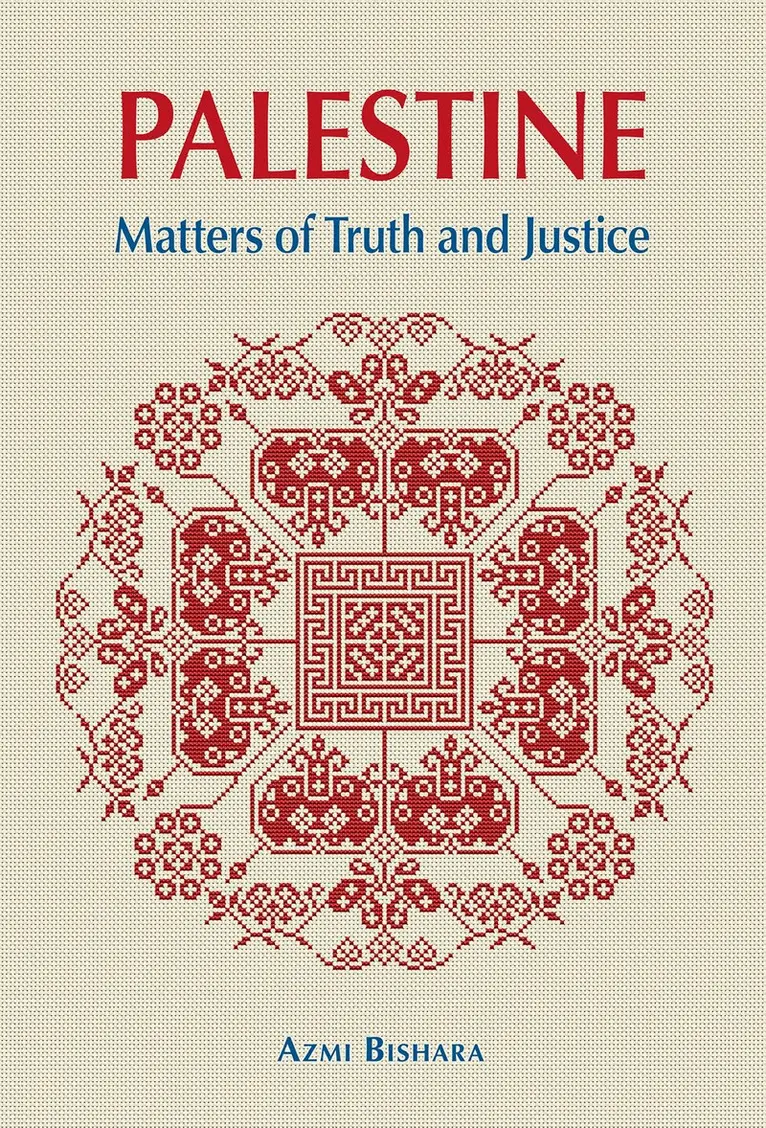
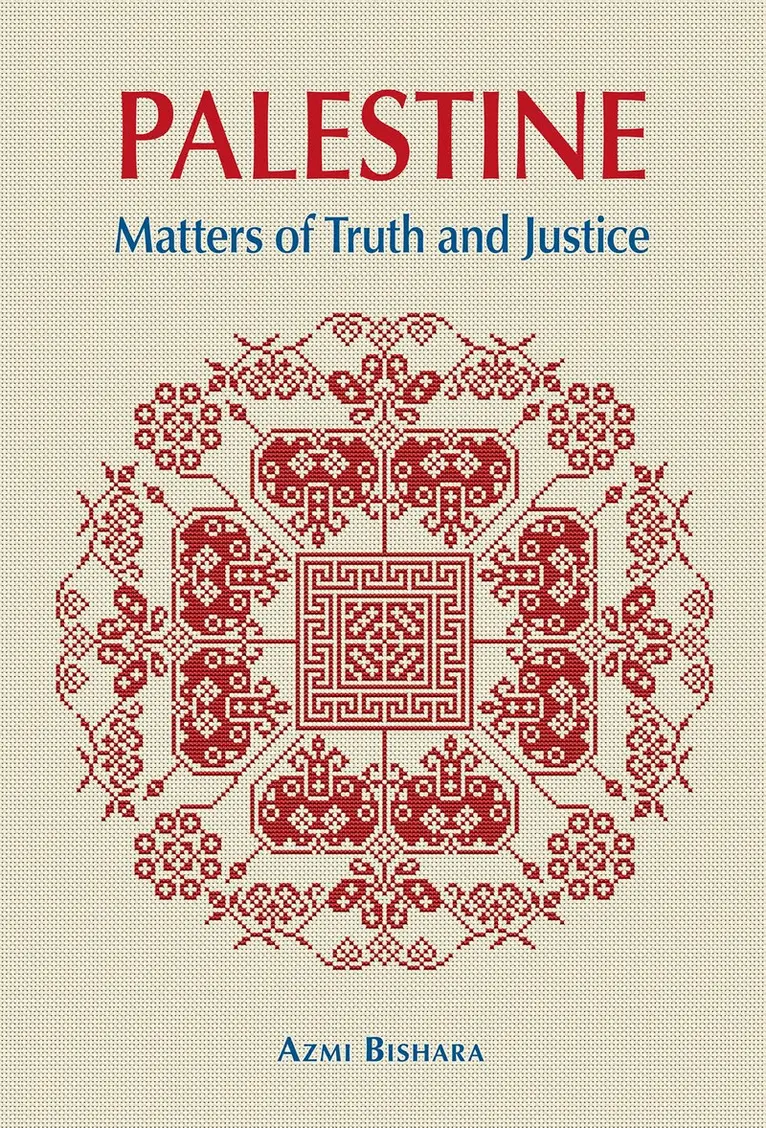
In January 2020, US President Donald Trump announced his 'deal of the century'. Supposedly intended to 'resolve' the Palestine-Israel conflict, it accepted Israeli occupation as a fait accompli. Azmi Bishara places this normalisation of occupation in its historical context, examining Palestine as an unresolved case of settler colonialism, now evolved into an apartheid regime.Drawing on extensive research and rich theoretical analysis, Bishara examines the overlap between the long-discussed 'Jewish Question' and what he calls the 'Arab Question', complicating the issue of Palestinian nationhood. He addresses the Palestinian Liberation Movement's failure to achieve self-determination, and the emergence of a 'Palestinian Authority' under occupation. He contends that no solution to problems of nationality or settler colonialism is possible without recognising the historic injustices inflicted on Palestinians since the Nakba. This book compellingly argues that Palestine is not simply a dilemma awaiting creative policy solutions, but a problem requiring the application of justice. Attempts by regional governments to marginalise the Palestinian cause and normalise relations with Israel have emphasised this aspect of the struggle, and boosted Palestinian interactions with justice movements internationally. Bishara provides a sober perspective on the current political situation in Palestine, and a fresh outlook for its future.
Inbunden, Engelska, 2026
774 kr
Skickas
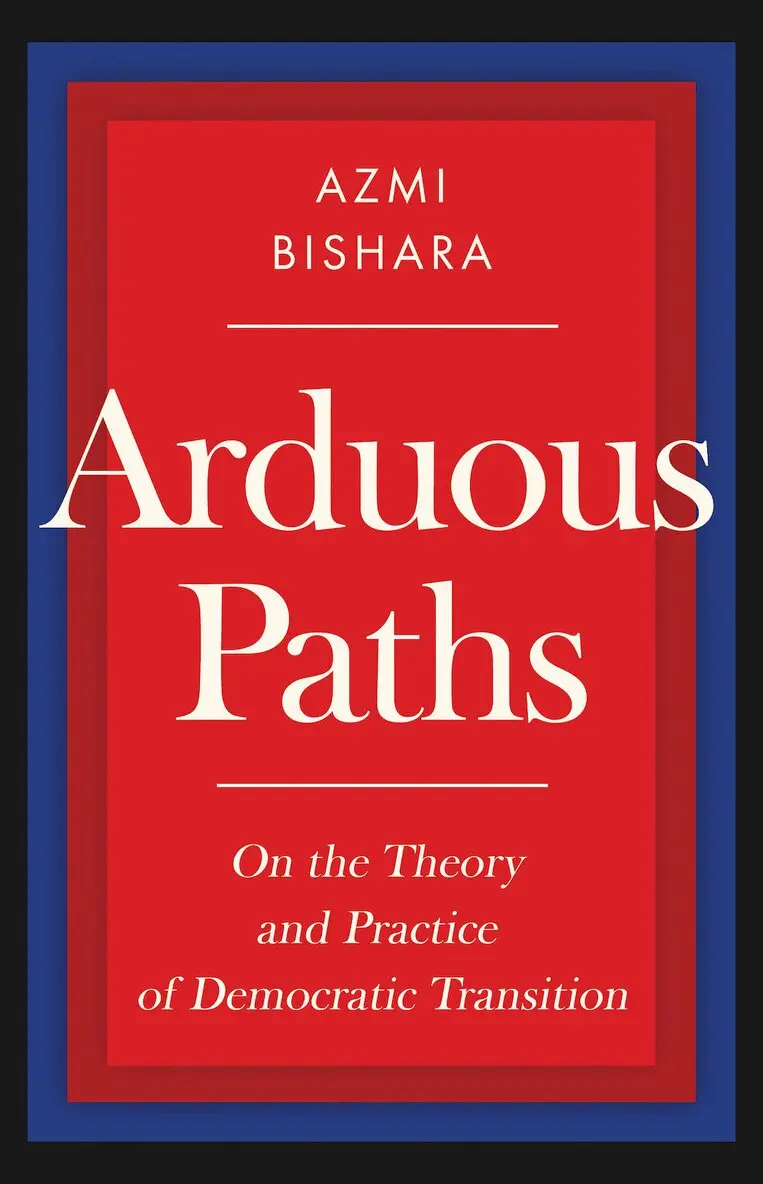
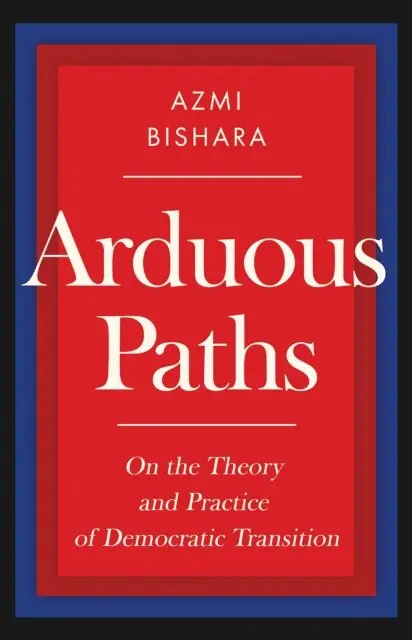
Azmi Bishara’s Arduous Paths builds on his sizeable body of work on democracy through the lenses of civil society, state formation processes and theories, secularisation, populism and sectarianism.Arab transition scholarship has often been confined to theory, reliant on models born of specific historical conditions, and uncritical of concepts of democratisation. However, while situating his research within a critical theoretical framework, Bishara engages with the challenges facing wider global contemporary Arab societies by testing theory and lessons learned from democratic transitions elsewhere against Arab cases.This English translation of his book offers a detailed analysis and timely critique of modernisation and transition theory, interwoven with empirical evidence from the modern Middle East. Bishara evaluates the outcomes of transition experiences in Arab countries that have seen revolutions and popular uprisings, illustrating how—despite the centrality of the demand for democracy across the region during the 2010/2011 protests, and again in 2019—transition either failed or never took place. The book offers the reader a distinctly Arab contribution to the field of democratic transition studies, made all the more urgent given the relevance of the transition to democracy for those living under authoritarianism.'
Häftad, Engelska, 2025
320 kr
Skickas inom 7-10 vardagar
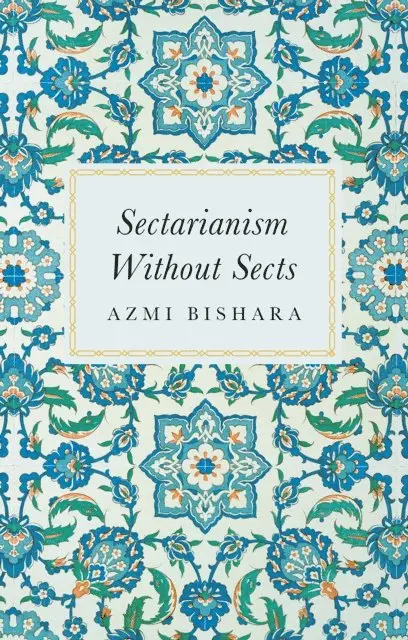
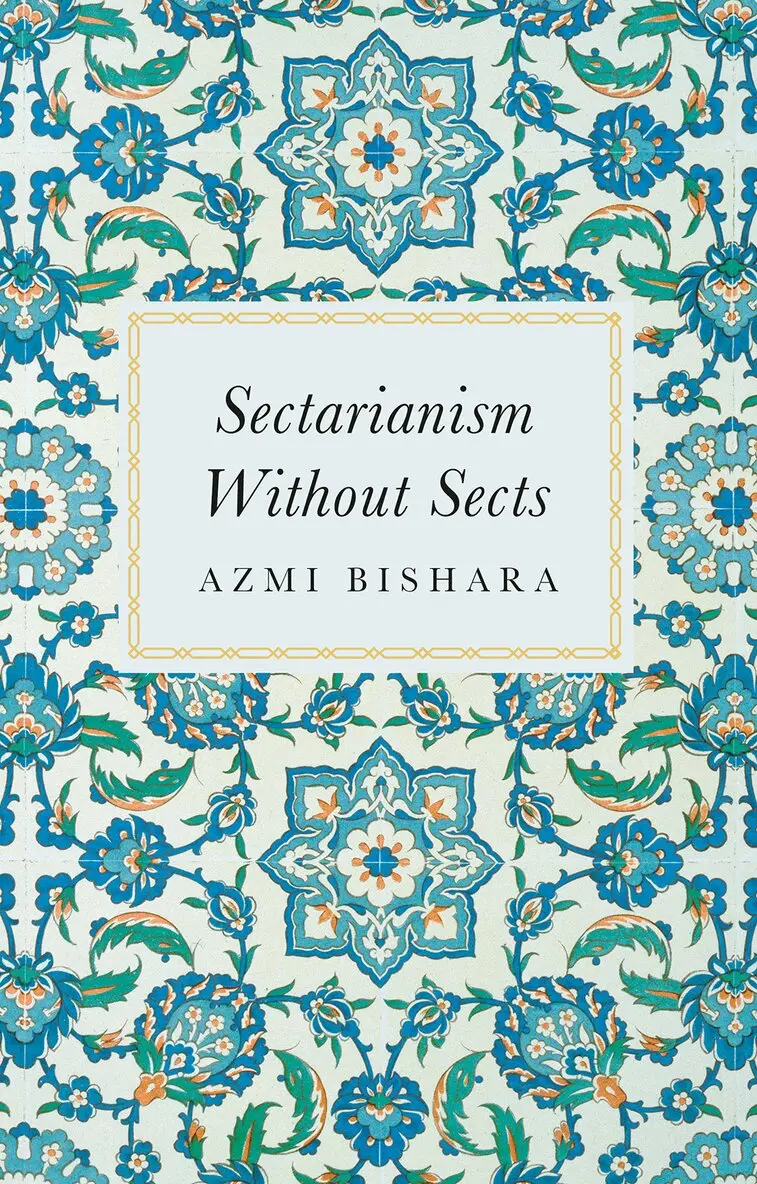
This volume analyses the transformation of social sectarianism into political sectarianism across the Arab world. Using a framework of social theories and socio-historical analysis, the book distinguishes between 'ta'ifa', or 'sect', and modern 'ta'ifiyya', 'sectarianism', arguing that sectarianism itself produces 'imaginary sects'. It charts and explains the evolution of these phenomena and their development in Arab and Islamic history, as distinct from other concepts used to study religious groups within Western contexts. Bishara documents the role played by internal and external factors and rivalries among political elites in the formulation of sectarian identity, citing both historical and contemporary models. He contends that sectarianism does not derive from sect, but rather that sectarianism resurrects the sect in the collective consciousness and reproduces it as an imagined community under modern political and historical conditions.Sectarianism Without Sects is a vital resource for engaging with the sectarian crisis in the Arab world. It provides a detailed historical background to the emergence of sect in the region, as well as a complex theoretical exploration of how social identities have assumed political significance in the struggle for power over the state.
Inbunden, Engelska, 2021
545 kr
Tillfälligt slut
This volume analyses the transformation of social sectarianism into political sectarianism across the Arab world. Using a framework of social theories and socio-historical analysis, the book distinguishes between 'ta'ifa', or 'sect', and modern 'ta'ifiyya', 'sectarianism', arguing that sectarianism itself produces 'imaginary sects'. It charts and explains the evolution of these phenomena and their development in Arab and Islamic history, as distinct from other concepts used to study religious groups within Western contexts. Bishara documents the role played by internal and external factors and rivalries among political elites in the formulation of sectarian identity, citing both historical and contemporary models. He contends that sectarianism does not derive from sect, but rather that sectarianism resurrects the sect in the collective consciousness and reproduces it as an imagined community under modern political and historical conditions. 'Sectarianism Without Sects' is a vital resource for engaging with the sectarian crisis in the Arab world. It provides a detailed historical background to the emergence of sect in the region, as well as a complex theoretical exploration of how social identities have assumed political significance in the struggle for power over the state.
Inbunden, Engelska, 2022
776 kr
Tillfälligt slut
In January 2020, US President Donald Trump announced his 'deal of the century'. Supposedly intended to 'resolve' the Palestine-Israel conflict, it accepted Israeli occupation as a fait accompli. Azmi Bishara places this normalisation of occupation in its historical context, examining Palestine as an unresolved case of settler colonialism, now evolved into an apartheid regime.Drawing on extensive research and rich theoretical analysis, Bishara examines the overlap between the long-discussed 'Jewish Question' and what he calls the 'Arab Question', complicating the issue of Palestinian nationhood. He addresses the Palestinian Liberation Movement's failure to achieve self-determination, and the emergence of a 'Palestinian Authority' under occupation. He contends that no solution to problems of nationality or settler colonialism is possible without recognising the historic injustices inflicted on Palestinians since the Nakba. This book compellingly argues that Palestine is not simply a dilemma awaiting creative policy solutions, but a problem requiring the application of justice. Attempts by regional governments to marginalise the Palestinian cause and normalise relations with Israel have emphasised this aspect of the struggle, and boosted Palestinian interactions with justice movements internationally. Bishara provides a sober perspective on the current political situation in Palestine, and a fresh outlook for its future.