B. Coulbeck – författare
Visar alla böcker från författaren B. Coulbeck. Handla med fri frakt och snabb leverans.
3 produkter
3 produkter
Inbunden, Engelska, 1992
2 160 kr
Skickas inom 10-15 vardagar
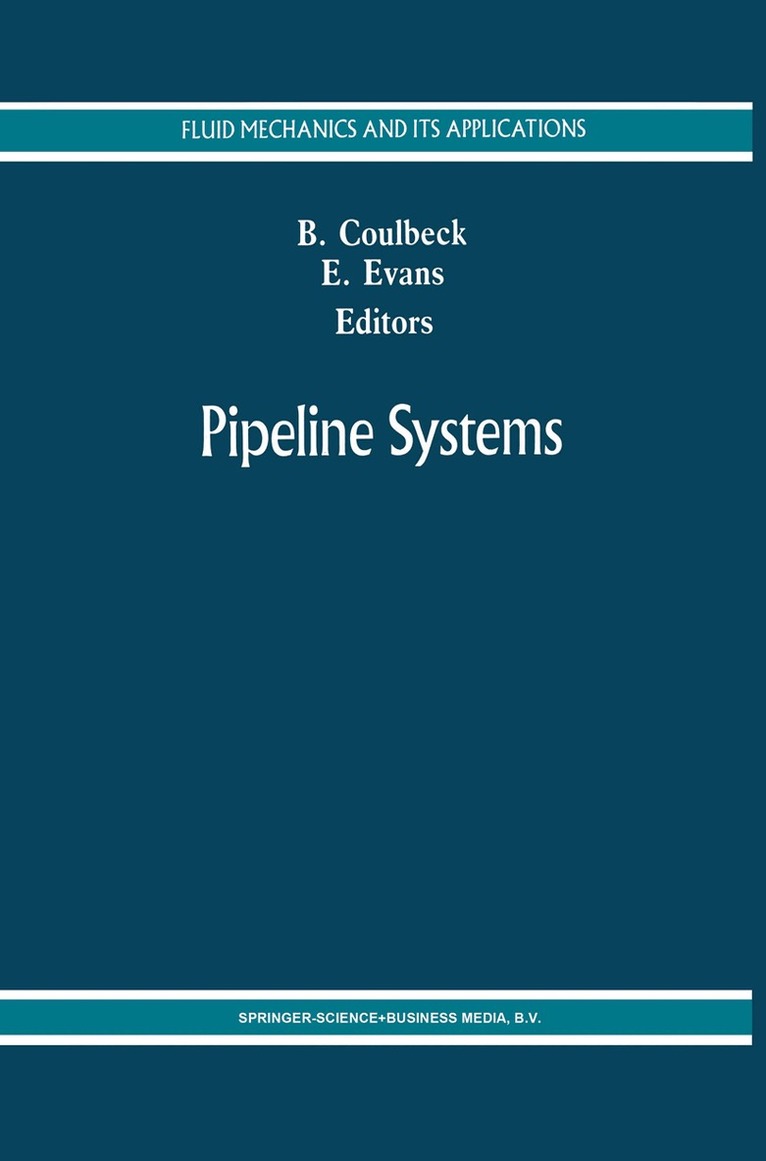
This volume presents the edited Proceedings of the International Conference on Pipeline Systems held in Manchester 24-26 March, 1992. It provides a forum for the exchange of technical and operational information across a wide range of pipeline activities. The overall theme of the contributions is the optimization of pipeline systems, through design analysis, component specification, operational strategies and performance evaluation, in order to minimize both risk and the lifetime cost of ownership. Emphasis is also placed on important developing technologies with consideration for computational equipment and methods. Contributions are collated in the main categories of design, operation and performance. In each case, aspects of safety, security and economy are covered with a mix of analytical techniques, computer implementation, validation and results. The book is intended for use by civil, hydraulic and petroleum engineers.
Häftad, Engelska, 2010
2 158 kr
Skickas inom 10-15 vardagar
This conference provides a forum for exchange of technical and operational information across a wide range of pipeline activities. Various supply and distribution industries, and their service organisations, have traditionally approached pipeline systems from many different perspec tives. The organisers believe that significant benefits can be gained by enabling representatives from the oil, gas, water, chemical, power and related industries to present their latest ideas and methods. An awareness of these alternative methodologies and technologies should result in a more unified and coherent approach to each individual type of pipeline system. The overall theme of the conference is the optimisation of pipeline systems, through design analysis, component specification, operational strategies and performance evaluation, in order to minimise both risk and the lifetime cost of ownership. Wherever possible emphasis is given to important developing technologies with special consideration to use of computational equipment and methods. SYSTEMS APPROACH For the major activities of design, operation and performance; pipeline systems can be conveniently classified in terms of the systetV: components, constraints and objectives. These are described using fluid terminology, to suit' the majority of conference participants, as given below: Components consist of pumps and valves (controls), pipe networks (transmission and distribu tion), reservoirs (storage) and consumer demands (disturbances). The arrangement of these components, to form the system, must take into account the conflicting requirements of structural, hydraulic, and cost, performance.
E-bok
PDF, Engelska, 20132 840 kr
Läs direkt efter köp
This conference provides a forum for exchange of technical and operational information across a wide range of pipeline activities. Various supply and distribution industries, and their service organisations, have traditionally approached pipeline systems from many different perspec tives. The organisers believe that significant benefits can be gained by enabling representatives from the oil, gas, water, chemical, power and related industries to present their latest ideas and methods. An awareness of these alternative methodologies and technologies should result in a more unified and coherent approach to each individual type of pipeline system. The overall theme of the conference is the optimisation of pipeline systems, through design analysis, component specification, operational strategies and performance evaluation, in order to minimise both risk and the lifetime cost of ownership. Wherever possible emphasis is given to important developing technologies with special consideration to use of computational equipment and methods. SYSTEMS APPROACH For the major activities of design, operation and performance; pipeline systems can be conveniently classified in terms of the systetV: components, constraints and objectives. These are described using fluid terminology, to suit'' the majority of conference participants, as given below: Components consist of pumps and valves (controls), pipe networks (transmission and distribu tion), reservoirs (storage) and consumer demands (disturbances). The arrangement of these components, to form the system, must take into account the conflicting requirements of structural, hydraulic, and cost, performance.