B. H. Walker - Böcker
Visar alla böcker från författaren B. H. Walker. Handla med fri frakt och snabb leverans.
2 produkter
2 produkter
692 kr
Skickas inom 7-10 vardagar
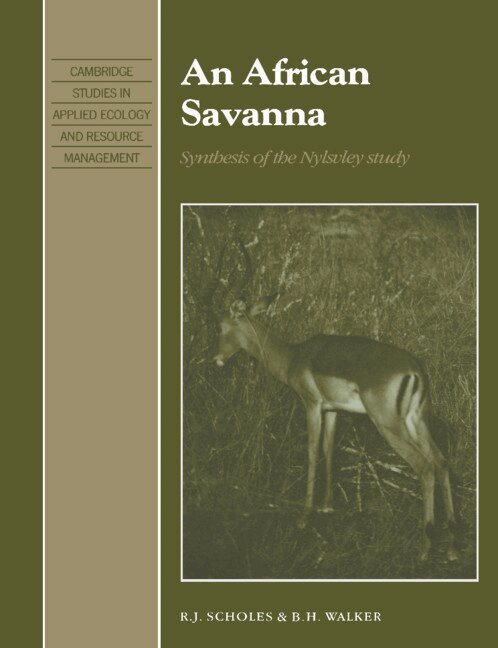
Savannas cover approximately half of the African land surface and one fifth of the land surface of the world. They are one of the most important, but least understood terrestrial ecosystems. They are the basis of the African livestock industry and the wildlife they support is of key importance in bringing in tourists. The Nylsvley area in South Africa is one of the most intensively studied savanna regions in the world and as such it is a key source of data and theory relating to this important tropical biome. The South African Savanna Biome Programme was set up to develop the understanding necessary to predict changes in the ecosystem stability induced by both natural and man-made stresses. This book provides a synthesis of the programme's sixteen years of research at Nylsvley and aims to develop a unified vision of the ecology of the dry savanna.
1 578 kr
Skickas inom 10-15 vardagar
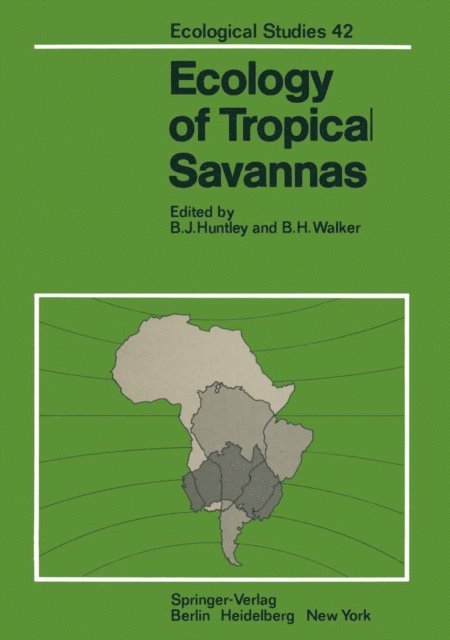
This book examines the ecological characteristics of tropical savanna- most simply defined as those ecosystems which lie between the equatorial rainforests and the deserts and semi-deserts of Africa, Australia and South America. These savannas form a continuum of physiognomic types ranging from closed woodlands with a heliophytic grass understorey, through open savanna woodlands to treeless edaphic grasslands. In all areas Kranz syndrome or C4 grasses dominate the herbaceous layer while the woody component, at the moist end of the moisture gradient, comprises fire tolerant trees and shrubs. Tropi ca 1 savannas occupy the greater area of the southern conti nent- some 65% of Africa, 60% of Austral ia and 45% of South America. Oespi te their vast area and their present and potential importance in terms of livestock and crop production, they have not enjoyed the intensity of research interest devoted during the last several decades to the deserts, rainforests and mediterranean regions. Indeed they are probably the least well understood of the world's major terrestrial ecosystems.With a few notable exceptions, ecological studies in tropical savannas have been 1 imited to scattered and rather di sparate ventures. The fi rst integrated study of a tropical savanna was probably that undertaken in the Ivory Coast by Lamotte and associates, while Medina and others had conducted important ecophysiological work in the Venezuelan llanos.