
Barbara Sicherman – författare
Visar alla böcker från författaren Barbara Sicherman. Handla med fri frakt och snabb leverans.
5 produkter
5 produkter
Häftad, Engelska, 2003
312 kr
Skickas inom 5-8 vardagar
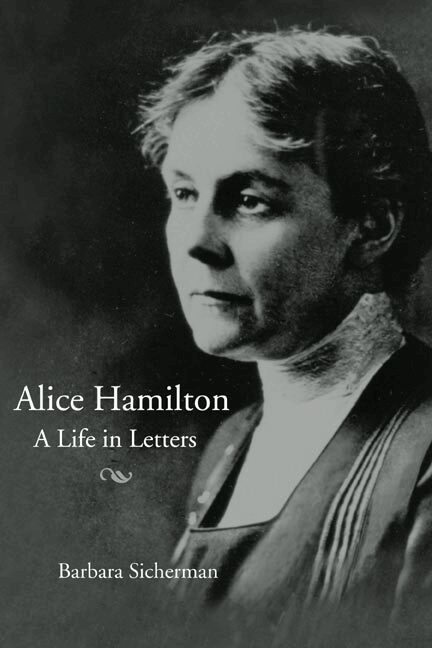
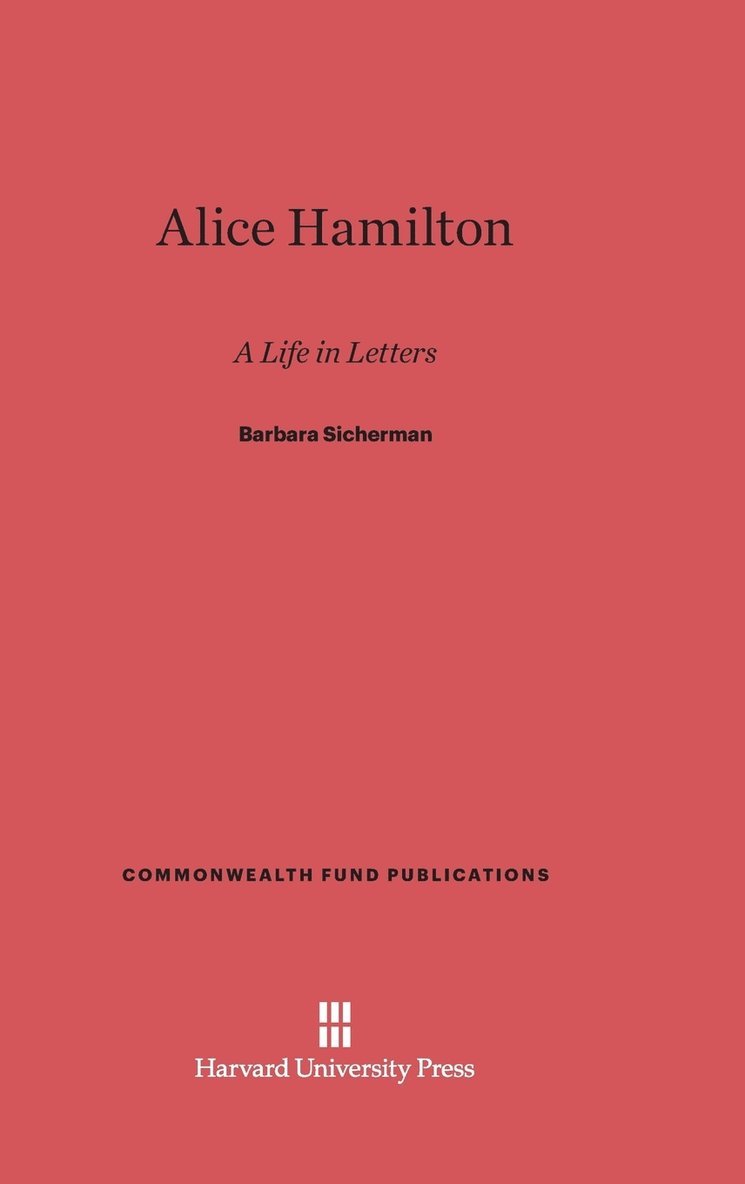
Alice Hamilton (1869-1970), a pioneer in the study of diseases of the workplace, a founder of industrial toxicology in the United States, and Harvard's first woman professor, led a long and interesting life. Always a consummate professional, she was also a prominent social reformer whose interest in the environmental causes of disease and in promoting equitable living conditions developed during her years as a resident at Jane Addams's Hull-House. This legendary figure now comes to life in an integrated work of biography and letters that reveals the personal as well as the professional woman. In documenting Hamilton's evolution from a childhood of privilege to a life of social advocacy, the volume opens a window on women reformers and their role in Progressive Era politics and reform. Because Hamilton was a keen observer and vivid writer, her letters--more than 100 are included here--bring an unmatched freshness and immediacy to a range of subjects, such as medical education; personal relationships and daily life at Hull House; the women's peace movement; struggles for the protection of workers' health; academic life at Harvard; politics and civil liberties during the cold war; and the process of growing old. Her story takes the reader from the Gilded Age to the Vietnam War.
Häftad, Engelska, 2012
503 kr
Skickas inom 10-15 vardagar
In a compelling approach structured as theme and variations, Barbara Sicherman offers insightful profiles of a number of accomplished women born in America's Gilded Age who lost--and found--themselves in books, and worked out a new life purpose around them. Some women, like Edith and Alice Hamilton, M. Carey Thomas, and Jane Addams, grew up in households filled with books, while less privileged women found alternative routes to expressive literacy. Jewish immigrants Hilda Satt Polacheck, Rose Cohen, and Mary Antin acquired new identities in the English-language books they found in settlement houses and libraries, while African Americans like Ida B. Wells relied mainly on institutions of their own creation, even as they sought to develop a literature of their own. It is Sicherman's masterful contribution to show that however the skill of reading was acquired, under the right circumstances, adolescent reading was truly transformative in constructing female identity, stirring imaginations, and fostering ambition. With Little Women's Jo March often serving as a youthful model of independence, girls and young women created communities of learning, imagination, and emotional connection around literary activities in ways that helped them imagine, and later attain, public identities. Reading themselves into quest plots and into male as well as female roles, these young women went on to create an unparalleled record of achievement as intellectuals, educators, and social reformers. Sicherman's graceful study reveals the centrality of the era's culture of reading and sheds new light on these women's Progressive-Era careers.
E-bok
Engelska, 2010387 kr
Läs direkt efter köp
In a compelling approach structured as theme and variations, Barbara Sicherman offers insightful profiles of a number of accomplished women born in America''s Gilded Age who lost--and found--themselves in books, and worked out a new life purpose around them. Some women, like Edith and Alice Hamilton, M. Carey Thomas, and Jane Addams, grew up in households filled with books, while less privileged women found alternative routes to expressive literacy. Jewish immigrants Hilda Satt Polacheck, Rose Cohen, and Mary Antin acquired new identities in the English-language books they found in settlement houses and libraries, while African Americans like Ida B. Wells relied mainly on institutions of their own creation, even as they sought to develop a literature of their own. It is Sicherman''s masterful contribution to show that however the skill of reading was acquired, under the right circumstances, adolescent reading was truly transformative in constructing female identity, stirring imaginations, and fostering ambition. With Little Women''s Jo March often serving as a youthful model of independence, girls and young women created communities of learning, imagination, and emotional connection around literary activities in ways that helped them imagine, and later attain, public identities. Reading themselves into quest plots and into male as well as female roles, these young women went on to create an unparalleled record of achievement as intellectuals, educators, and social reformers. Sicherman''s graceful study reveals the centrality of the era''s culture of reading and sheds new light on these women''s Progressive-Era careers.
E-bok
PDF, Engelska, 2010369 kr
Läs direkt efter köp
In a compelling approach structured as theme and variations, Barbara Sicherman offers insightful profiles of a number of accomplished women born in America''s Gilded Age who lost--and found--themselves in books, and worked out a new life purpose around them. Some women, like Edith and Alice Hamilton, M. Carey Thomas, and Jane Addams, grew up in households filled with books, while less privileged women found alternative routes to expressive literacy. Jewish immigrants Hilda Satt Polacheck, Rose Cohen, and Mary Antin acquired new identities in the English-language books they found in settlement houses and libraries, while African Americans like Ida B. Wells relied mainly on institutions of their own creation, even as they sought to develop a literature of their own. It is Sicherman''s masterful contribution to show that however the skill of reading was acquired, under the right circumstances, adolescent reading was truly transformative in constructing female identity, stirring imaginations, and fostering ambition. With Little Women''s Jo March often serving as a youthful model of independence, girls and young women created communities of learning, imagination, and emotional connection around literary activities in ways that helped them imagine, and later attain, public identities. Reading themselves into quest plots and into male as well as female roles, these young women went on to create an unparalleled record of achievement as intellectuals, educators, and social reformers. Sicherman''s graceful study reveals the centrality of the era''s culture of reading and sheds new light on these women''s Progressive-Era careers.
Inbunden, Engelska, 1984
879 kr
Tillfälligt slut
She was first considered "subversive" during World War I, yet she lived to protest our involvement in Vietnam. She was America's foremost industrial toxicologist, a pioneer in medicine and in social reform, long-time resident of Hull House, pacifist and civil libertarian. She was Edith Hamilton's sister, and the first woman on the faculty of Harvard, though she retired--an assistant professor in the school of public health--ten years before women medical students were admitted. This legendary figure now comes to life in an integrated work of biography and letters. A keen observer and an extraordinarily complex woman, Alice Hamilton left a rich correspondence, spanning the period from 1888 to 1965, that forms a journal of her times as well as of her life. The letters document the range of her involvement, from the battle against lead poisoning to debates with Felix Frankfurter over civil liberties. But as Alice Hamilton describes a woman's medical education in the late nineteenth century, her unlikely adventures in city slums, mine shafts, and factories, her work with Jane Addams and the women's peace movement, we also witness the stages of one woman's evolution from self-deprecating girl to leading social advocate. The charming details of her girlhood help us to understand her conflicted need to escape Victorian constraints without violating her own notion of femininity, a dilemma resolved only by a career combining science with service. Beautifully realized works themselves, these letters have been woven by Barbara Sicherman into an exemplary biography that opens a window on the Progressive era.