Barbara Townley – författare
Visar alla böcker från författaren Barbara Townley. Handla med fri frakt och snabb leverans.
7 produkter
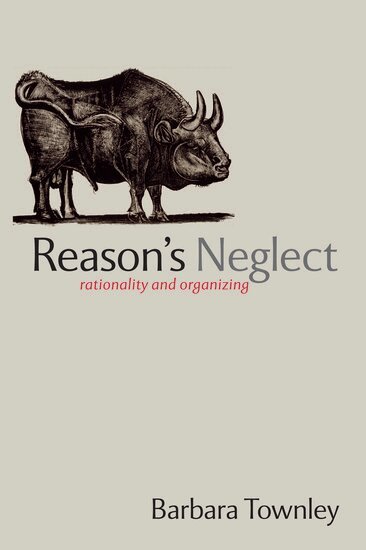
Reason's Neglect
Rationality and Organizing
E-bok, 2008
622 kr
Lägg i varukorg
Reason, and the need to Be Rational, are essential dimensions of society and the organizations we live and work in. Yet the ''rationalization'' of working and administrative processes, or the ''rationality'' studied in social sciences, is all too often, used, understood, and interpreted in an …
Creating Economy
Enterprise, Intellectual Property, and the Valuation of Goods
Av Nicola Searle, Philip Roscoe m. fl.
E-bok, 2019
1097 kr
Lägg i varukorg
Creativity is at the vanguard of contemporary capitalism, valorised as a form of capital in its own right. It is the centrepiece of the vaunted ''creative economy'', the creative industries, and is increasingly a focus of public policy. But what is economic about creativity? How can creative labour …
Creating Economy
Enterprise, Intellectual Property, and the Valuation of Goods
Av Nicola Searle, Philip Roscoe m. fl.
E-bok, 2019
1097 kr
Lägg i varukorg
Creativity is at the vanguard of contemporary capitalism, valorised as a form of capital in its own right. It is the centrepiece of the vaunted ''creative economy'', the creative industries, and is increasingly a focus of public policy. But what is economic about creativity? How can creative labour …
Creating Economy
Enterprise, Intellectual Property, and the Valuation of Goods
Av Barbara Townley, Philip Roscoe m. fl.
Inbunden, 2019
1582 kr
Lägg i varukorg
Creativity is at the vanguard of contemporary capitalism, valorised as a form of capital in its own right. It is the centrepiece of the vaunted 'creative economy', the creative industries, and is increasingly a focus of public policy. But what is economic about creativity? How can creative labour …
Reason's Neglect
Rationality and Organizing
Häftad, 2008
983 kr
Lägg i varukorg
Reason, and the need to Be Rational, are essential dimensions of society and the organizations we live and work in. Yet the 'rationalization' of working and administrative processes, or the 'rationality' studied in social sciences, is all too often, used, understood, and interpreted in an extremely …
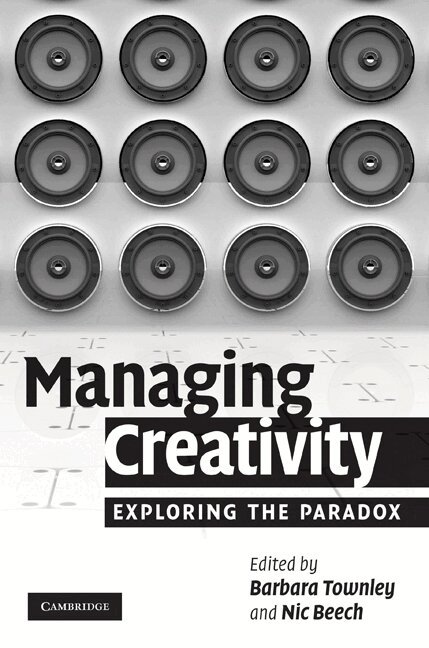
Managing Creativity
Exploring the Paradox
Inbunden, 2009
1068 kr
Lägg i varukorg
What are the challenges and opportunities of managing people in creative industries? How are the tensions between creative and commercial pressures mediated? The creative industries are an area of increasing economic importance. Yet creative industries and creative-based organizations are rife with …
Managing Creativity
Exploring the Paradox
Häftad, 2011
803 kr
Lägg i varukorg
What are the challenges and opportunities of managing people in creative industries? How are the tensions between creative and commercial pressures mediated? The creative industries are an area of increasing economic importance. Yet creative industries and creative-based organizations are rife with …