Barney Glaser - Böcker
Visar alla böcker från författaren Barney Glaser. Handla med fri frakt och snabb leverans.
8 produkter
8 produkter
671 kr
Skickas inom 10-15 vardagar
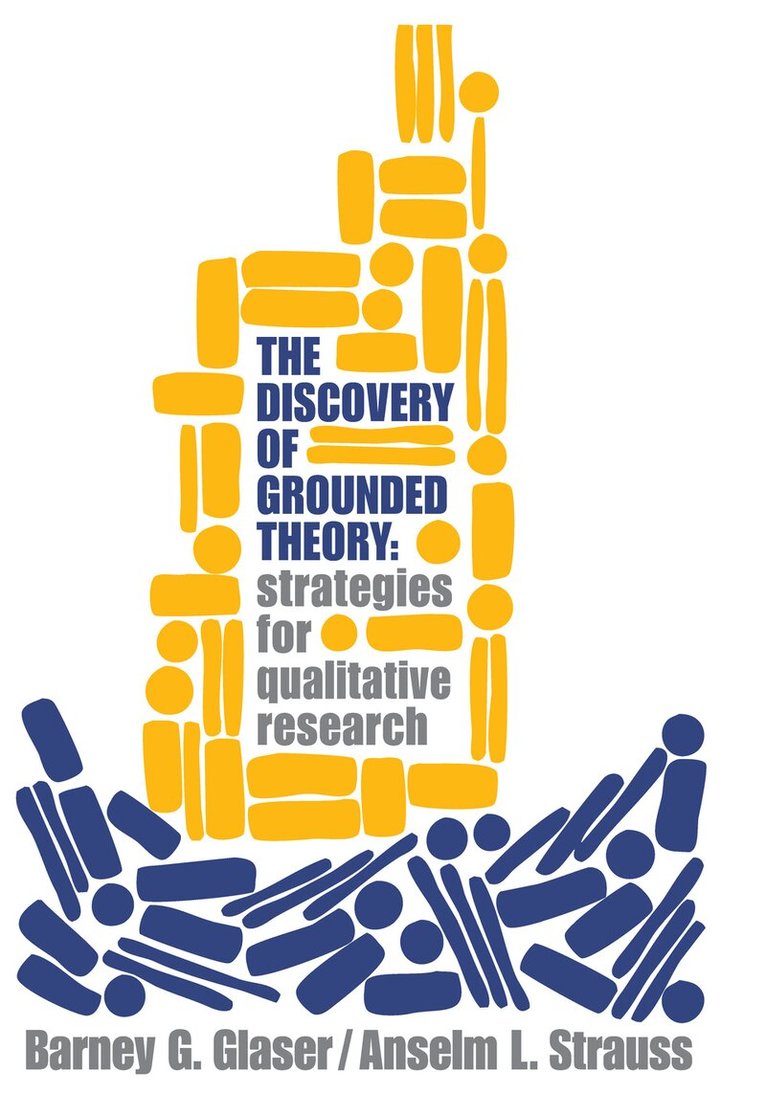
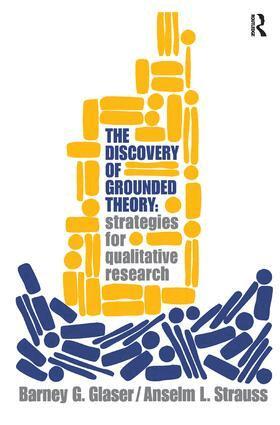
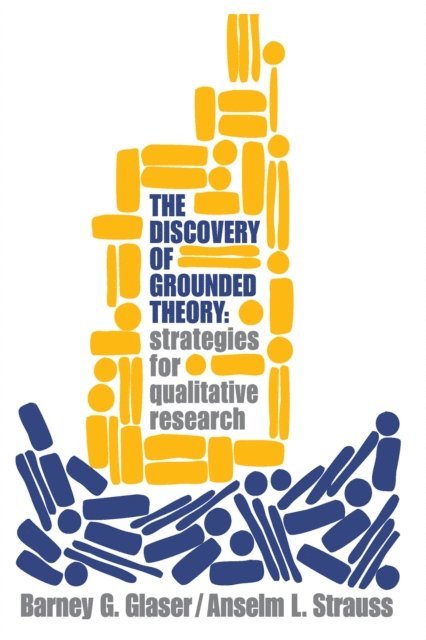
Most writing on sociological method has been concerned with how accurate facts can be obtained and how theory can thereby be more rigorously tested. In The Discovery of Grounded Theory, Barney Glaser and Anselm Strauss address the equally Important enterprise of how the discovery of theory from data—systematically obtained and analyzed in social research—can be furthered. The discovery of theory from data—grounded theory—is a major task confronting sociology, for such a theory fits empirical situations, and is understandable to sociologists and laymen alike. Most important, it provides relevant predictions, explanations, interpretations, and applications. In Part I of the book, "Generation Theory by Comparative Analysis," the authors present a strategy whereby sociologists can facilitate the discovery of grounded theory, both substantive and formal. This strategy involves the systematic choice and study of several comparison groups. In Part II, The Flexible Use of Data," the generation of theory from qualitative, especially documentary, and quantitative data Is considered. In Part III, "Implications of Grounded Theory," Glaser and Strauss examine the credibility of grounded theory. The Discovery of Grounded Theory is directed toward improving social scientists' capacity for generating theory that will be relevant to their research. While aimed primarily at sociologists, it will be useful to anyone Interested In studying social phenomena—political, educational, economic, industrial— especially If their studies are based on qualitative data.
719 kr
Skickas inom 10-15 vardagar
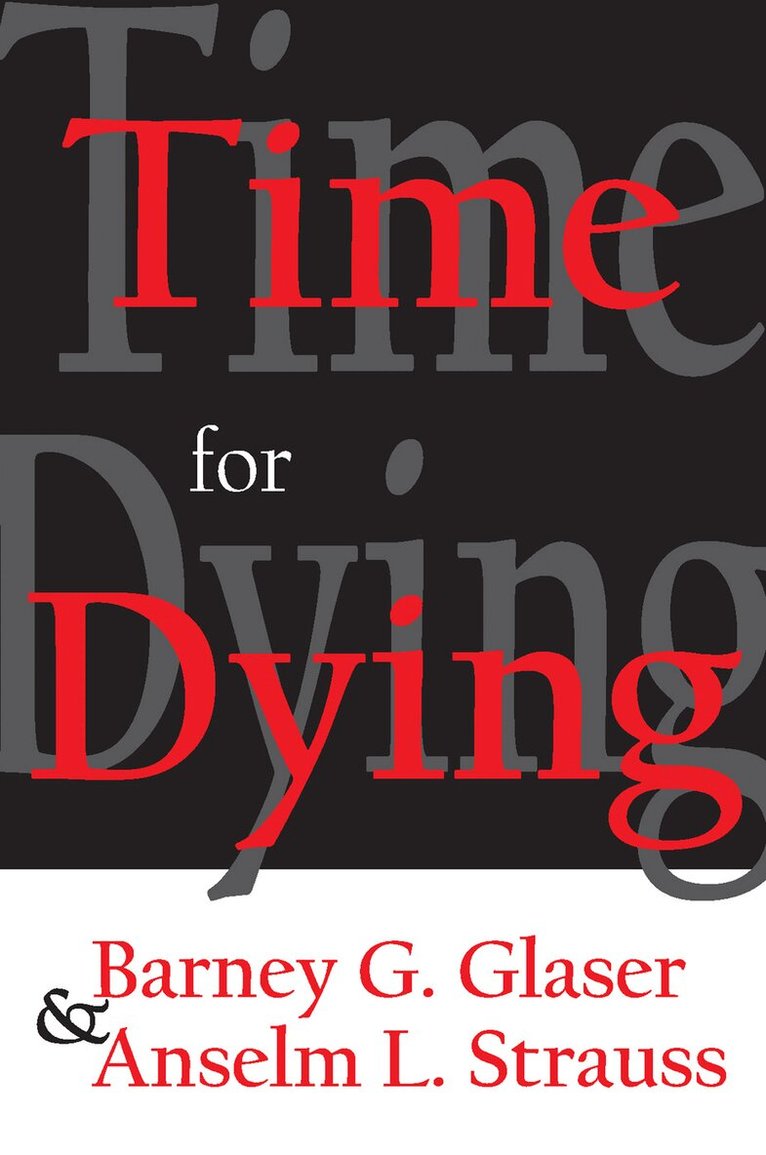
This book has been written for those who must work with and give care to the dying. Our discussion is not simple narrative or description; it is a "rendition of reality," informed by a rather densely woven and fairly abstract theoretical scheme. This scheme evolved gradually during the course of our research. The second audience for this volume is social scientists who are less interested in dying than they are in useful substantive theory. Our central concern is with the temporal aspects of work. The theory presented here may be useful to social scientists interested in areas far removed from health, medicine, or hospitals. The training of physicians and nurses equips them for the technical aspects of dealing with illness.Medical students learn not to kill patients through error, and to save lives through diagnosis and treatment. But their teachers put little or no emphasis on how to talk with dying patients; how-or whether-to disclose an impending death; or even how to approach the subject with the wives, husbands, children, and parents of the dying. Students of nursing are taught how to give nursing care to terminal patients, as well as how to give "post-mortem care." But the psychological aspects of dealing with the dying and their families are virtually absent from training. Although physicians and nurses are highly skilled at handling the bodies of terminal patients, their behavior to them otherwise is actually outside the province of professional standards. Much, if not most, nontechnical conduct toward, and in the presence of, dying patients and their families is profoundly influenced by "common sense" assumptions, essentially untouched by professional or even rational considerations or by current advancement in social-psychological knowledge. The process of dying in hospitals is much affected by professional training and codes, and by the particular conditions of work generated by hospitals as places of work. A third important consideration in interpreting dying as a temporal process is that dying is a social as well as a biological and psychological process. The term "social" underlines that the dying person is not simply leaving life. Unless he dies without kin or friends, and in such a way that his death is completely undiscovered his death is recorded. His dying is inextricably bound up with the life of society, however insignificant his particular life may have been or how small the impact his death makes upon its future course. This aspect of dying is treated in relationship to what the authors call "status passage."Time for Dying is an illumination of the temporal features of dying in hospitalsuas related both to the work of hospital personnel and to dying itself as a social process. Barney G. Glaser is the founder of the Grounded Theory Institute in Mill Valley, California, and has also been a research sociologist at the University of California Medical Center, San Francisco. He is the author or coauthor of several books, including The Grounded Theory Perspective II and Experts versus Laymen: A Study of the Patsy and the Subcontractor, published by Aldine Transaction. Anselm L. Strauss (1916-1996) was emeritus professor of sociology at the University of California, San Francisco. He was the author of numerous books, including Professions, Work and Careers, Mirrors and Masks: The Search for Identity, and Creating Sociological Awareness: Collective Images and Symbolic Representations, all published in new editions by Transaction.
753 kr
Skickas inom 10-15 vardagar
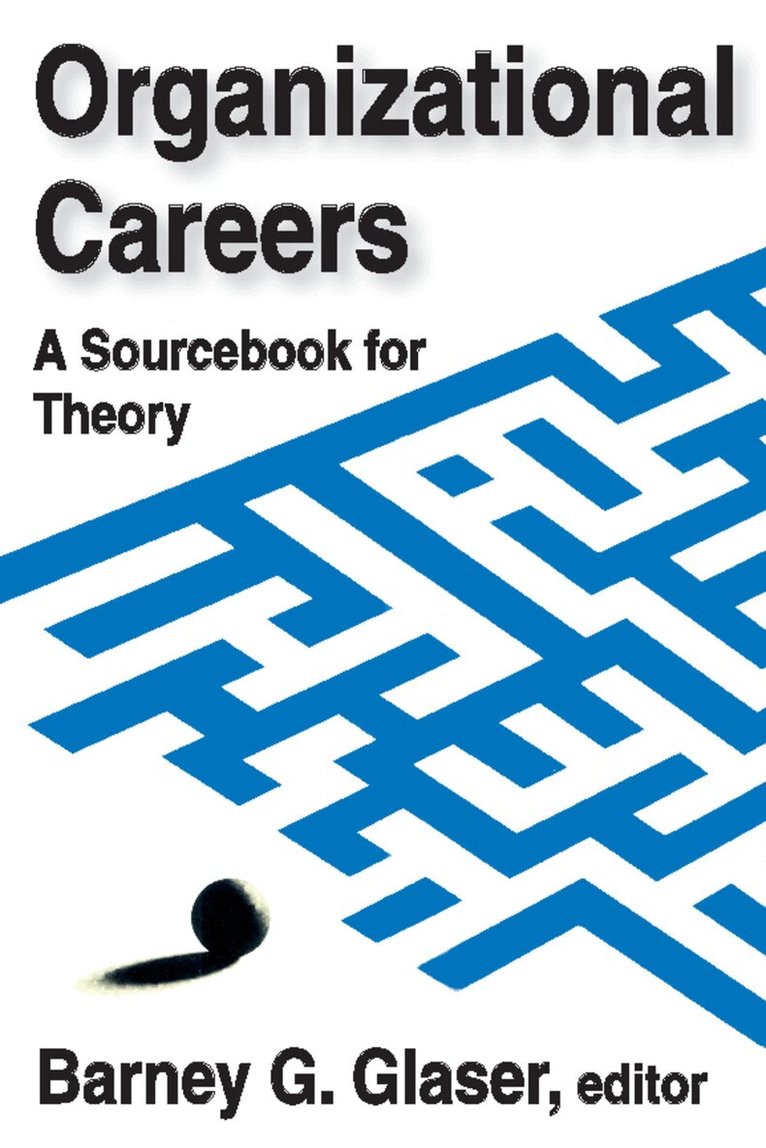
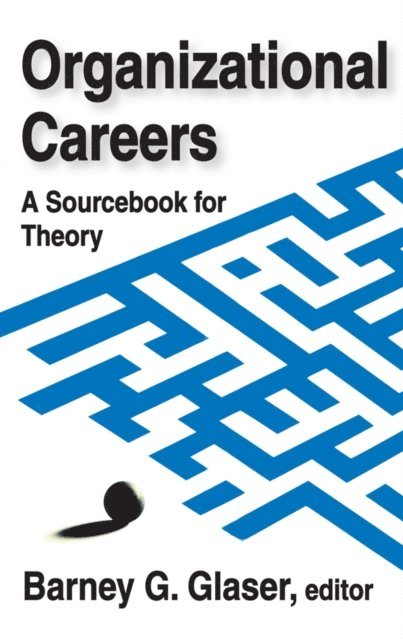
Although sociologists have written extensively on the broad subject of occupational careers, generally they have referred only incidentally to organizational careers within work organizations. In this pioneering sourcebook, now considered a classic, Glaser gathered from the literature of occupational sociology those studies that bear most directly on organizational careers. His objective was to provide the first survey of the substantial body of data on the subject and to place this data in a framework that illustrates its significance for the development of theory.In an extensive introduction, the editor explains the several purposes of the book and describes in detail the process of comparative analysis through which sociological theory on organizational careers can be generated. Organized around general themes such as recruitment, motivation, commitment, mobility, and succession, the writings of prominent sociologists--including Riesman, Caplow, Hughes, Becker, and Wilensky--form the content of the book and systematically cover every important facet of organizational careers. The editor's introductions to each section of the book alert the reader to the general phenomena--such as processes, conditions, categories, hypotheses, and properties--that crosscut and are generally relevant to all organizational careers and are, therefore, the raw material of theory. These introductions also suggest questions and problems for further analysis and research.This book as a whole stands as a demonstration of the contributors' method of how the sociologist, working from the data of research, can generate grounded, formal theory on this or any social phenomenon. This book also presents a vital body of data on organizational careers and a guide to further research that will be of great use both to occupational sociologists and to all those involved in the study of organizations.
1 069 kr
Tillfälligt slut
This book studies the relationship and balance of power between experts and laymen. It is rooted in the author's analysis of customer and contractor interactions in the housing industry, but relevant to other kinds of expert-layman relationships. Many of the conflicts between customer and contractor noted by the author also occur in lawyer-client, student-teacher, and doctor-patient relations.The author's research is structured around three core categories pertaining to experts' relations with laymen: choosing experts, power symmetry, and what he calls "elsewhereism." The first category has to do with seeking experts, finding them, referrals, and judging whether or not to use experts. Power symmetry concerns the inherent imbalance of power between an expert and a layman. "Elsewhereism" focuses on the constant competition that laymen face with unseen others in claiming the time and services of an expert.Experts versus Laymen broadens the analysis of expert-layman phenomena far beyond similar studies. It examines processes of bidding, gaining information, inspecting and evaluating work, winning trust, bargaining over costs, and determining who has situational control. This book discusses not only the contracting process in the housing industry, but—far more important—a world of power and domination in expert-laymen relationships.
2 160 kr
Skickas inom 10-15 vardagar
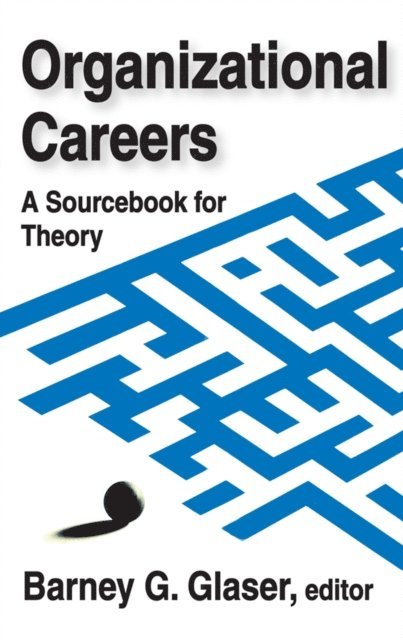
Although sociologists have written extensively on the broad subject of occupational careers, generally they have referred only incidentally to organizational careers within work organizations. In this pioneering sourcebook, now considered a classic, Glaser gathered from the literature of occupational sociology those studies that bear most directly on organizational careers. His objective was to provide the first survey of the substantial body of data on the subject and to place this data in a framework that illustrates its significance for the development of theory.In an extensive introduction, the editor explains the several purposes of the book and describes in detail the process of comparative analysis through which sociological theory on organizational careers can be generated. Organized around general themes such as recruitment, motivation, commitment, mobility, and succession, the writings of prominent sociologists--including Riesman, Caplow, Hughes, Becker, and Wilensky--form the content of the book and systematically cover every important facet of organizational careers. The editor's introductions to each section of the book alert the reader to the general phenomena--such as processes, conditions, categories, hypotheses, and properties--that crosscut and are generally relevant to all organizational careers and are, therefore, the raw material of theory. These introductions also suggest questions and problems for further analysis and research.This book as a whole stands as a demonstration of the contributors' method of how the sociologist, working from the data of research, can generate grounded, formal theory on this or any social phenomenon. This book also presents a vital body of data on organizational careers and a guide to further research that will be of great use both to occupational sociologists and to all those involved in the study of organizations.
2 300 kr
Skickas inom 10-15 vardagar
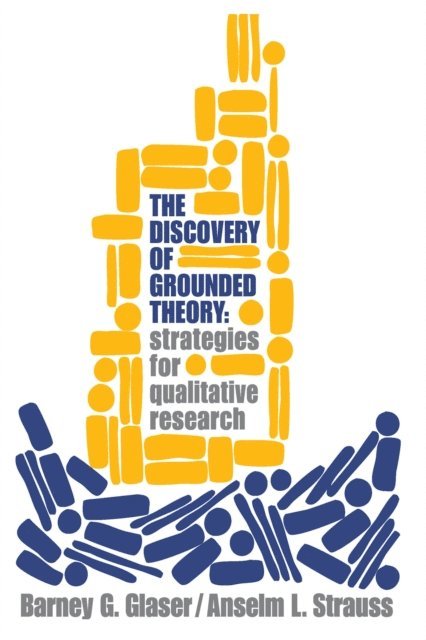
Most writing on sociological method has been concerned with how accurate facts can be obtained and how theory can thereby be more rigorously tested. In The Discovery of Grounded Theory, Barney Glaser and Anselm Strauss address the equally Important enterprise of how the discovery of theory from data—systematically obtained and analyzed in social research—can be furthered. The discovery of theory from data—grounded theory—is a major task confronting sociology, for such a theory fits empirical situations, and is understandable to sociologists and laymen alike. Most important, it provides relevant predictions, explanations, interpretations, and applications. In Part I of the book, "Generation Theory by Comparative Analysis," the authors present a strategy whereby sociologists can facilitate the discovery of grounded theory, both substantive and formal. This strategy involves the systematic choice and study of several comparison groups. In Part II, The Flexible Use of Data," the generation of theory from qualitative, especially documentary, and quantitative data Is considered. In Part III, "Implications of Grounded Theory," Glaser and Strauss examine the credibility of grounded theory. The Discovery of Grounded Theory is directed toward improving social scientists' capacity for generating theory that will be relevant to their research. While aimed primarily at sociologists, it will be useful to anyone Interested In studying social phenomena—political, educational, economic, industrial— especially If their studies are based on qualitative data.
2 098 kr
Skickas inom 10-15 vardagar
This book has been written for those who must work with and give care to the dying. Our discussion is not simple narrative or description; it is a "rendition of reality," informed by a rather densely woven and fairly abstract theoretical scheme. This scheme evolved gradually during the course of our research. The second audience for this volume is social scientists who are less interested in dying than they are in useful substantive theory. Our central concern is with the temporal aspects of work. The theory presented here may be useful to social scientists interested in areas far removed from health, medicine, or hospitals. The training of physicians and nurses equips them for the technical aspects of dealing with illness.Medical students learn not to kill patients through error, and to save lives through diagnosis and treatment. But their teachers put little or no emphasis on how to talk with dying patients; how-or whether-to disclose an impending death; or even how to approach the subject with the wives, husbands, children, and parents of the dying. Students of nursing are taught how to give nursing care to terminal patients, as well as how to give "post-mortem care." But the psychological aspects of dealing with the dying and their families are virtually absent from training. Although physicians and nurses are highly skilled at handling the bodies of terminal patients, their behavior to them otherwise is actually outside the province of professional standards. Much, if not most, nontechnical conduct toward, and in the presence of, dying patients and their families is profoundly influenced by "common sense" assumptions, essentially untouched by professional or even rational considerations or by current advancement in social-psychological knowledge. The process of dying in hospitals is much affected by professional training and codes, and by the particular conditions of work generated by hospitals as places of work. A third important consideration in interpreting dying as a temporal process is that dying is a social as well as a biological and psychological process. The term "social" underlines that the dying person is not simply leaving life. Unless he dies without kin or friends, and in such a way that his death is completely undiscovered his death is recorded. His dying is inextricably bound up with the life of society, however insignificant his particular life may have been or how small the impact his death makes upon its future course. This aspect of dying is treated in relationship to what the authors call "status passage."Time for Dying is an illumination of the temporal features of dying in hospitalsuas related both to the work of hospital personnel and to dying itself as a social process. Barney G. Glaser is the founder of the Grounded Theory Institute in Mill Valley, California, and has also been a research sociologist at the University of California Medical Center, San Francisco. He is the author or coauthor of several books, including The Grounded Theory Perspective II and Experts versus Laymen: A Study of the Patsy and the Subcontractor, published by Aldine Transaction. Anselm L. Strauss (1916-1996) was emeritus professor of sociology at the University of California, San Francisco. He was the author of numerous books, including Professions, Work and Careers, Mirrors and Masks: The Search for Identity, and Creating Sociological Awareness: Collective Images and Symbolic Representations, all published in new editions by Transaction.
695 kr
Skickas inom 10-15 vardagar
This book studies the relationship and balance of power between experts and laymen. It is rooted in the author's analysis of customer and contractor interactions in the housing industry, but relevant to other kinds of expert-layman relationships. Many of the conflicts between customer and contractor noted by the author also occur in lawyer-client, student-teacher, and doctor-patient relations.The author's research is structured around three core categories pertaining to experts' relations with laymen: choosing experts, power symmetry, and what he calls "elsewhereism." The first category has to do with seeking experts, finding them, referrals, and judging whether or not to use experts. Power symmetry concerns the inherent imbalance of power between an expert and a layman. "Elsewhereism" focuses on the constant competition that laymen face with unseen others in claiming the time and services of an expert.Experts versus Laymen broadens the analysis of expert-layman phenomena far beyond similar studies. It examines processes of bidding, gaining information, inspecting and evaluating work, winning trust, bargaining over costs, and determining who has situational control. This book discusses not only the contracting process in the housing industry, but—far more important—a world of power and domination in expert-laymen relationships.