Barry Rider – författare
Visar alla böcker från författaren Barry Rider. Handla med fri frakt och snabb leverans.
14 produkter
The Governance of Corporate Groups
Häftad, 2006
733 kr
Lägg i varukorg
Starting from a discussion of the theoretical underpinning of the place companies occupy in society, this book explores the consequences of adherence to free market contractualist theory, including the lack of regulatory control of a sufficiently robust nature. Professor Dine comments on the …
Companies, International Trade and Human Rights
Inbunden, 2005
1574 kr
Lägg i varukorg
Originally published in 2005, this book focuses on the role of corporations within the trading system, and the complex relationships between corporations, nation states and international organisations. The actions and motives that drive corporations are considered as well as the structure of the …
Market Abuse and Insider Dealing
Av Barry Rider, Kern Alexander m. fl.
Inbunden, 2022
2456 kr
Lägg i varukorg
Market abuse and insider dealing remains and always has been a real concern for all those that operate in the financial sector. Some of the earliest laws relating to trade outlaw attempts to artificially interfere with the proper functions of the markets and ensure fairness.With recent changes to …
Market Abuse and Insider Dealing
Av Barry Rider, Kern Alexander m. fl.
E-bok, 2022
2366 kr
Lägg i varukorg
Market abuse and insider dealing remains and always has been a real concern for all those that operate in the financial sector. Some of the earliest laws relating to trade outlaw attempts to artificially interfere with the proper functions of the markets and ensure fairness. With recent changes to …
Market Abuse and Insider Dealing
Av Barry Rider, Kern Alexander m. fl.
E-bok, 2022
2366 kr
Lägg i varukorg
Market abuse and insider dealing remains and always has been a real concern for all those that operate in the financial sector. Some of the earliest laws relating to trade outlaw attempts to artificially interfere with the proper functions of the markets and ensure fairness. With recent changes to …
Research Agenda for Financial Crime
Av Barry Rider
Inbunden, 2022
1606 kr
Lägg i varukorg
In this timely Research Agenda, Barry Rider has assembled a cast of internationally renowned experts to identify the most pressing questions and issues around financial crime, helping to inform our understanding of how best to protect our economies and financial institutions.The book begins by …
Research Agenda for Financial Crime
Av Barry Rider
E-bok, 2022
422 kr
Lägg i varukorg
In this timely Research Agenda, Barry Rider has assembled a cast of internationally renowned experts to identify the most pressing questions and issues around financial crime, helping to inform our understanding of how best to protect our economies and financial institutions. The book begins by …
Research Agenda for Organised Crime
Av Barry Rider
Inbunden, 2023
1701 kr
Lägg i varukorg
Elgar Research Agendas outline the future of research in a given area. Leading scholars are given the space to explore their subject in provocative ways, and map out the potential directions of travel. They are relevant but also visionary.This insightful Research Agenda explores the varied …
Research Agenda for Organised Crime
Av Barry Rider
E-bok, 2023
422 kr
Lägg i varukorg
Elgar Research Agendas outline the future of research in a given area. Leading scholars are given the space to explore their subject in provocative ways, and map out the potential directions of travel. They are relevant but also visionary. This insightful Research Agenda explores the varied …
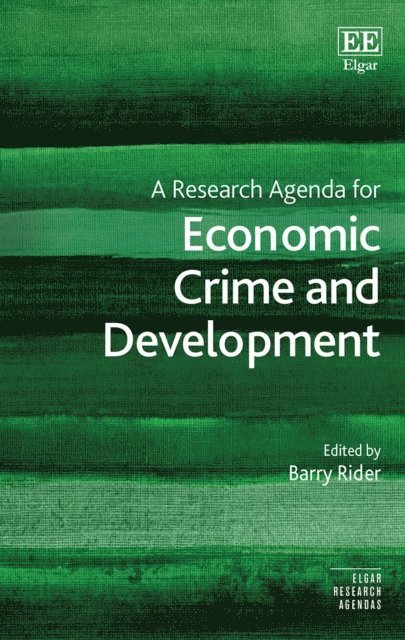
Research Agenda for Economic Crime and Development
Av Barry Rider
Inbunden, 2023
1701 kr
Lägg i varukorg
This contemporary Research Agenda examines the threats to stability and sustainability presented by economically motivated crime and misconduct. Featuring contributions from distinguished experts in the field of criminal law and justice, this book proposes avenues for future research into the legal …
Research Agenda for Economic Crime and Development
Av Barry Rider
E-bok, 2023
422 kr
Lägg i varukorg
This contemporary Research Agenda examines the threats to stability and sustainability presented by economically motivated crime and misconduct. Featuring contributions from distinguished experts in the field of criminal law and justice, this book proposes avenues for future research into the legal …
Corruption: The Enemy Within
The Enemy Within
Av Barry Rider
E-bok, 1997
2713 kr
Lägg i varukorg
Prevention and control of corrupt practices formed the central theme of the 14th International Symposium on Economic Crime. This topical work contains a selection of key Conference papers. Amid several arguably central issues-- the control of economic crime, the protection of developing economies …
International Contracts and National Economic Regulation
Dispute Resolution Through International Commercial Arbitration
Av Barry Rider
E-bok, 1981
2993 kr
Lägg i varukorg
The growth of national economic regulation and the process of globalisation increasingly expose international transactions to an array of regulations from different jurisdictions. These developments often contribute to widespread international contractual failures when parties claim the …
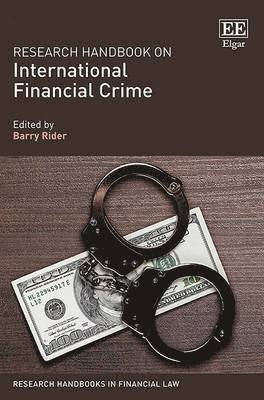
Research Handbook on International Financial Crime
Av Barry Rider
Inbunden, 2015
4441 kr
Tillfälligt slut
A significant proportion of serious crime is economically motivated. Almost all financial crimes will be either motivated by greed, or the desire to cover up misconduct. This Handbook addresses financial crimes such as fraud, corruption and money laundering, and highlights both the risks presented …