Bart Huelsenbeck – författare
Visar alla böcker från författaren Bart Huelsenbeck. Handla med fri frakt och snabb leverans.
9 produkter
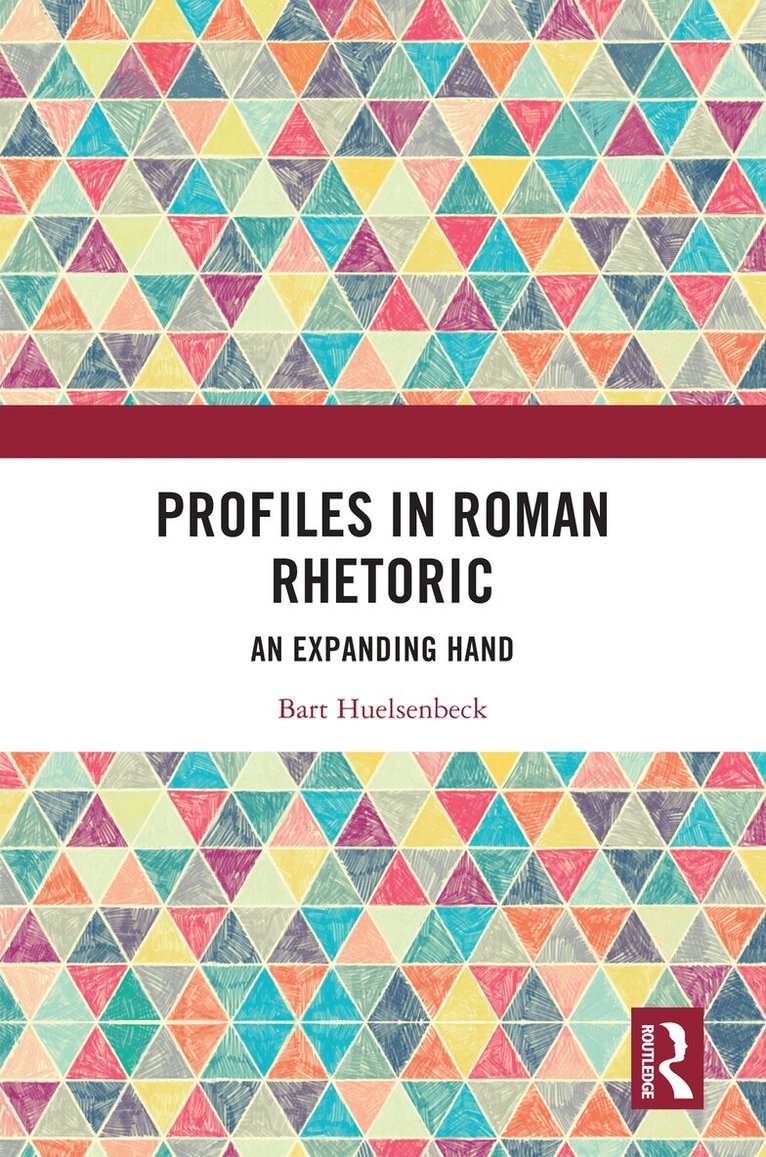
Profiles in Roman Rhetoric
An Expanding Hand
Inbunden, 2025
2578 kr
Lägg i varukorg
This volume shifts perspective to the everyday aspects of ancient rhetoric—its teaching, exercises, and daily life—and concentrates on persons less visible in narratives of rhetoric’s history: teachers, slaves and freedmen, speech performers, political dissidents, mavericks, and dropouts.Standard …
Profiles in Roman Rhetoric
An Expanding Hand
E-bok, 2025
838 kr
Lägg i varukorg
This volume shifts perspective to the everyday aspects of ancient rhetoric—its teaching, exercises, and daily life—and concentrates on persons less visible in narratives of rhetoric’s history: teachers, slaves and freedmen, speech performers, political dissidents, mavericks, and dropouts. Standard …
Profiles in Roman Rhetoric
An Expanding Hand
E-bok, 2025
856 kr
Lägg i varukorg
This volume shifts perspective to the everyday aspects of ancient rhetoric—its teaching, exercises, and daily life—and concentrates on persons less visible in narratives of rhetoric’s history: teachers, slaves and freedmen, speech performers, political dissidents, mavericks, and dropouts. Standard …
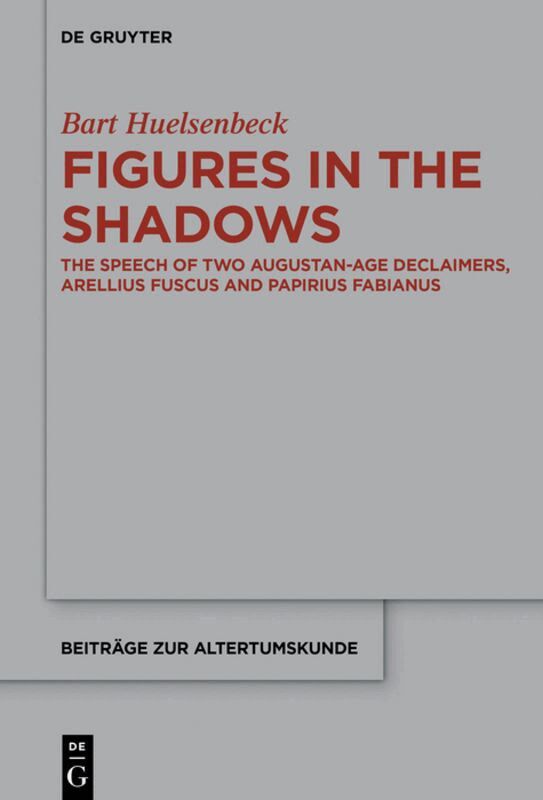
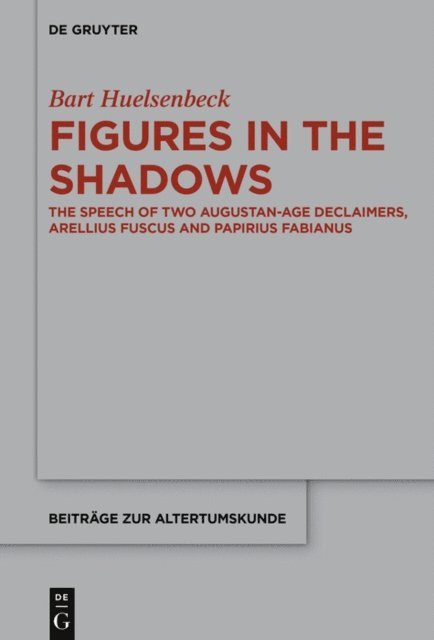
Figures in the Shadows
The Speech of Two Augustan-Age Declaimers, Arellius Fuscus and Papirius Fabianus
Inbunden, 2018
1962 kr
Lägg i varukorg
The collection of the elder Seneca assembles quotations from scores of declaimers over a period spanning sixty years, from the Augustan Age through the early decades of the empire. A view is offered onto a literary scene, for this critical period of Roman letters, that is numerously populated, …
Figures in the Shadows
The Speech of Two Augustan-Age Declaimers, Arellius Fuscus and Papirius Fabianus
E-bok, 2018
1825 kr
Lägg i varukorg
The collection of the elder Seneca assembles quotations from scores of declaimers over a period spanning sixty years, from the Augustan Age through the early decades of the empire. A view is offered onto a literary scene, for this critical period of Roman letters, that is numerously populated, …
Figures in the Shadows
The Speech of Two Augustan-Age Declaimers, Arellius Fuscus and Papirius Fabianus
E-bok, 2018
1825 kr
Lägg i varukorg
The collection of the elder Seneca assembles quotations from scores of declaimers over a period spanning sixty years, from the Augustan Age through the early decades of the empire. A view is offered onto a literary scene, for this critical period of Roman letters, that is numerously populated, …
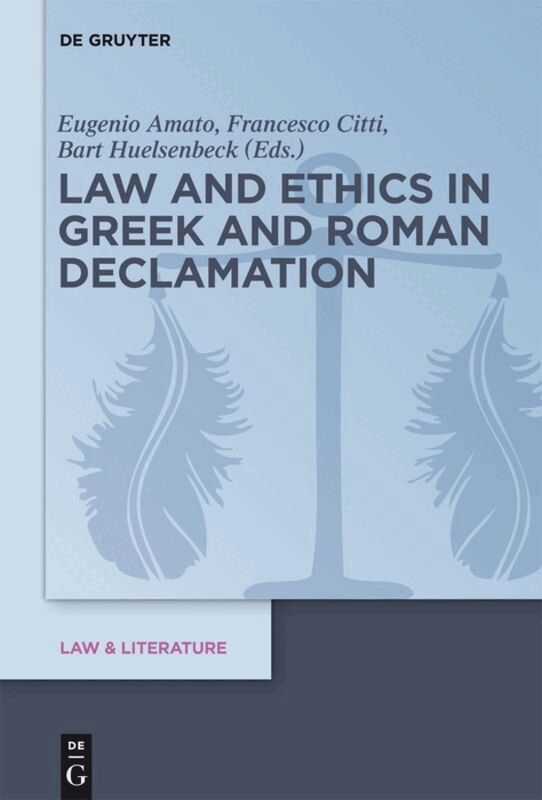
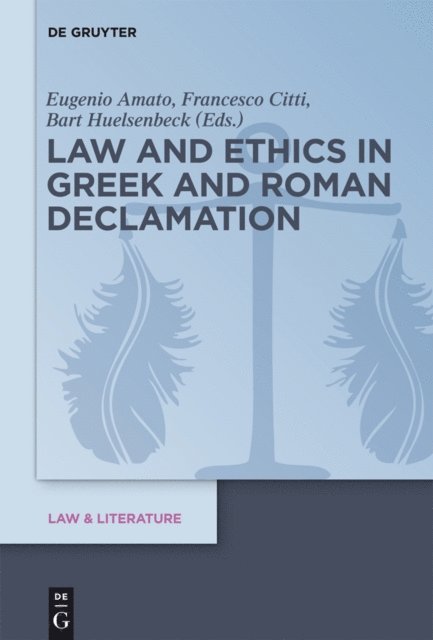
Law and Ethics in Greek and Roman Declamation
Av Eugenio Amato, Francesco Citti m. fl.
Inbunden, 2015
2542 kr
Lägg i varukorg
Ancient declamation—the practice of delivering speeches on the basis of fictitious scenarios—defies easy categorization. It stands at the crossroads of several modern disciplines. It is only within the past few decades that the full complexity of declamation, and the promise inherent in its study, …
Law and Ethics in Greek and Roman Declamation
Av Bart Huelsenbeck, Francesco Citti m. fl.
E-bok, 2015
2514 kr
Lägg i varukorg
Ancient declamation—the practice of delivering speeches on the basis of fictitious scenarios—defies easy categorization. It stands at the crossroads of several modern disciplines. It is only within the past few decades that the full complexity of declamation, and the promise inherent in its study, …
Law and Ethics in Greek and Roman Declamation
Av Bart Huelsenbeck, Francesco Citti m. fl.
E-bok, 2015
2514 kr
Lägg i varukorg
Ancient declamation—the practice of delivering speeches on the basis of fictitious scenarios—defies easy categorization. It stands at the crossroads of several modern disciplines. It is only within the past few decades that the full complexity of declamation, and the promise inherent in its study, …