Ben Fitzhugh – författare
Visar alla böcker från författaren Ben Fitzhugh. Handla med fri frakt och snabb leverans.
9 produkter
9 produkter
Inbunden, Engelska, 2002
1 664 kr
Skickas inom 10-15 vardagar
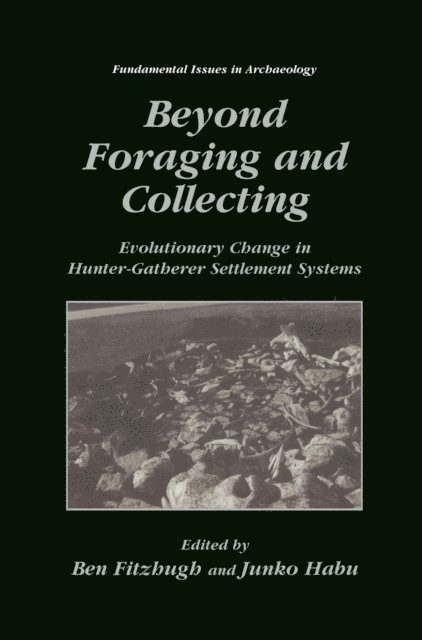
LEWIS R. BINFORD AND AMBER L. JOHNSON The organizers of this volume have brought together authors who have worked on local sequences, much as traditional archaeologists tended to do, however, with the modern goal of addressing evolutionary change in hunter-gatherer systems over long time spans. Given this ambitious goal they wisely chose to ask the authors to build their treatments around a focal question, the utility of the forager-eollector continuum (Binford 1980) for research on archaeological sequences. Needless to say, Binford was flat tered by their choice and understandably read the papers with a great deal of interest. When he was asked to write the foreword to this provoca tive book he expected to learn new things and in this he has not been disappointed. The common organizing questions addressed among the contributors to this volume are simply, how useful is the forager-eollector continuum for explanatory research on sequences, and what else might we need to know to explain evolutionary change in hunter-gatherer adaptations? Most sequences document systems change, in some sense. Though we don't necessarily know how much synchronous systemic variability there might have been relative to the documented sequence, most authors have tried to address the problem of within systems variability. In this sense, most are operating with sophistication not seen among traditional culture historians. The primary problem for archaeologists of the generation prior to Binford was how to date archaeological materials.
Inbunden, Engelska, 2003
1 664 kr
Skickas inom 10-15 vardagar
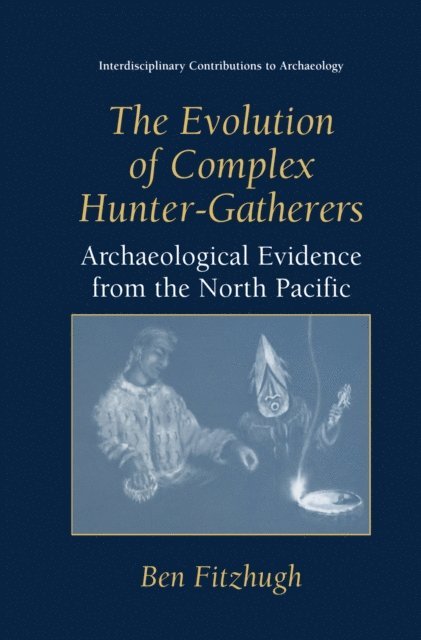
In 1987, I had the good fortune to join in the excavation of a phenomenal archae ological site on the western coast of Kodiak Island, in Alaska. The New Karluk site (a. k. a. , "Karluk One") was perched on the edge of the small village of Karluk at the mouth of the river of the same name, once one of the most productive salmon rivers in the North Pacific. I had just completed my sophomore year of college, and under the direction of Richard Jordan, I enthusiastically joined sev eral other students in the Kodiak Archaeology Projects New Karluk excavation. I had participated in my father's archaeological research in Eastern Canada since early childhood, but the Karluk dig was unlike any archaeology I had experienced before. For three months, we peeled back layers of grass, wood, and earth floors separated by remnants of ancient sod roofs. Due to the unusual preservation and richness of the site, at every tum we uncovered perishable items such as bent-wood bowls, masks, dolls, puffin-beak rattles, grass baskets, fragments of fiber netting, locks of hair, and food waste. Preservation was so excellent, in fact, that we often exposed grass blades still green after hundreds of years, which once exposed to air would tum brown before our eyes.
Häftad, Engelska, 2003
1 664 kr
Skickas inom 10-15 vardagar
In 1987, I had the good fortune to join in the excavation of a phenomenal archae ological site on the western coast of Kodiak Island, in Alaska. The New Karluk site (a. k. a. , "Karluk One") was perched on the edge of the small village of Karluk at the mouth of the river of the same name, once one of the most productive salmon rivers in the North Pacific. I had just completed my sophomore year of college, and under the direction of Richard Jordan, I enthusiastically joined sev eral other students in the Kodiak Archaeology Projects New Karluk excavation. I had participated in my father's archaeological research in Eastern Canada since early childhood, but the Karluk dig was unlike any archaeology I had experienced before. For three months, we peeled back layers of grass, wood, and earth floors separated by remnants of ancient sod roofs. Due to the unusual preservation and richness of the site, at every tum we uncovered perishable items such as bent-wood bowls, masks, dolls, puffin-beak rattles, grass baskets, fragments of fiber netting, locks of hair, and food waste. Preservation was so excellent, in fact, that we often exposed grass blades still green after hundreds of years, which once exposed to air would tum brown before our eyes.
Häftad, Engelska, 2012
1 774 kr
Skickas inom 10-15 vardagar
LEWIS R. BINFORD AND AMBER L. JOHNSON The organizers of this volume have brought together authors who have worked on local sequences, much as traditional archaeologists tended to do, however, with the modern goal of addressing evolutionary change in hunter-gatherer systems over long time spans. Given this ambitious goal they wisely chose to ask the authors to build their treatments around a focal question, the utility of the forager-eollector continuum (Binford 1980) for research on archaeological sequences. Needless to say, Binford was flat tered by their choice and understandably read the papers with a great deal of interest. When he was asked to write the foreword to this provoca tive book he expected to learn new things and in this he has not been disappointed. The common organizing questions addressed among the contributors to this volume are simply, how useful is the forager-eollector continuum for explanatory research on sequences, and what else might we need to know to explain evolutionary change in hunter-gatherer adaptations? Most sequences document systems change, in some sense. Though we don't necessarily know how much synchronous systemic variability there might have been relative to the documented sequence, most authors have tried to address the problem of within systems variability. In this sense, most are operating with sophistication not seen among traditional culture historians. The primary problem for archaeologists of the generation prior to Binford was how to date archaeological materials.
E-bok
PDF, Engelska, 20122 110 kr
Läs direkt efter köp
In 1987, I had the good fortune to join in the excavation of a phenomenal archae ological site on the western coast of Kodiak Island, in Alaska. The New Karluk site (a. k. a. , "Karluk One") was perched on the edge of the small village of Karluk at the mouth of the river of the same name, once one of the most productive salmon rivers in the North Pacific. I had just completed my sophomore year of college, and under the direction of Richard Jordan, I enthusiastically joined sev eral other students in the Kodiak Archaeology Projects New Karluk excavation. I had participated in my father''s archaeological research in Eastern Canada since early childhood, but the Karluk dig was unlike any archaeology I had experienced before. For three months, we peeled back layers of grass, wood, and earth floors separated by remnants of ancient sod roofs. Due to the unusual preservation and richness of the site, at every tum we uncovered perishable items such as bent-wood bowls, masks, dolls, puffin-beak rattles, grass baskets, fragments of fiber netting, locks of hair, and food waste. Preservation was so excellent, in fact, that we often exposed grass blades still green after hundreds of years, which once exposed to air would tum brown before our eyes.
E-bok
PDF, Engelska, 20122 110 kr
Läs direkt efter köp
LEWIS R. BINFORD AND AMBER L. JOHNSON The organizers of this volume have brought together authors who have worked on local sequences, much as traditional archaeologists tended to do, however, with the modern goal of addressing evolutionary change in hunter-gatherer systems over long time spans. Given this ambitious goal they wisely chose to ask the authors to build their treatments around a focal question, the utility of the forager-eollector continuum (Binford 1980) for research on archaeological sequences. Needless to say, Binford was flat tered by their choice and understandably read the papers with a great deal of interest. When he was asked to write the foreword to this provoca tive book he expected to learn new things and in this he has not been disappointed. The common organizing questions addressed among the contributors to this volume are simply, how useful is the forager-eollector continuum for explanatory research on sequences, and what else might we need to know to explain evolutionary change in hunter-gatherer adaptations? Most sequences document systems change, in some sense. Though we don''t necessarily know how much synchronous systemic variability there might have been relative to the documented sequence, most authors have tried to address the problem of within systems variability. In this sense, most are operating with sophistication not seen among traditional culture historians. The primary problem for archaeologists of the generation prior to Binford was how to date archaeological materials.
Del 6 - Archaeology of Asia-Pacific Navigation
Maritime Prehistory of Northeast Asia
With a Foreword by Dr. William W. Fitzhugh
Inbunden, Engelska, 2022
732 kr
Skickas inom 5-8 vardagar
1 588 kr
Läs direkt efter köp
Del 6 - Archaeology of Asia-Pacific Navigation
Maritime Prehistory of Northeast Asia
With a Foreword by Dr. William W. Fitzhugh
Häftad, Engelska, 2023
732 kr
Skickas inom 5-8 vardagar