Ben Shepherd - Böcker
Visar alla böcker från författaren Ben Shepherd. Handla med fri frakt och snabb leverans.
8 produkter
8 produkter
407 kr
Skickas inom 10-15 vardagar
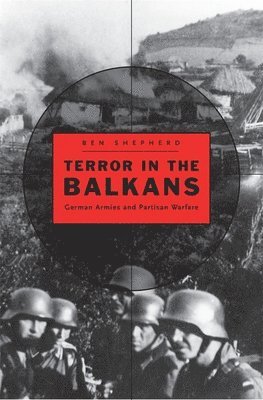
Germany’s 1941 seizure of Yugoslavia led to an insurgency as bloody as any in World War II. The Wehrmacht waged a brutal counter-insurgency campaign in response, and by 1943 German troops in Yugoslavia were engaged in operations that ranked among the largest of the entire European war. Their actions encompassed massive reprisal shootings, the destruction of entire villages, and huge mobile operations unleashed not just against insurgents but also against the civilian population believed to be aiding them. Terror in the Balkans explores the reasons behind the Wehrmacht’s extreme security measures in southern and eastern Europe.Ben Shepherd focuses his study not on the high-ranking generals who oversaw the campaign but on lower-level units and their officers, a disproportionate number of whom were of Austrian origin. He uses Austro-Hungarian army records to consider how the personal experiences of many Austrian officers during the Great War played a role in brutalizing their behavior in Yugoslavia. A comparison of Wehrmacht counter-insurgency divisions allows Shepherd to analyze how a range of midlevel commanders and their units conducted themselves in different parts of Yugoslavia, and why. Shepherd concludes that the Wehrmacht campaign’s violence was driven not just by National Socialist ideology but also by experience of the fratricidal infighting of Yugoslavia’s ethnic groups, by conditions on the ground, and by doctrines that had shaped the military mindsets of both Germany and Austria since the late nineteenth century. He also considers why different Wehrmacht units exhibited different degrees of ruthlessness and restraint during the campaign.
558 kr
Skickas inom 10-15 vardagar
The global financial crisis triggered a broad reassessment of economic integration policies in developed and developing countries worldwide. The crisis-induced collapse in trade was the sharpest ever since World War II, affecting all countries and all product categories. A huge shock to the trading system, combined with severe macroeconomic instability, makes it natural for policymakers to call into question the basic underlying assumptions of trade liberalization and openness. In particular, outward-oriented or export-led growth strategies are being reassessed as openness is increasingly associated with greater volatility. However, it is crucial not to lose sight of the dynamic benefits that openness can offer. Examples include technology transfer, increased competitive pressure that reduces markups and improves efficiency, and economies of scale. The real question is how to manage outward-oriented strategies so as to maximize the benefits of openness while minimizing risks.This book aims to contribute to this important and ongoing policy debate, bringing together recent empirical work on the trade collapse, its causes and consequences, and the broader trade policy agenda in the post-crisis environment. It addresses critical policy issues revolving around the topic of outward-oriented growth strategy, including policy instruments that help manage risks associated with outward-orientation, lessons learned from the crisis for particular countries and regions, and how emerging trade policy issues such as climate change, commodities, global production networking, and migration affect the prospects for recovery and outward-oriented growth.
262 kr
Kommande
Brutal gangsters, shadowy organisations and bloody vampires. A gritty pub crawl from the blood-soaked streets of South London to the elite hallways of vampire royalty. Blood Drunk is a pitch-black urban fantasy for fans of Empire of the Vampire and Slow Horses.Freddie Burns just wants ten pints, a brawl, and the chance to take over his uncle's fading gangland empire.But when a routine hit goes tits up, Freddie discovers a new kind of organised crime – one where vampires are real and monsters hide in plain sight. Good thing he has a nasty talent for giving vampires a good kicking – them, and anyone else who looks at him funny.Freddie's power to rip magical strength from the death of living things drags him to a world he never knew existed. Now he's staring down shadowy organisations, a magical underworld, gruesome vampire initiations and a blood-chilling covenant.It might be up to Freddie to save the world – or at least not wreck it entirely. He just needs a drink and a smoke first.
181 kr
Kommande
Brutal gangsters, shadowy organisations and bloody vampires. A gritty pub crawl from the blood-soaked streets of South London to the elite hallways of vampire royalty. Blood Drunk is a pitch-black urban fantasy for fans of Empire of the Vampire and Slow Horses.Freddie Burns just wants ten pints, a brawl, and the chance to take over his uncle's fading gangland empire.But when a routine hit goes tits up, Freddie discovers a new kind of organised crime – one where vampires are real and monsters hide in plain sight. Good thing he has a nasty talent for giving vampires a good kicking – them, and anyone else who looks at him funny.Freddie's power to rip magical strength from the death of living things drags him to a world he never knew existed. Now he's staring down shadowy organisations, a magical underworld, gruesome vampire initiations and a blood-chilling covenant.It might be up to Freddie to save the world – or at least not wreck it entirely. He just needs a drink and a smoke first.
385 kr
Kommande
279 kr
Skickas inom 5-8 vardagar
389 kr
Skickas inom 3-6 vardagar
540 kr
Tillfälligt slut
This book presents an analysis of the state of trade facilitation in member countries of the South Asia Subregional Economic Cooperation (SASEC) programme. It includes country-level studies and identifies four common trade facilitation priorities among SASEC countries: implementation of the Trade Facilitation Agreement and other international conventions; logistics and infrastructure development, and related regulatory reforms; coordinated border management; and institutions and capacity building.